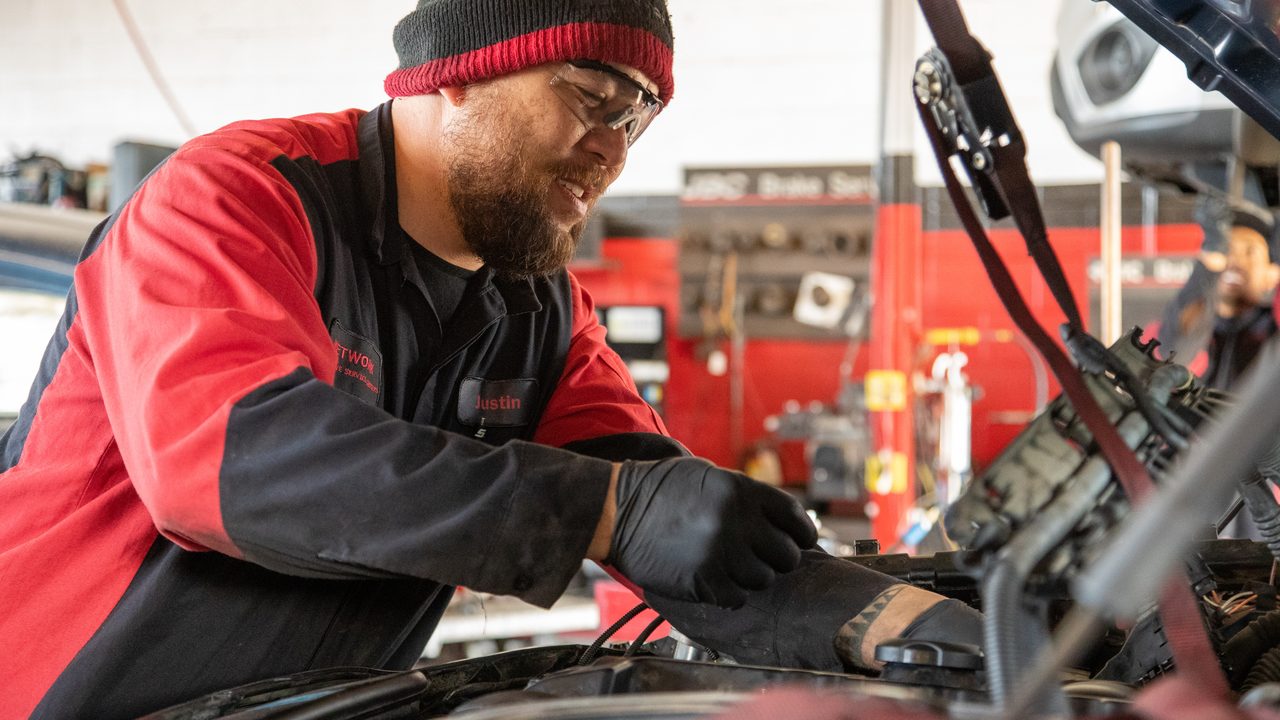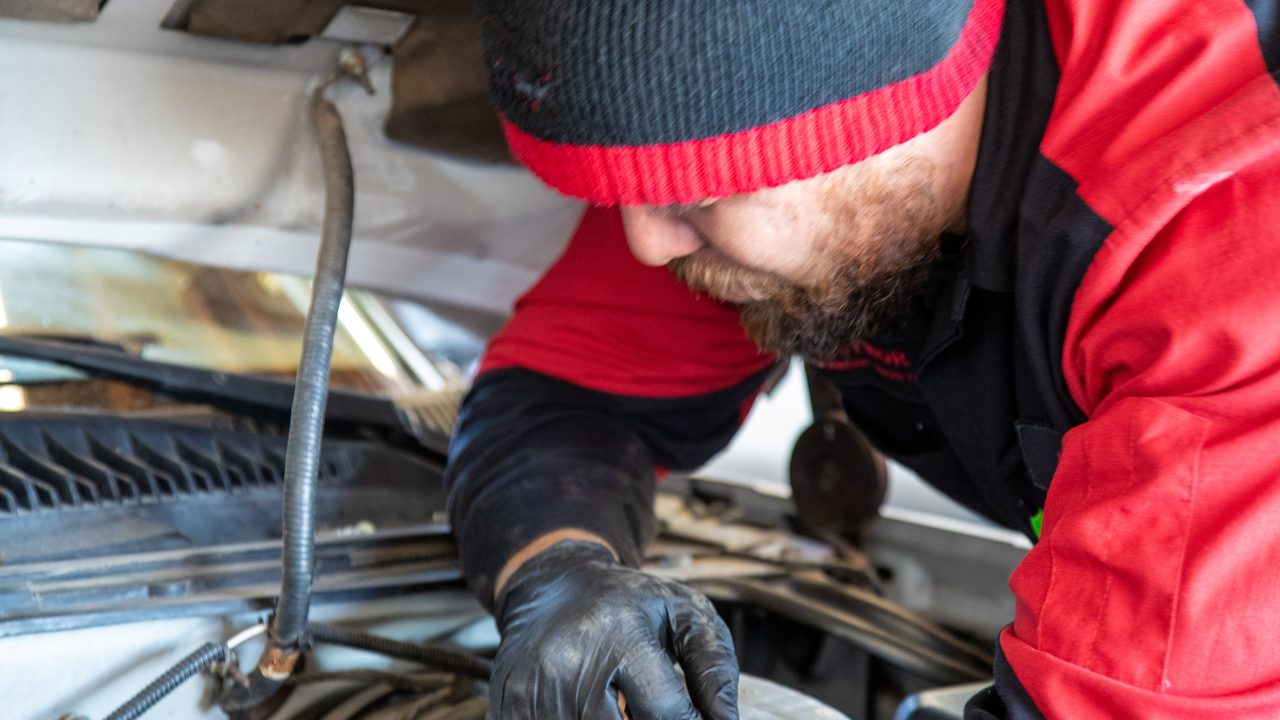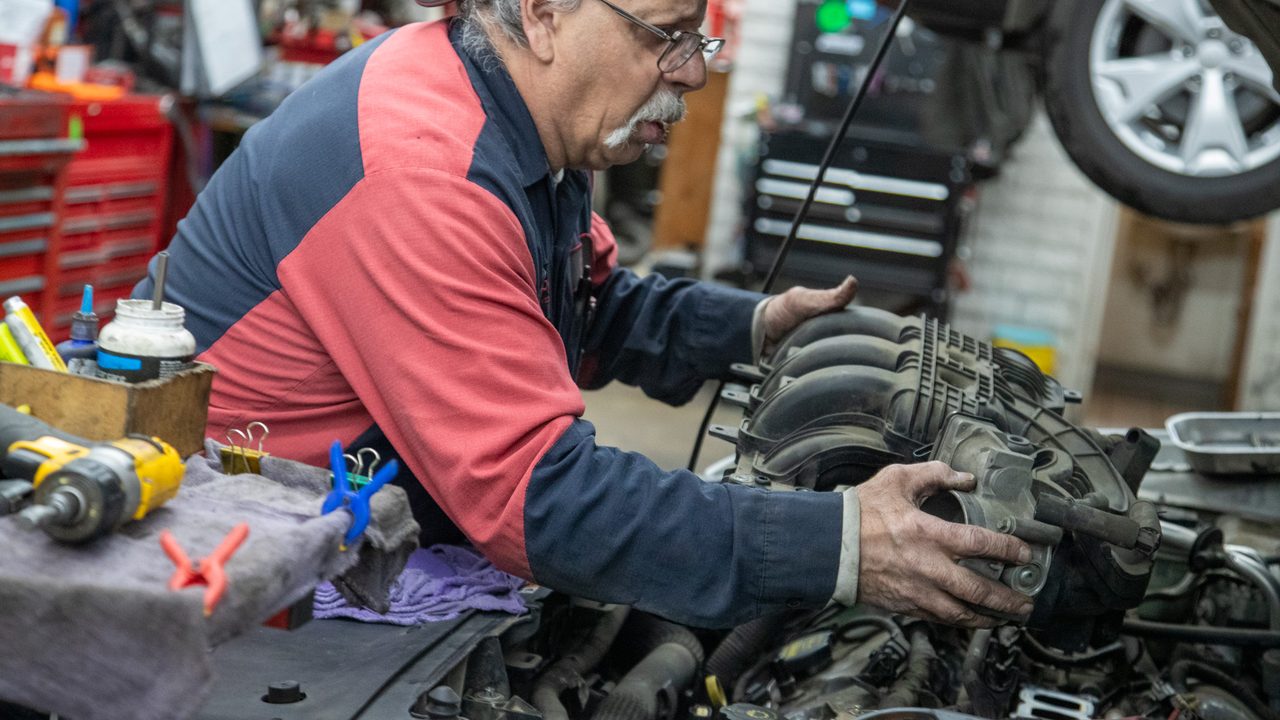
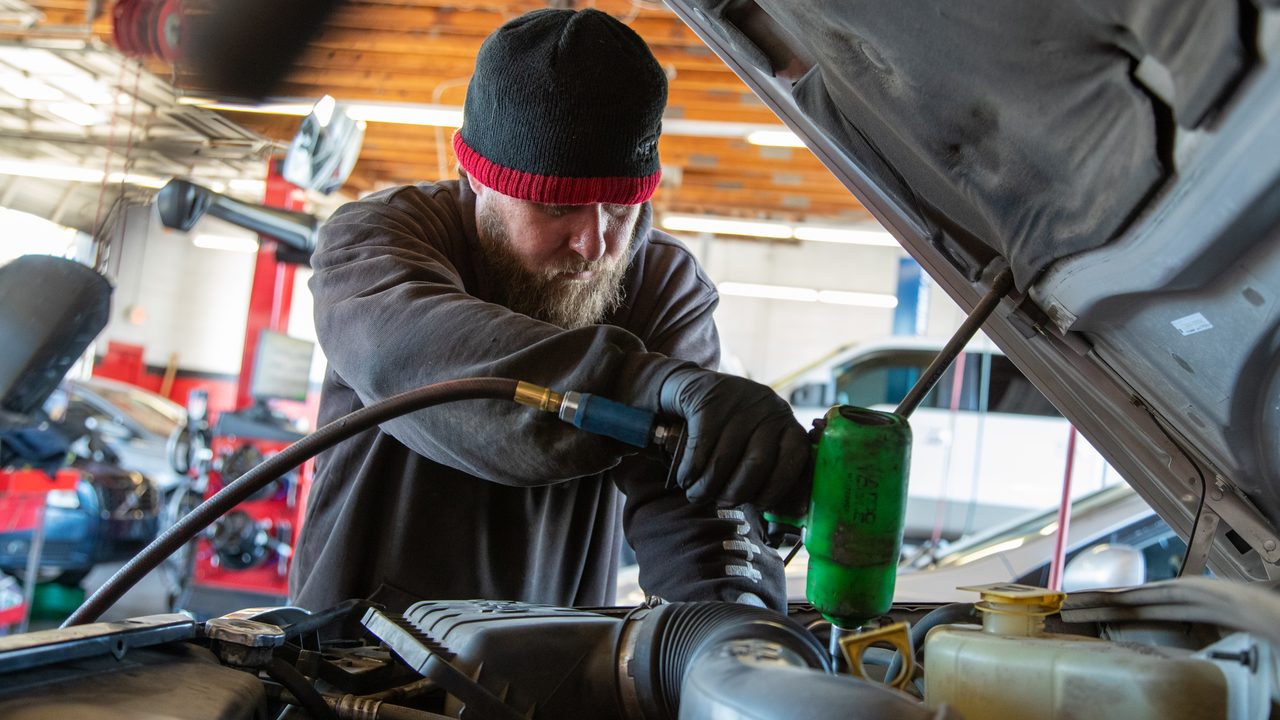
If your windshield keeps fogging up for no clear reason, the inside of your car smells faintly sweet, or your floorboard is damp even though it has not rained, a failing heater core is one of the first things a Mesa technician will check. It is a small part tucked deep in the dashboard, but when it fails it can leave you with a wet carpet, a cloudy windshield at the worst possible moment, and a coolant system that is slowly losing fluid you cannot see leaking anywhere obvious.
What a Heater Core Actually Does
The heater core is a small radiator mounted inside the dashboard, usually just behind the center console. Hot engine coolant flows through it, a blower motor pushes air across it, and that heated air comes out of your vents. It is the same basic principle as the radiator up front, just shrunk down and hidden where you cannot see it.
Because it carries pressurized coolant and sits inside a thin aluminum or copper-brass core, it is also one of the more fragile parts of the cooling system. Years of heat cycling, mineral buildup, and the constant expansion and contraction that comes with Arizona's summer-to-winter swings eventually take a toll on the seams and tubes.
A heater core does more than make the cabin warm on a rare Mesa cold morning. It is also part of the same closed cooling loop as your radiator, water pump, and thermostat, so a leak here reduces the coolant available to keep your engine itself from overheating.
5 Warning Signs of a Failing Heater Core
Most drivers notice one or two of these signs well before the core fails completely. Catching it early usually means a simpler repair and no damage to the carpet, wiring, or dashboard electronics underneath.
- A sweet smell inside the car. Coolant has a distinct sweet odor. If you smell it with the vents on, even faintly, coolant is leaking somewhere in the heater box behind your dash.
- Fog or a greasy film on the inside of the windshield. A small core leak sends coolant vapor straight into the defrost ducts. You will usually see a thin oily haze on the glass that smears instead of wiping clean with a dry cloth.
- A wet or damp carpet on the passenger side. The heater core and its housing sit just above the passenger footwell on most vehicles. A leak drips down from there, often pooling under the carpet before you notice it by sight.
- Weak heat, or heat that will not get hot. If the blower runs but the air never gets warm, or only warms up on one side of the car, the core may be clogged with scale or losing coolant faster than the system can replace it.
- Coolant level dropping with no visible puddle under the car. This is the sign drivers miss most often. If you keep topping off the coolant reservoir and there is no stain in the driveway, the leak is very likely inside the dash, not underneath the vehicle.
Why Heater Cores Fail Faster in the Mesa Heat
Arizona's climate is hard on the entire cooling system, and the heater core is no exception. Summer underhood temperatures push coolant through repeated heat-and-cool cycles every time you start the car, idle in traffic on the US 60, or sit at a light on Power Road. That constant expansion and contraction stresses the thin metal seams of the core over years of driving.
Hard water and old coolant add to the problem. As coolant breaks down past its service interval, it loses the corrosion inhibitors that protect the core's internal passages. Mineral deposits and rust particles build up inside the narrow tubes, which restricts flow, raises internal pressure, and stresses the weakest points in the core until a pinhole leak opens up.
Stop-and-go traffic on Mesa's major arterials like Gilbert Road, Power Road, and the US 60 corridor also means the engine spends more time at idle with the AC and systems running hard, which keeps underhood temperatures elevated longer than highway driving would.
None of this means Mesa drivers are destined for a heater core failure. It means the climate here simply shortens the margin for error on routine coolant service compared to milder climates, so a core that might last 12 years in a temperate state may show its first symptoms closer to the 8 to 10 year mark in the Valley.
Common Causes Behind a Failing Core
A handful of root causes show up again and again when a technician pulls a heater core out of a Mesa-area vehicle:
- Old, acidic coolant. Coolant that has not been flushed on schedule turns acidic over time and corrodes the core from the inside out.
- Mineral and scale buildup. Hard water mixed into coolant over the years, or coolant that was never fully flushed during a top-off, leaves deposits that clog narrow internal passages.
- Age and heat cycling. Most heater cores are rated for roughly 8 to 10 years of service. Past that point, metal fatigue from repeated heat cycles becomes the main failure mode regardless of maintenance history.
- A stuck heater control valve. On vehicles equipped with one, a valve that sticks open keeps full coolant pressure and flow through the core constantly, accelerating wear.
- Air pockets or trapped pressure. A cooling system that was not bled correctly after a prior repair can trap air that creates pressure spikes inside the core over time.
- A previous coolant flush that was skipped or delayed. Vehicles that miss one or more scheduled coolant services tend to show core problems earlier than those kept on a regular interval, since degraded coolant does its damage gradually and silently.
In many cases it is a combination of two or three of these factors rather than a single cause. A ten-year-old vehicle running on original coolant that has also had a sticking heater control valve for the last year is a textbook setup for a core failure, and it is exactly the kind of history a technician will ask about during diagnosis.
How a Shop Diagnoses a Heater Core Leak
Because the heater core is buried inside the dashboard, a shop cannot just glance underneath the car the way they would for a radiator or hose leak. Diagnosis usually follows a specific sequence:
| Step | What the Technician Checks |
|---|---|
| Visual and smell check | Inspect the carpet, floor mats, and lower dash panel for dampness, staining, or a sweet coolant odor concentrated near the vents |
| Pressure test | Pressurize the cooling system to see if the system holds pressure or drops, which narrows the leak to the heater circuit versus the main radiator loop |
| UV dye trace | Add a UV-reactive dye to the coolant, run the heater, then check the ductwork and footwell area with a UV light for a glowing trace of the leak point |
| Airflow and temperature check | Confirm the blower motor and blend door are working correctly so a separate issue is not mistaken for a core failure |
| Dash disassembly confirmation | On vehicles where the core is not visible without removing dash panels, partial disassembly confirms the leak location before ordering parts |
This is a professional, paid diagnostic service, not a guess. A proper pressure test and dye trace is the only reliable way to confirm a heater core leak instead of a hose, heater control valve, or a different coolant leak entirely.
What the Repair Involves
Heater core replacement is labor-intensive because of where the part sits. On most vehicles, the dashboard has to be partially or fully removed to access the heater box, which means disconnecting climate control wiring, airbag components, and trim panels before the core itself can even be reached.
The typical repair sequence includes:
- Draining the cooling system and disconnecting the heater hoses at the firewall
- Removing the dashboard, center console, or lower trim panels needed to access the heater box (the exact amount of disassembly depends on the vehicle)
- Opening the heater box and removing the failed core
- Installing the new core and resealing the heater box housing
- Reassembling the dash, reconnecting all wiring and trim
- Refilling the system with the correct coolant and bleeding air pockets out of the system
- Pressure testing the repair and confirming heat output at all vents before the vehicle leaves the bay
Because of the disassembly involved, this is one of the more time-consuming cooling system repairs a shop performs, which is also why catching the early warning signs matters. A confirmed diagnosis lets a technician plan the job correctly instead of discovering mid-repair that trim clips or additional components need attention.
Most heater core replacements are completed in a single visit once the part is on hand, and a technician will always confirm heat output at every vent and recheck for leaks after the refill before handing the keys back. Because the job involves working around airbag wiring and climate control modules behind the dash, it is not a repair worth attempting without the right trim tools and a clear torque sequence for reassembly.
Is It Urgent? Can You Keep Driving?
A heater core leak is not usually an immediate breakdown risk the way a snapped serpentine belt or a collapsed radiator hose is, but it should not be ignored for long. A few things to weigh:
- Fogged windshield is a visibility issue. A film on the inside of the glass that keeps returning after you wipe it is a real driving hazard, especially at night or in traffic.
- You are losing coolant you cannot see. A slow core leak still drains coolant from the same system that protects your engine from overheating. Running low on coolant for long enough can lead to a much more expensive engine repair.
- Coolant fumes inside the cabin are not something to tolerate. A sweet smell means you are breathing in vapor from an active leak every time the blower runs.
- Carpet and electronics underneath can be damaged by standing coolant. The longer a leak sits, the more likely it affects wiring harnesses or module connectors routed under the dash.
If you notice any of the five warning signs above, it is worth getting the cooling system pressure tested before a short trip to Queen Creek or Apache Junction turns into a tow call on the side of the road.
Heater Core vs. Other Common Coolant Leaks
A heater core leak gets confused with a few other common Mesa-area coolant issues, mainly because the end symptom, low coolant, looks the same from the driver's seat. A quick comparison helps explain why the location of the leak changes everything about how it is found and fixed.
| Leak Source | Typical Sign | Where It Shows Up |
|---|---|---|
| Heater core | Sweet smell inside the cabin, foggy windshield, damp passenger carpet | Inside the dashboard, no visible puddle under the car |
| Radiator | Puddle under the front of the car, steam from under the hood | Underneath the vehicle near the front bumper |
| Hose or clamp | Visible wet spot or crust along a rubber hose, hissing sound | Underneath or alongside the engine bay |
| Water pump | Coolant drip near the front of the engine, a whining or grinding noise | Front-center of the engine, below the pulley |
| Head gasket | White exhaust smoke, milky oil, overheating under load | No external puddle; coolant disappears into the engine |
If the leak you are dealing with matches the radiator, hose, or water pump pattern instead of a heater core, our coolant leak repair guide walks through those specific repairs.
What to Do Right Now
If you suspect a heater core leak, a few simple steps protect your vehicle until it can be looked at:
- Keep an eye on the coolant reservoir level and top it off with the correct coolant type if it is low, but do not keep topping off a leak indefinitely without having it checked.
- Run the defrost or AC instead of the heater when possible, since that reduces active flow and pressure through a leaking core.
- Check under the floor mats on the passenger side for dampness, which confirms the leak is inside the cabin rather than somewhere else in the engine bay.
- Book an appointment at /book-appointment-choose-location/ for a proper pressure test and UV dye trace rather than guessing at parts.
Why Choose Network Automotive
Network Automotive has been a family-owned shop since 1995, with ASE-certified technicians who see this exact failure pattern across Mesa's heat and driving conditions every season. Every heater core replacement is backed by a 24-month / 24,000-mile nationwide warranty, so you are covered well past the day you drive off the lot.
With six Arizona locations across Mesa, Gilbert, Apache Junction, Queen Creek, and Prescott, there is a shop near wherever your daily drive takes you, and the diagnostic approach is the same honest, pressure-test-and-confirm process at every one of them.
Service Area
Network Automotive serves drivers throughout the East Valley and beyond. Mesa customers can find full diagnostic and cooling system service details on our Mesa location page, and nearby drivers in Gilbert, Apache Junction, and Queen Creek are covered by the same team and warranty. If a heater core issue turns out to be part of a bigger overheating problem, our guide on car overheating repair in Mesa covers the rest of the cooling system, and our thermostat replacement guide is a good companion read if your temperature gauge has been acting up too.
Explore our full lineup of services or check current coupons before you book. Call (480) 444-0242 or visit /contact-us/ with any questions before your appointment.
Next step
Want this looked at by someone who does it every day?
Book online at any of our six Arizona shops, or call and talk to a real person. Family owned since 1995.