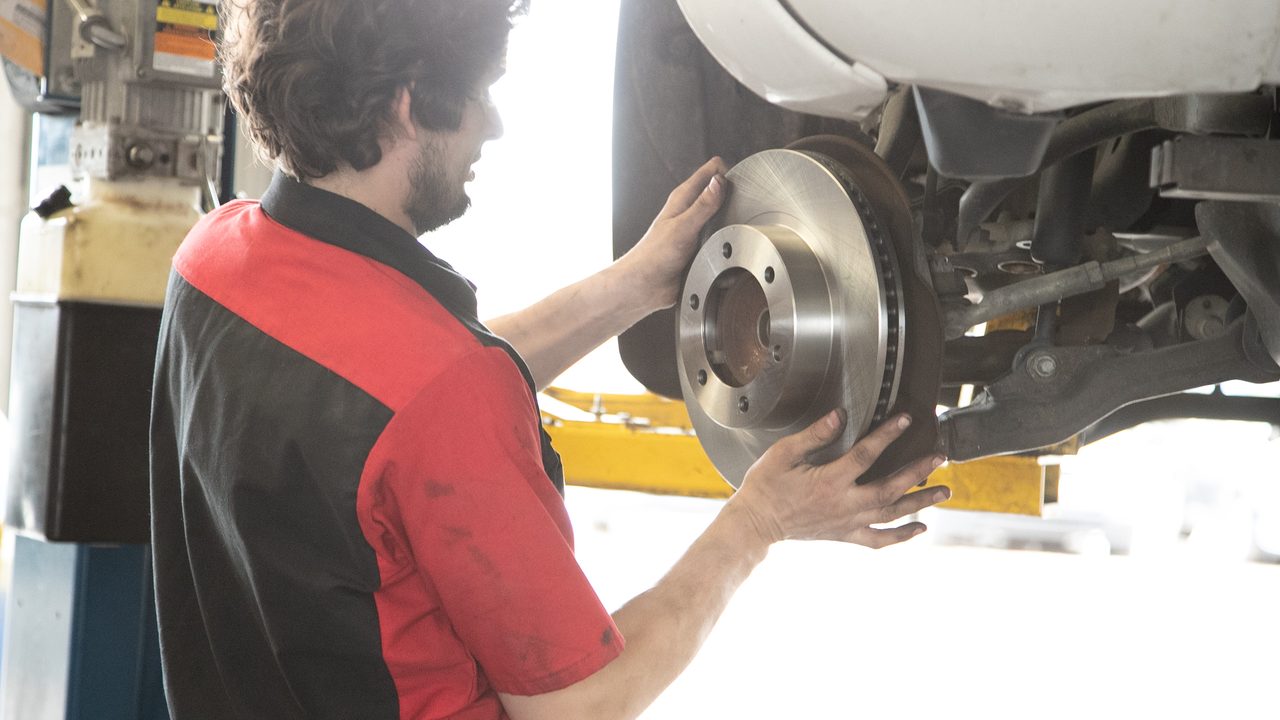
If your car is grinding at every stop, squealing through intersections on Higley, or the pedal feels soft on the descent off the US 60 — your brakes are telling you something you can’t afford to ignore. Gilbert driving is uniquely hard on brake systems: stop-and-go on Val Vista, Power Road construction backups, the stretch between Germann and Queen Creek Road that sees heavy commuter traffic every morning, and the heat. Always the heat. Arizona summers cook brake fluid, glaze pads, and warp rotors faster than almost any other climate in the country.
The good news: brake repair in Gilbert AZ doesn’t have to be expensive, mysterious, or take all day. At Network Automotive Service Center we do brake jobs every single day, on everything from Civics to F-350s to RAM 2500 diesels, and the majority of them finish same-day. This guide walks you through what’s actually happening under the wheel, what a proper inspection looks like, what brake pads and rotors should cost in 2026, and the specific symptoms that mean you should stop driving and call us right now.
92% of brake jobs we complete same-day when a vehicle is dropped off before 10 AM. Free inspection. Honest quote. No upsell.
What Brake Repair Actually Covers
“Brake repair” is a catch-all term, and it gets thrown around loosely by shops that want you to assume the worst. In reality, the work falls into a few very different categories, and the difference between them is often several hundred dollars.
Friction replacement is the most common. That’s new brake pads (and sometimes shoes, on older rear-drum setups), and in most cases new rotors as well. Modern pads and rotors are designed to wear together — most rotors you’ll see today are too thin to be resurfaced safely by the time the pads are due, especially on trucks and SUVs common in Gilbert. A proper brake job means pads and rotors together, not one without the other.
Hydraulic repair covers the fluid side of the system — the master cylinder, brake lines, flex hoses, and calipers. A seized caliper slider, a leaking wheel cylinder, a flex hose that’s ballooning on the inside — any of these can cause a soft pedal, uneven pad wear, or a pull to one side. These repairs are less common than pad-and-rotor jobs but equally critical, and they almost always require a full system bleed afterward.
ABS and electronic brake system work is the third bucket. Anti-lock sensors get coated with Gilbert’s alkaline road dust and fail one wheel at a time. Electronic parking brake actuators on newer vehicles can seize. Traction control modules occasionally need reflashing. These require a scan tool that can talk to each manufacturer’s brake module — something a lot of quick-lube shops simply don’t own.
At Network Automotive we handle all three. When you drop a car off for brake repair in Gilbert AZ, the inspection looks at every piece of the system — not just the two wheels you asked about — because brake symptoms lie. A grinding front can be a sticking rear caliper. A pulling left can be a worn-out flex hose. We find root causes, not just the squeaky pad.
Warning Signs & Common Causes
Your brakes will almost always tell you they’re going before they fail. The trick is reading the message correctly. Here’s how to decode what’s happening, and how urgent it is.
| Symptom | What’s likely wrong | Urgency |
|---|---|---|
| High-pitched squeal when braking lightly | Pad wear indicators contacting the rotor — time to replace pads | Schedule within 1–2 weeks |
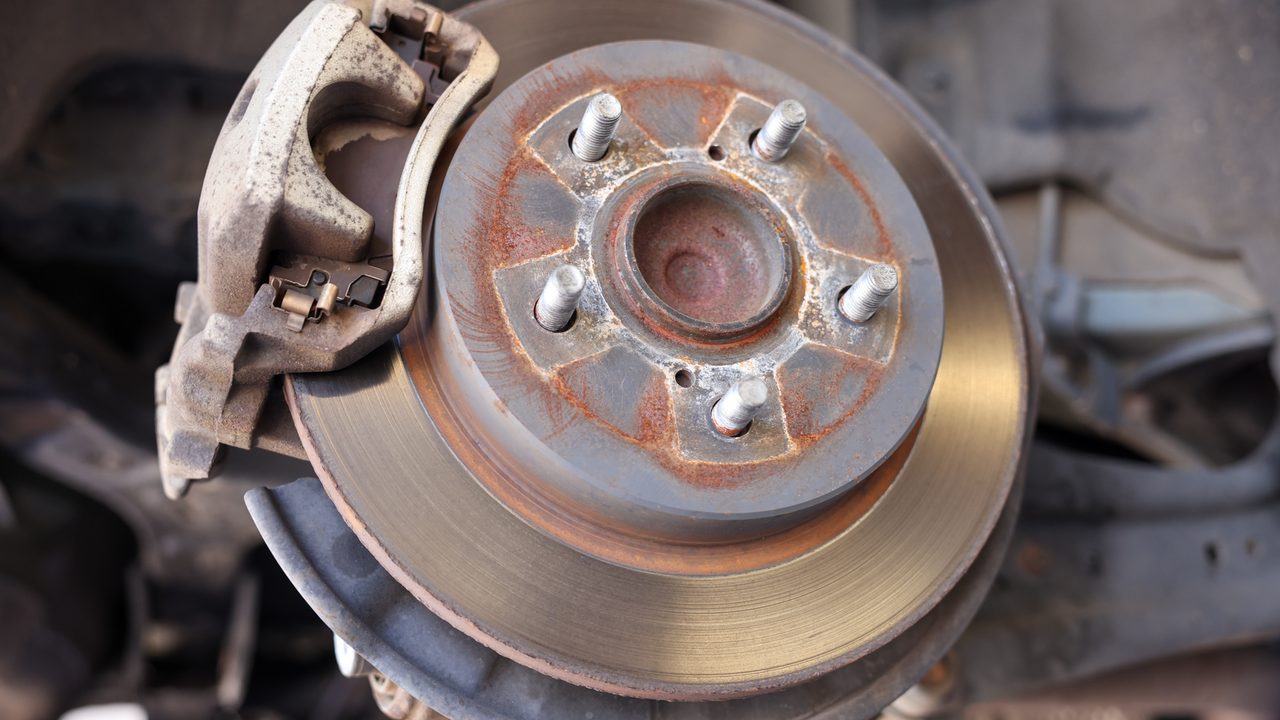
| Deep grinding / metal-on-metal noise | Pads are gone; rotor surfaces are being damaged by the backing plate | Do not drive — call today |
| Steering wheel shakes when braking at highway speed | Warped or uneven rotor thickness (common after AZ summer heat cycles) | Schedule within a week |
| Soft or sinking brake pedal | Air in lines, fluid leak, or failing master cylinder | Safety issue — call immediately |
| Car pulls to one side when braking | Seized caliper slider, collapsed flex hose, or uneven pad wear | Schedule within a few days |
| Red BRAKE or yellow ABS light on the dash | Low fluid, worn pads (some vehicles), ABS sensor failure | Scan + inspection this week |
| Burning smell after a long drive | Dragging caliper or stuck parking brake — rotors overheating | Stop driving — tow in |
A few of these deserve extra explanation because they’re easy to misread.
Squealing doesn’t always mean worn pads. In Gilbert we see a lot of morning squeal — a light rust flash on the rotor overnight from sprinkler mist or humidity that burns off after the first few stops. If the noise goes away within a mile, it’s almost certainly not a repair issue. If it persists every single stop, you’re hearing the wear indicator doing its job.
Shaking at highway speeds is usually rotor runout — the rotor surface isn’t perfectly flat anymore. In Arizona summers this often happens after a single hard stop from highway speed when the rotors are already red-hot from descending a steep grade (like the section of Loop 202 heading down into the valley). Once a rotor warps, resurfacing rarely brings it back long-term on modern thin-wall rotors. Replacement is the honest answer.
Soft pedal is the symptom we take most seriously. Compressed fluid behaves predictably. Air does not. If you step on the brake and the pedal sinks toward the floor, especially if it happens intermittently, stop driving and have the vehicle towed. A pedal that goes all the way to the floor in traffic is how rear-end collisions happen.
Quick self-check: Start your car, hold the brake pedal down firmly for about 30 seconds without the engine running. A healthy pedal stays firm. If it slowly sinks under your foot, you have a fluid leak or a failing master cylinder — neither of which should be driven on.
Our 7-Step Brake Inspection
Every vehicle that comes in for brake repair in Gilbert AZ goes through the same inspection, whether you scheduled a full replacement or just asked us to “take a look.”
- Road test. One of our technicians drives the vehicle on Gilbert Road or the 202 on-ramp to replicate the symptom you described. We note pedal feel, pull, noise, and any ABS activity.
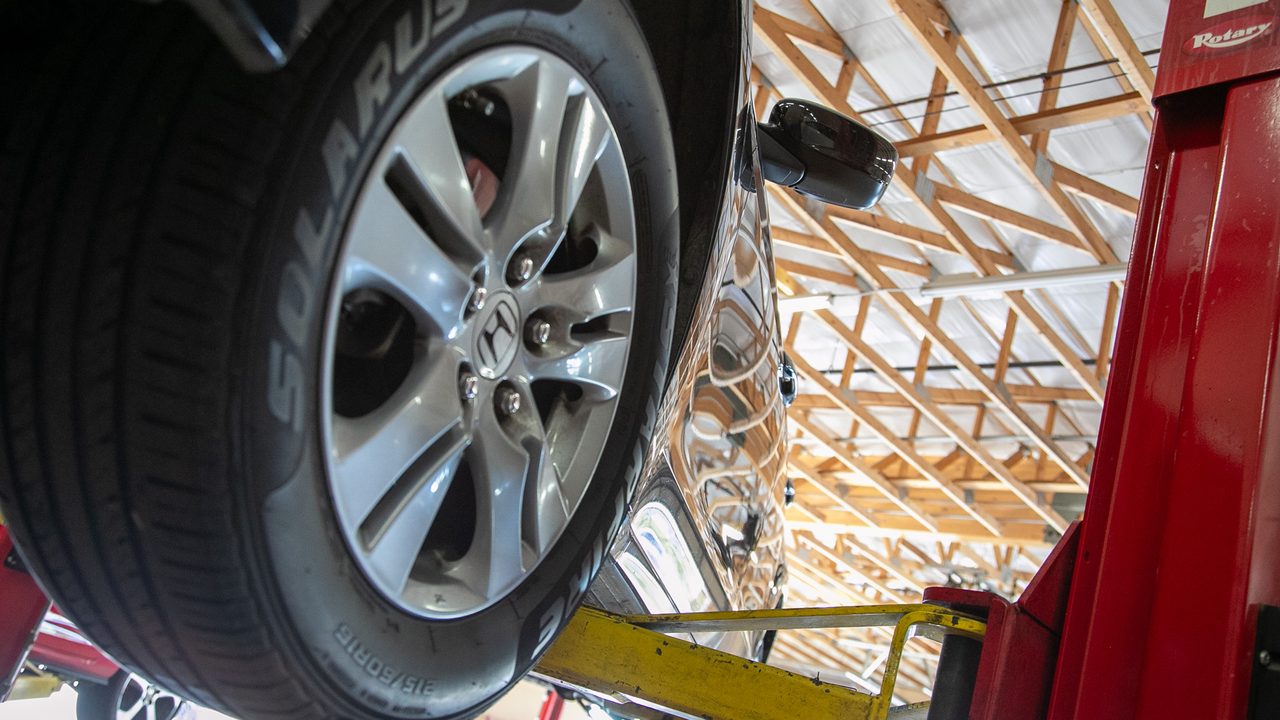
- Wheels off, visual inspection. All four wheels come off. We photograph pad thickness, rotor condition, caliper movement, and the brake fluid reservoir. You get those photos texted to you before any work is approved.
- Measurement. Pads are measured in millimeters (new is typically 10–12mm, replace-now is under 3mm). Rotor thickness is checked against the manufacturer’s minimum spec stamped on the hat.
- Hydraulic test. We pressurize the system and look for leaks at every line, hose, and caliper. Fluid moisture content is tested — anything over 3% water means a flush is needed.
- Scan + ABS check. A full scan of the ABS module catches stored codes that often don’t trigger the dash light but will hurt stopping performance in an emergency.
- Written quote. You get a plain-English estimate listing exactly what’s needed, what’s optional, what’s safe to defer, and the out-the-door total. No surprises, no “while we were in there” add-ons.
- Repair, test, confirm. Once approved, we replace components, bleed the system if needed, torque everything to spec, and road-test again before it goes back to you.
Cost & How Long It Takes
Brake pricing depends heavily on what the vehicle is and what the inspection finds, but here are the realistic ranges for brake repair in Gilbert AZ in 2026. These reflect quality parts — not the lowest-bid pads that glaze over in one Arizona summer.
- Front pads + rotors, most passenger cars: $295 to $475 out the door, including fluid top-off and labor.
- Rear pads + rotors, most passenger cars: $265 to $445 out the door.
- Half-ton trucks / large SUVs (F-150, Silverado, Tahoe): $425 to $650 per axle.
- 3/4 and 1-ton diesels (Cummins, Powerstroke, Duramax): $575 to $950 per axle depending on whether OE-spec or severe-duty pads are fitted.
- Brake fluid flush (recommended every 30–40k miles in AZ): $125 to $165.
- Caliper replacement (single): $265 to $475 including labor and bleed.
- ABS sensor replacement (single): $195 to $325 with scan-tool clearing.
How long does it take? A standard single-axle pad-and-rotor job is 90 minutes to two hours once the vehicle is in the bay. Both axles at once is about three hours. Caliper or hydraulic work adds 30–60 minutes for the bleed cycle. Diesel trucks take longer because the wheels and rotors are significantly heavier and the calipers are often bolted with higher torque specs. If you drop off before 10 AM, 9 out of 10 brake jobs are finished the same day.
Network Automotive backs every brake repair with a written nationwide warranty on parts and labor. If the pads you bought from us chirp, shudder, or wear prematurely inside the warranty window, bring it back — no fight.
When Is Brake Repair Urgent?
Most brake issues are annoyances that can wait a few days for a scheduled appointment. Some are genuine safety emergencies. Here’s the difference.
- Metal-on-metal grinding at every stop. The pad is gone. Every additional mile is gouging the rotor deeper and potentially the caliper piston.
- Pedal sinks to the floor. You have a fluid leak or a failed master cylinder. Do not drive. Tow in.
- Smoke or burning smell from a wheel. A caliper is dragging. The rotor is glowing hot. Continued driving risks wheel bearing damage, seized hubs, and in extreme cases, a brake fire.
- Red BRAKE warning light stays on. Different from the yellow ABS light — the red BRAKE light typically means critically low fluid or parking-brake engaged. If the parking brake is released and the light is still on, stop driving.
- Steering wheel fights you hard during braking. A stuck caliper or a collapsed flex hose — either can lock a wheel under emergency braking.
- Pedal feels different every time you press it. Air in the lines or a failing master cylinder. Unpredictable brake response in traffic is how rear-end collisions start.
Arizona heat warning: If you’ve been on a long downhill or towing heavy in the summer and then smell hot brakes, do not put cold water on the rotors. Thermal shock on a hot rotor will crack it. Park somewhere safe, pop the hood, and let the whole front end cool for 30 minutes before driving further. Summer brake fluid boil is one of the most common reasons Gilbert drivers end up in our tow bay.
What To Do Right Now
If something in this article made you say “yep, that’s what mine is doing” — here’s your next move.
- Write down when it happens. Only at highway speed? Only after sitting overnight? Only when the car is hot? The pattern tells us where to look first and saves you diagnostic time.
- Check your brake fluid reservoir. Under the hood, look for a small translucent tank labeled BRAKE. Fluid should be between the MIN and MAX lines and a light amber color. Dark brown or below MIN is a flag.
- Stop driving if you hear metal grinding. Every mile past that point costs you money in rotor damage that could have been a simple pad replacement.
- Call or book online. Call a Shop or book online. If the pedal is soft or you smell burning, tell us — we’ll fit you in as a safety priority.
- Plan for a drop-off, not a wait. A proper brake inspection and repair is a few hours. Grab a ride from a friend, drop the car, and we’ll text you when it’s ready.
Why Gilbert Drivers Pick Network Automotive
You have options for brake repair in Gilbert AZ. Here’s what actually makes a difference.
- Same-day service. Drop off before 10 AM, drive home before dinner. We keep common brake pads and rotors stocked for domestic, Japanese, German, and diesel applications.
- Photo documentation on every job. You see pad thickness and rotor wear with your own eyes. No guesswork, no “trust us.”
- Honest declines. If your pads still have 60% left, we’ll tell you. Nothing kills our reputation faster than upselling work that isn’t needed.
- ASE-certified technicians who work on diesels daily. See our full services list for diesel, fleet, and heavy-duty capability.
- Nationwide parts-and-labor warranty. Same coverage whether you’re in Gilbert or broke down in Oklahoma.
- Real shuttle service and free loaner options. We’ll get you home and back.
- Current coupons. Check our coupons page before booking — we rotate brake-specific offers seasonally.
- Family-owned since 1987. Read about us. We’re not a chain — the name on the building is the name of the people who actually run it.
Service Area & Gilbert Neighborhoods
Network Automotive is located a short drive from every corner of Gilbert. We serve drivers from:
- Gilbert: Power Ranch, Seville, Morrison Ranch, The Islands, Val Vista Lakes, Trilogy, Agritopia, Adora Trails, Layton Lakes, Finley Farms.
- Neighboring cities: Mesa, Chandler, Queen Creek, Apache Junction, Tempe, Ahwatukee.
- Easy access from: US 60, Loop 202 (Santan Freeway), Power Road, Val Vista Drive, Higley Road, Greenfield Road, and Gilbert Road.
Dropping off from the east side of Gilbert? Take the Santan east to Power Road, head north, and we’re minutes from the shop. Coming from the south or Queen Creek? Val Vista runs straight to us.
Next step
Want this looked at by someone who does it every day?
Book online at any of our six Arizona shops, or call and talk to a real person. Family owned since 1995.