Car Shaking When Braking Gilbert AZ? 5 Real Causes (2026)
Car Shaking When Braking Gilbert AZ: 5 Warning Signs Behind the Shudder (2026)
If your car shaking when braking Gilbert AZ has become a regular thing on the drive to the 202, it isn’t your imagination — and it isn’t something to keep ignoring.
You feel it first in the steering wheel: a rhythmic pulse every time you press the brake pedal coming off the 202 or slowing for a light on Val Vista. Car shaking when braking Gilbert AZ is one of the most common complaints we hear at our Gilbert-area service bay, and it’s rarely random. It’s almost always a mechanical symptom with a specific, findable cause — and in the vast majority of cases, it traces back to what’s happening at the rotors and pads under the extreme heat cycling that East Valley driving puts on a brake system.
Gilbert’s mix of long, fast arterial stretches (Val Vista, Greenfield, Higley) followed by dense stop-and-go around school zones and shopping centers is exactly the pattern that overheats rotors, cools them unevenly, and warps them out of true. Add 110-plus degree pavement for four months a year, and car shaking when braking Gilbert AZ starts showing up in cars far younger than their mileage would suggest.
This guide walks through what’s actually happening inside your brake system when that shudder shows up, the handful of causes our technicians see most often on Gilbert vehicles, what a real inspection looks like, and how to tell whether the shake you’re feeling is a next-appointment issue or a get-it-looked-at-today one. If you’ve already searched around and found conflicting advice about whether it’s the rotors, the pads, or something else entirely, that’s normal — car shaking when braking Gilbert AZ can have more than one cause, which is exactly why guessing over the phone doesn’t work.
What’s Actually Happening When Your Car Shakes
When a driver describes car shaking when braking Gilbert AZ, they’re almost always describing one of two distinct sensations, and the difference matters for diagnosis. The first is a rhythmic pulsing felt through the brake pedal and steering wheel that gets stronger the harder you brake — this is the classic sign of rotor thickness variation, where the rotor’s braking surface is no longer perfectly flat and parallel from one side to the other. The second is a lower-frequency shudder that shows up even before you touch the brake pedal, which points more toward suspension or wheel-bearing wear that braking simply makes more noticeable.
Rotors don’t warp from heat alone — steel can handle very high temperatures evenly. What actually happens is uneven heat distribution: hard braking heats one section of the rotor faster than the rest, and if the car then sits parked with the parking brake engaged or coasts through a cooldown at inconsistent speeds, that section cools unevenly too. Over enough heat cycles, the rotor develops microscopic high and low spots. Those high spots are what your brake pads catch on every single rotation, and that’s the pulse you feel. In Gilbert, where a 15-minute freeway run is routinely followed by a dead stop in a parking lot with 130-degree pavement radiating up into the wheel well, that heat-cycling stress happens faster than it would in a milder climate.
Pads play a supporting role in the same story. A brake pad that’s worn unevenly, glazed from repeated hard stops, or contaminated by leaking caliper grease won’t transfer braking force evenly across the rotor face, which can produce a similar pulsing sensation even on a rotor that hasn’t warped yet. That’s part of why a technician needs to inspect both the rotor and the pad together rather than assuming one is the culprit before recommending a repair for car shaking when braking Gilbert AZ.
Not Sure What’s Causing It?
Tell us what you’re feeling and where, and we’ll get you scheduled for a real brake inspection — not a guess.
Common Causes of Car Shaking When Braking
Car shaking when braking Gilbert AZ almost always comes down to one of a handful of root causes, and a proper inspection is what separates a $200 fix from an unnecessary $900 one. Here’s how our technicians sort through the possibilities during a brake inspection.
| Cause | What It Feels Like | What Confirms It |
|---|---|---|
| Warped rotors | Pulsing pedal and wheel, worse at highway speed, worse the harder you brake | Rotor thickness variation measured with a micrometer |
| Uneven pad wear / glazing | Vibration plus a burning smell, sometimes pulling to one side | Visual inspection of pad surface and caliper slide pins |
| Worn wheel bearing | Humming or grinding that changes with speed, shake present even off the brakes | Wheel bearing play test on a lift |
| Loose or worn suspension component | Clunk plus shake, worse over bumps and during braking | Suspension inspection of control arms, bushings, and tie rods |
| Warped or damaged wheel | Shake tied to speed, not directly to brake pedal pressure | Wheel runout check on a balancer |
The reason this list matters is that the fix is completely different depending on which one applies. Resurfacing or replacing a warped rotor does nothing for a worn wheel bearing, and no amount of new pads will fix a suspension bushing that’s let a control arm move where it shouldn’t. That’s why we don’t guess at car shaking when braking Gilbert AZ over the phone — we put the vehicle on a lift, pull the wheels, and measure.
Mileage isn’t a reliable predictor on its own. We’ve measured warped rotors on vehicles with under 30,000 miles that saw heavy stop-and-go commuting through Gilbert’s school-zone corridors, and we’ve seen original rotors still within spec past 70,000 miles on cars driven mostly on the open freeway with gentler braking habits. What matters more than the odometer is the heat history — how often the brakes have been worked hard, how quickly they’ve been allowed to cool, and whether the vehicle sits with hot rotors in direct summer sun between drives. That’s part of why two nearly identical vehicles in the same Gilbert neighborhood can have very different brake wear stories.
Our Brake Inspection Process
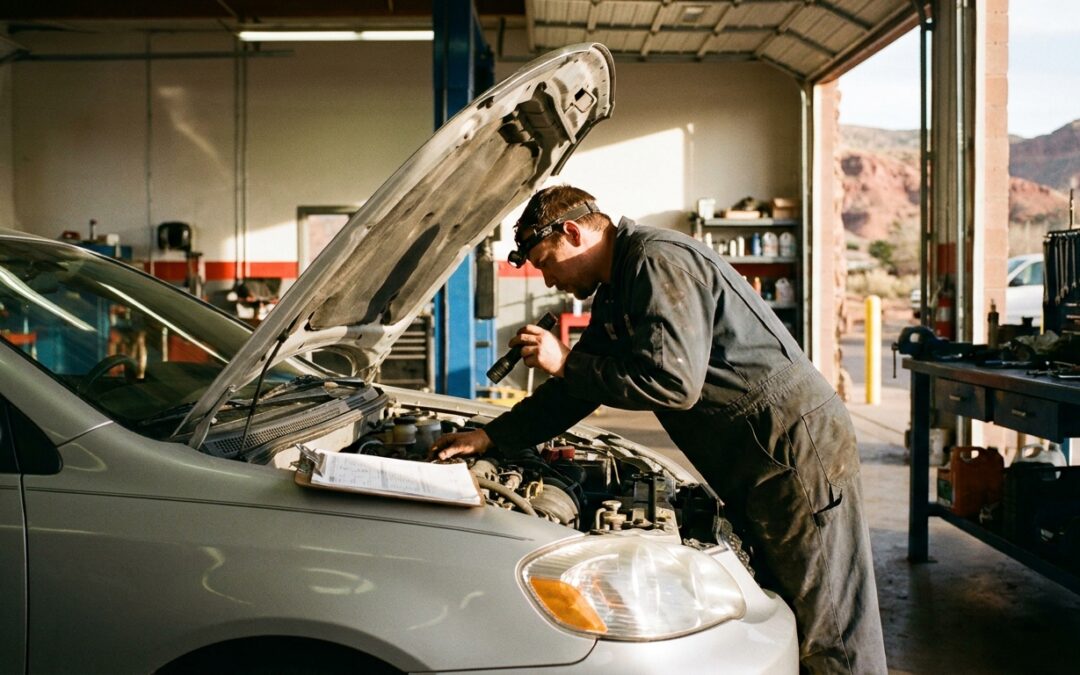
When you bring in a car for car shaking when braking Gilbert AZ, we don’t start by quoting a repair — we start by confirming exactly what’s happening and why. A rushed inspection is how shops end up replacing parts that were never the problem, which costs you money without fixing the shake. Here’s what our technicians actually walk through before recommending a repair:
- Test drive and symptom confirmation. We reproduce the shake at the speed and brake pressure you described, since where and how it shows up narrows the diagnosis considerably.
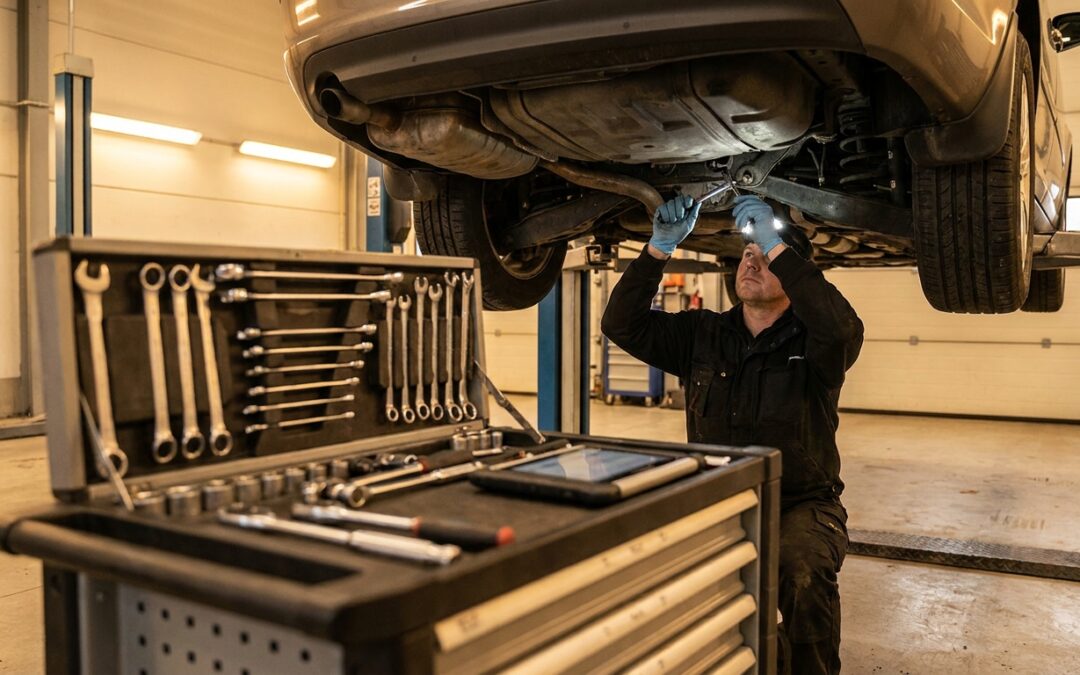
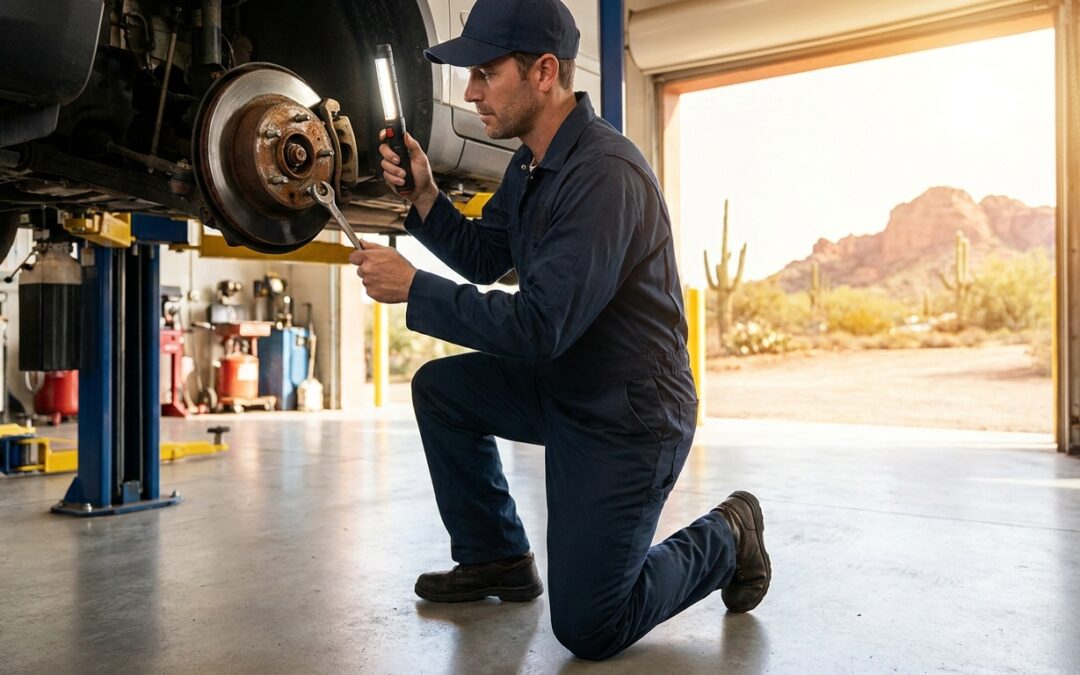
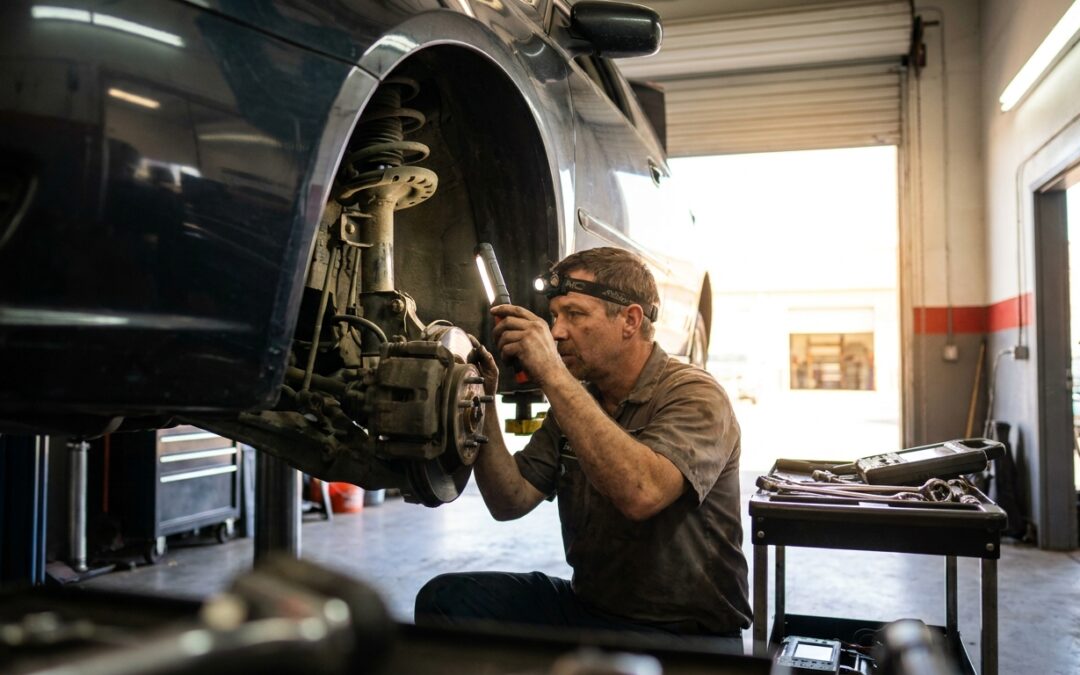
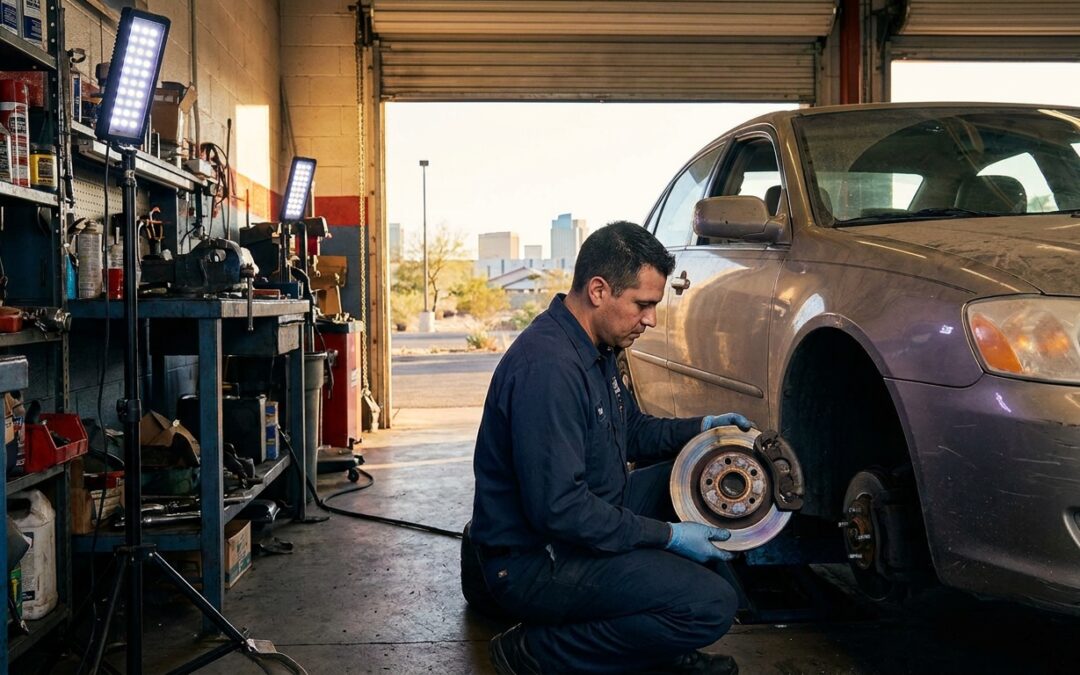
- Visual rotor inspection. We look for scoring, bluing (a sign of overheating), cracking, and uneven wear patterns on both faces of each rotor.
- Rotor thickness variation measurement. A micrometer measures the rotor’s thickness at multiple points around its circumference — this is the definitive test for warping, not a guess by eye.
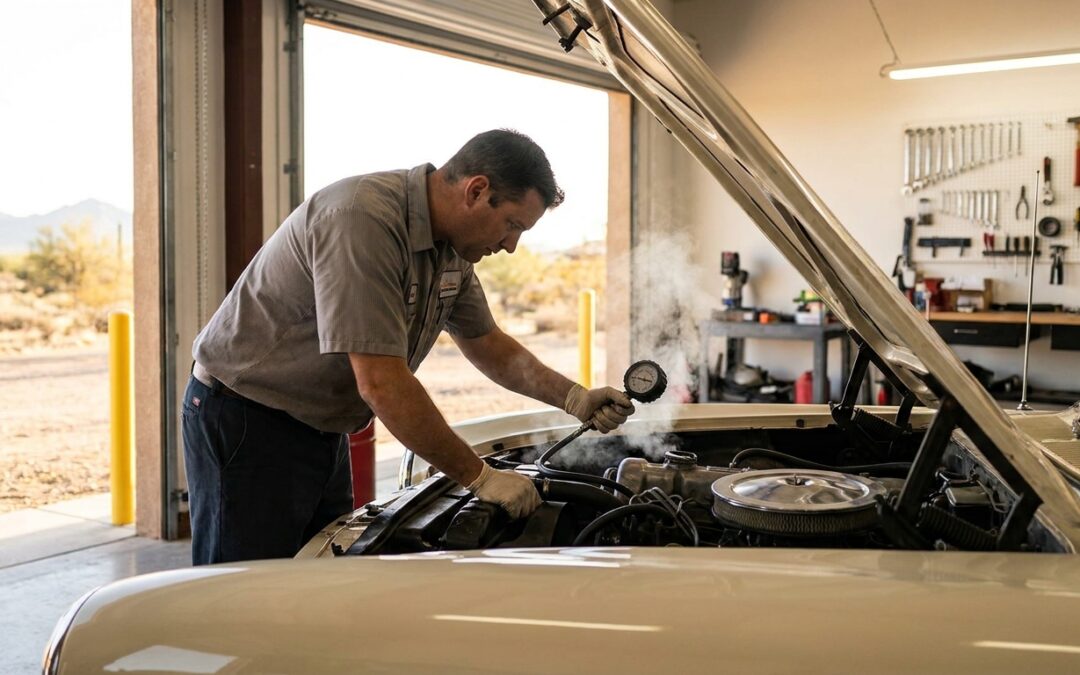
- Pad condition and caliper check. We check remaining pad material, look for uneven wear side-to-side, and confirm the caliper slide pins move freely and aren’t sticking.
- Wheel bearing play test. With the wheel off the ground, we check for excess play or grinding as the wheel is rotated and rocked.
- Suspension component check. Control arm bushings, tie rod ends, and strut mounts get inspected for looseness that could contribute to the shake.
- Brake fluid and hardware review. We check fluid condition and confirm hardware like anti-rattle clips and shims are in place and not contributing to vibration.
- Written findings and options. You get a clear explanation of what’s actually causing the car shaking when braking Gilbert AZ symptom, with repair options and honest pricing before anything is touched.
Cost & Time
Repair costs for car shaking when braking Gilbert AZ vary depending on which cause the inspection confirms, but here’s what Gilbert drivers can generally expect:
- Rotor resurfacing (when thickness allows): the most affordable option, typically same-day, though many rotors on modern vehicles are too thin to resurface and need replacement instead.
- Rotor and pad replacement (per axle): the most common repair for confirmed warping, usually completed same-day.
- Caliper service or replacement: needed when a sticking caliper is cooking pads unevenly or dragging on the rotor.
- Wheel bearing replacement: a longer job, typically requiring a day or scheduled appointment depending on the vehicle.
- Suspension component repair: timing depends on which part is worn; some are same-day, others require parts ordering.
We’ll never quote a price for car shaking when braking Gilbert AZ before the inspection confirms the cause — anything else is a guess, and guesses on brake repairs are how people end up paying twice.
Get an Honest Diagnosis, Not a Guess
Tell us about the shake and we’ll get your vehicle on the schedule for a proper inspection.
Is It Urgent? Know the Red Flags
Not every case of car shaking when braking Gilbert AZ needs to be treated as an emergency, but some symptoms mean you shouldn’t wait for a convenient appointment. Watch for these:
- The shake has gotten noticeably worse over the past week or two, not stayed the same
- You hear grinding, metal-on-metal noise, or a squeal that changes pitch with speed
- The brake pedal feels soft, sinks toward the floor, or takes longer to stop the car
- The vehicle pulls hard to one side when you brake
- You smell a strong burning odor after normal driving, not just after hard braking
- The steering wheel shakes violently, not just a mild pulse
It’s worth being honest about what “urgent” actually means here. A mild pulsation that’s been stable for weeks isn’t the same emergency as a shake that’s rapidly getting worse or is now accompanied by grinding metal-on-metal contact — the latter usually means the pads have worn through completely and the backing plate is contacting the rotor directly, which reduces stopping power and can score the rotor surface badly enough to require replacement instead of resurfacing. If you’re ever unsure which category your car shaking when braking Gilbert AZ symptom falls into, treat it as the more serious one until an inspection says otherwise.
What To Do Right Now
- Note when it happens. Is it every time you brake, only at highway speed, or only under hard braking? This detail speeds up diagnosis.
- Avoid riding the brakes on long downhill or freeway approaches. Extra heat buildup while you wait for your appointment only makes rotor warping worse.
- Don’t ignore a worsening trend. A shake that’s mild today and getting stronger week over week is telling you something is actively degrading.
- Schedule an inspection before it becomes a grinding noise. Catching car shaking when braking Gilbert AZ early is almost always the cheaper repair path.
- Bring us the details. Speed, frequency, and any accompanying sounds or smells help our technicians narrow the diagnosis before the car is even on the lift.
Why Gilbert Drivers Choose Network Automotive
Car shaking when braking Gilbert AZ deserves a real measurement-based diagnosis, not a parts-swapping guess. We’ve built our brake inspection process around exactly the kind of intermittent, hard-to-describe symptom that pulsation is — because “it shakes sometimes” is one of the harder complaints to chase down without the right equipment and a technician who knows what to test first. Here’s what sets our shop apart:
- ASE-certified technicians who measure rotor thickness variation instead of eyeballing it
- Straightforward, written findings before any repair begins — you approve the work, not the other way around
- Full brake and suspension repair services under one roof, so a wheel bearing or suspension finding doesn’t mean a second shop
- A shop built on long-term relationships with Gilbert and East Valley drivers — read more about our team
- Current service coupons to help offset the cost of brake work
Service Area
We regularly diagnose and repair car shaking when braking Gilbert AZ for drivers throughout the Gilbert area, including:
- Downtown Gilbert and the Heritage District
- Val Vista Lakes and Val Vista Classic
- Power Ranch and Higley
- Seville and Circle G Ranches
- Morrison Ranch and the Greenfield corridor
- Neighboring Mesa, Chandler, and Queen Creek drivers who work or commute through Gilbert
Gilbert Car Shaking When Braking FAQ
Why does my car shaking when braking Gilbert AZ get worse at highway speed?
Rotor thickness variation is speed-sensitive — the faster the rotor spins, the more times per second the high spots pass under the pad, which makes the pulsation feel stronger and faster at highway speed than it does creeping through a parking lot.
Is car shaking when braking Gilbert AZ safe to drive with for a few more days?
A mild, stable pulsation is usually safe for a short drive to your appointment, but if the shake is worsening, accompanied by grinding, or the pedal feels soft, treat it as urgent and get it inspected right away rather than waiting.
Can I just replace the pads instead of the rotors?
If the inspection confirms the rotors are within spec and the shake is caused by uneven pad wear or glazing, yes — but if rotor thickness variation is confirmed, new pads alone won’t stop the pulsation because the rotor surface itself is uneven.
Why does car shaking when braking Gilbert AZ happen more here than in other climates?
Gilbert’s combination of high ambient heat, hot pavement, and stop-and-go arterial traffic creates faster and more uneven heat cycling in rotors than milder climates see, which accelerates the warping process that causes pedal pulsation.
How long does a brake inspection for car shaking when braking Gilbert AZ take?
A thorough inspection covering rotors, pads, calipers, wheel bearings, and suspension components typically takes under an hour, and most confirmed rotor or pad repairs can be completed the same day.
Could it be my tires instead of my brakes?
Tire issues like uneven wear or a bent wheel usually cause a shake that’s present regardless of whether you’re braking, while a shake that clearly gets stronger as you press the pedal points toward the brake system specifically — our inspection checks both.
What happens if I keep driving and ignore car shaking when braking Gilbert AZ?
A warped rotor under continued heat stress tends to get worse, not better, and can eventually crack or wear unevenly enough to damage the caliper or reduce stopping performance, turning an affordable repair into a more expensive one.
Do you offer financing or coupons for brake repair?
Yes — check our current service coupons before your visit, and our team can walk you through available options when you schedule your inspection.
Stop Guessing About That Shake
Car shaking when braking Gilbert AZ has a real, findable cause. Get it measured and fixed right the first time.