You’re climbing out of the Prescott Valley on Highway 69 with a trailer behind you when it starts — a rough idle, a puff of black smoke under load, or a dash light that wasn’t there yesterday. Or maybe it’s 34°F at 6 a.m. and your truck cranks and cranks before it finally catches. If you’re searching “diesel repair Prescott AZ” right now because something feels off, this guide is for you.
At Network Automotive Service Center, we’ve been repairing diesel trucks for East Valley and high-country drivers since 1995 — Power Stroke, Cummins, and Duramax alike. Prescott-area customers bring us everything from daily-driver work trucks to rigs that haul horse trailers up Iron Springs Road every week, and diesel systems in this part of Arizona take a different kind of beating than they do down in the valley. This article walks through exactly what causes the most common diesel problems at elevation, what diesel repair Prescott AZ actually costs in 2026, how to tell a routine service from a genuine emergency, and what our technicians do when your truck is on the lift.
5,400 feet of elevation in Prescott means colder mornings, thinner air, and more sustained load on turbos, glow plugs, and fuel systems than the same truck sees running flat pavement in Phoenix or Mesa.
What’s Happening to Your Diesel
Modern diesel engines are built to handle heavy loads and long hauls better than almost any gas engine on the road — but they’re also more sensitive to a handful of specific stressors, and Prescott’s driving environment hits several of them at once. Cold mornings make glow plugs and fuel systems work harder just to get the engine started. Long climbs on grades like Highway 69, Iron Springs Road, and the run up toward Yarnell push turbochargers, EGR systems, and diesel particulate filters (DPF) into sustained high-load conditions that flat-valley commuting rarely produces. And a lot of Prescott-area diesels are working trucks — hauling trailers, hay, or construction gear — which multiplies fuel system and injector wear compared to a truck that only ever drives empty.
None of that means your truck is falling apart. It means diesel repair Prescott AZ follows a different maintenance curve than it does for the same truck in a flatland climate, and catching the early warning signs saves real money later.
The 5 Warning Signs You Shouldn’t Ignore
- Hard or extended cranking on cold mornings: Usually points to weak glow plugs, a failing glow plug relay, or fuel starting to thicken in cold temperatures.
- Black or gray smoke under acceleration: Often a sign of a dirty EGR valve, a failing turbo, or injectors delivering too much fuel for the air available.
- Loss of power on grades: A truck that used to pull Highway 69 fine and now bogs on the same climb is telling you something — commonly a clogged fuel filter, boost leak, or failing turbo.
- Check engine or “wrench” light with rough idle: Diesel-specific codes for EGR, DPF, injector balance, or DEF systems need a real diagnostic, not a guess.
- Fuel smell or visible leak near the tank or filter housing: Diesel fuel system leaks can worsen quickly and are a fire and drivability risk — don’t wait on this one.
Prescott drivers, remember: if you regularly haul trailers up Iron Springs Road or run the Highway 69 grade daily, get your fuel filters and glow plugs checked on a tighter interval than the factory schedule assumes. Sustained climbs and cold starts age diesel components faster than mileage alone suggests.
Common Causes & How Diesel Systems Work
A diesel engine doesn’t use spark plugs to ignite fuel — it relies on high compression to heat the air enough that injected fuel ignites on its own. That makes diesel engines more durable under load, but it also means fuel quality, injector precision, and air delivery (turbo boost, EGR, DPF) all have to work together perfectly. When one part of that system drifts out of spec, the others compensate until they can’t anymore — which is why diesel problems often show up gradually as reduced power or rough idle before they show up as a full breakdown.
| System | What It Does | Common Prescott-Area Failure |
|---|---|---|
| Glow Plugs | Preheat cylinders for cold starts | Slow starts on sub-40°F mornings; failed relay |
| Fuel Filter / Water Separator | Removes water and debris from diesel fuel | Clogging from condensation during cold nights |
| Turbocharger | Forces extra air into cylinders for power | Boost leaks and bearing wear from sustained grade climbs |
| EGR / DPF | Recirculates exhaust, traps soot for emissions | Clogging from short trips and low-load city driving |
| Fuel Injectors | Deliver precise, high-pressure fuel spray | Wear from fuel quality and high mileage towing |
The most common mistake we see is a driver — or a shop — treating a symptom instead of the system. Clearing a DPF code without finding out why the filter clogged just means it clogs again in a few thousand miles. A proper diesel repair Prescott AZ job traces the symptom back to the actual cause before any parts get replaced.
Turbochargers deserve a special mention here, because they’re one of the parts most affected by Prescott’s combination of elevation and grade. Thinner air at 5,400 feet means the turbo has to spin harder to force the same amount of air into the cylinders that it would at sea level, and a long, sustained climb like the run up Highway 69 keeps that turbo working at high boost for minutes at a time instead of the short bursts a flat-city commute produces. Over years of towing and climbing, that adds up to more wear on turbo bearings and boost hoses than the same truck would see running errands in Phoenix. It’s not a defect — it’s just the environment the truck operates in, and it’s exactly why we check boost pressure and hose condition on every diesel repair Prescott AZ diagnostic, even when the customer’s complaint is something else entirely. For more on how modern diesel emissions and turbo technology works, the Diesel Technology Forum publishes plain-language explainers worth a read.
Our Diesel Repair Process
Here’s exactly what happens when you bring your diesel in for service at Network Automotive. No smoke, no mirrors — just the real workflow, whether you’re here for a routine fuel filter swap or a full diesel repair Prescott AZ diagnostic after a loss of power.
- Intake & history. We ask what you’re noticing, when it started, and how the truck is used — towing, commuting, or both.
- Full diagnostic scan. We pull manufacturer-specific codes, freeze-frame data, and live sensor readings, not just a generic parts-store scan.
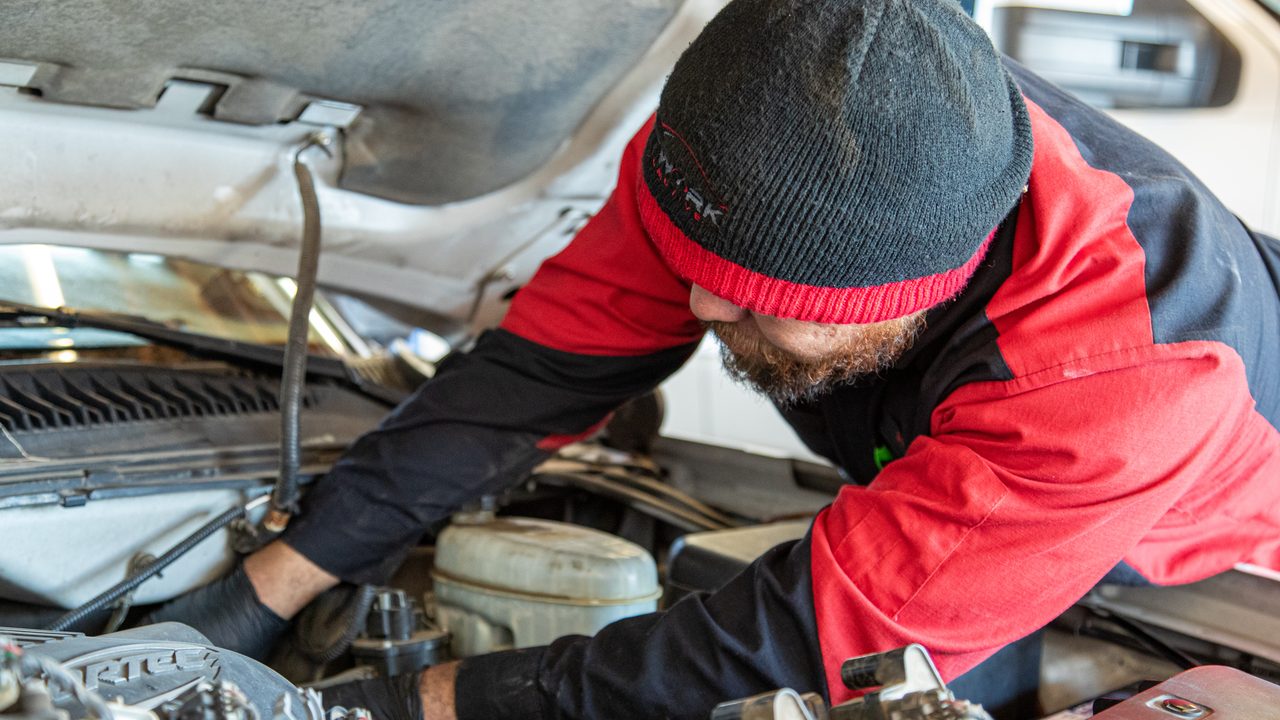
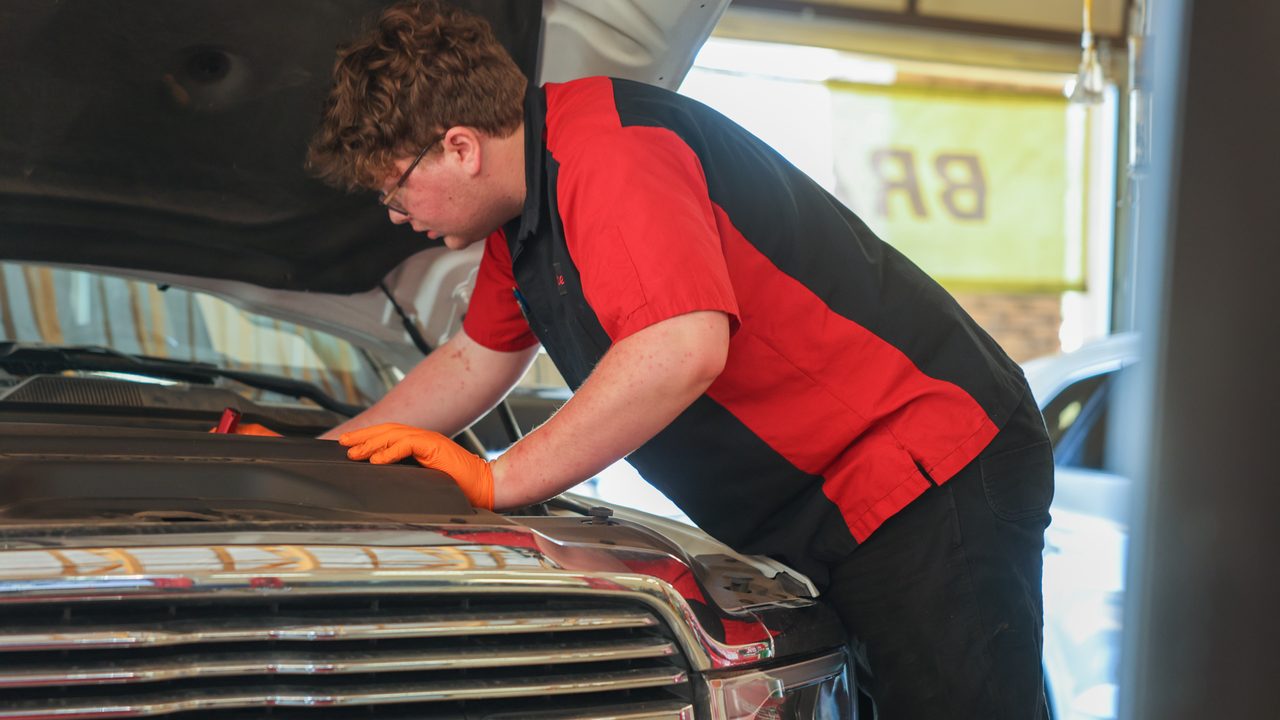
- Visual & physical inspection. Glow plugs, fuel filter, boost lines, and injector connectors get a hands-on check, not just a computer read.
- Road test (when needed). Grade and load-related complaints often only show up under real driving conditions, so we test accordingly.
- Written estimate. You get a clear, itemized quote before any work begins — no surprise charges at pickup.
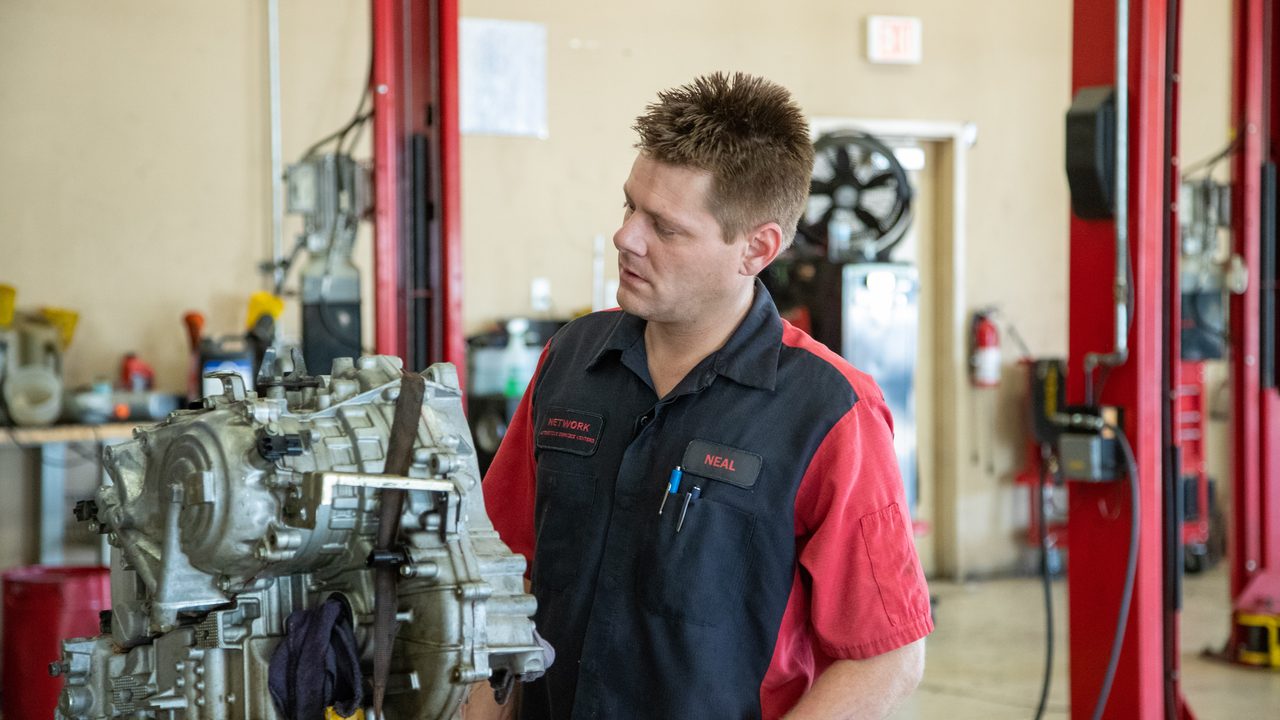
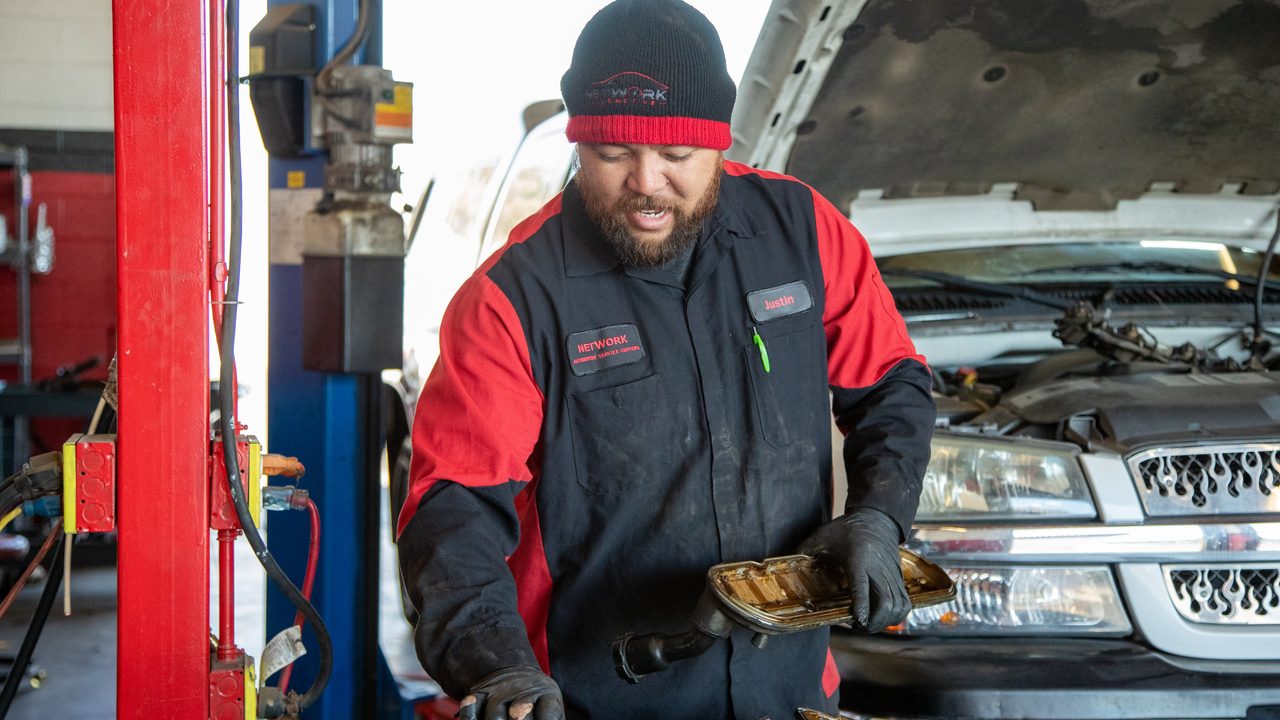
- Repair. Certified technicians perform the work using quality parts matched to your specific engine — Power Stroke, Cummins, or Duramax.
- Post-repair verification. We re-scan and, when relevant, road test again to confirm the original symptom is actually resolved.
- Walkthrough. We explain what we found and what we did in plain language, plus what to watch for going forward.
What Does Diesel Repair Cost in Prescott, AZ?
Diesel repair costs vary more than gas engine repair because parts and labor differ significantly between Power Stroke, Cummins, and Duramax platforms, and because diesel components are simply built heavier and priced higher. Here’s a realistic 2026 range for the repairs we see most often in the Prescott area:
- Full diagnostic scan: $150 to $280, quoted up front and often credited toward the repair.
- Fuel filter / water separator service: $120 to $220.
- Glow plug set replacement: $350 to $650 depending on engine platform and access.
- EGR or DPF cleaning service: $450 to $1,200 depending on severity and whether a filter replacement is needed.
- Fuel injector replacement (single): $600 to $1,400 depending on platform.
- Fuel injector set replacement: $1,800 to $4,500 depending on platform and labor access.
- Turbocharger replacement: $1,800 to $3,500 installed.
- DEF system repair: $250 to $900 depending on the failed component.
Every quote for diesel repair Prescott AZ customers receive from us is written before any work starts. If we find something unexpected once the truck is on the lift, we call before proceeding — never after. Most diagnostic and single-component repairs are same-day; larger jobs like injector sets or turbo replacement typically take one to two days depending on parts availability.
A lot of Prescott customers ask whether it’s cheaper to wait until a small issue becomes a bigger one. It almost never is. A fuel filter that’s starting to restrict flow costs a couple hundred dollars to replace on its own schedule; the same clogged filter left alone can starve an injector of clean fuel and turn a $180 part into a $1,500 repair. That’s the pattern behind most of the expensive diesel repair Prescott AZ jobs we see — a cheap early fix that got put off until it wasn’t cheap anymore.
When Is It Urgent? Safety Warnings for Prescott Drivers
Not every diesel symptom needs an emergency same-day appointment — but some absolutely do, especially when you’re regularly running mountain grades or towing.
- Loss of power mid-climb: A truck that suddenly can’t hold speed on a grade with a trailer attached is a safety issue, not just an inconvenience.
- Heavy black or blue smoke: Blue smoke especially can indicate oil being burned alongside fuel — get it checked before a short trip turns into a tow.
- Fuel smell in the cabin or near the tank: Stop driving and have it inspected. Diesel leaks near hot exhaust components are a fire risk.
- Overheating on a climb: Diesel engines under heavy load generate significant heat — if your temp gauge climbs on a grade, pull over and let it cool before continuing.
What to Do Right Now
- Note exactly what you’re seeing. Smoke color, when it happens (cold start vs. under load vs. idle), and any dash lights.
- Check the obvious first. Fuel level, oil level, and whether the DEF tank is full if your truck uses one.
- Don’t keep cranking a truck that won’t start. Repeated cranking on a cold morning can drain the battery and strain the starter unnecessarily.
- Call ahead. Describe the symptom to us at Call a Shop so we can plan the right diagnostic before you arrive.
- Get a written diagnostic, not a guess. A proper scan and inspection beats swapping parts based on a hunch.
- Ask for the estimate in writing before any repair work begins.
Why Prescott Drivers Choose Network Automotive
We know you have options for diesel repair Prescott AZ drivers can choose from, including dealerships and specialty diesel shops. Here’s what consistently brings Prescott-area drivers to Network Automotive:
- Family-owned since 1995. Same trucks, same families, same mechanics across the East Valley and high-country Prescott region for three decades.
- Certified technicians experienced across Power Stroke, Cummins, and Duramax platforms.
- Written estimates before work begins — no surprise charges at pickup.
- 24-month / 24,000-mile nationwide warranty on parts and labor.
- Straight answers, not upsells. If your truck doesn’t need the repair, we’ll tell you.
Learn more about our full lineup of auto repair services, get to know the shop on our about page, or check current service coupons before you book.
Prescott & Surrounding Service Area
Network Automotive serves customers throughout the greater Prescott region and surrounding communities for diesel repair and every other service we offer. If you’re driving in from any of these areas, we can help:
- Prescott — Including downtown, Prescott Lakes, Hassayampa Village, and Forest Trails
- Prescott Valley — Including Glassford Hill, Viewpoint, and Long Valley areas
- Dewey-Humboldt — And surrounding rural properties
- Chino Valley — North of Prescott along Highway 89
- Wickenburg — Via Highway 93 for drivers in the far western service area
Not sure if we cover your area for diesel repair Prescott AZ service? Call Call a Shop and we’ll tell you straight. We also serve customers in our primary East Valley locations including Mesa, Gilbert, Apache Junction, and Queen Creek — the same team handling diesel repair Prescott AZ trucks handles every one of those service areas too.
Next step
Want this looked at by someone who does it every day?
Book online at any of our six Arizona shops, or call and talk to a real person. Family owned since 1995.