When the vents in your car suddenly go silent or the air turns to a weak whisper no matter what setting you choose, the problem usually is not your air conditioner or heater at all. It is the blower motor, the small electric fan that pushes air through your dash and out the vents. Gilbert drivers notice this fast, because a car that cannot move air in the Arizona heat stops being a car you want to sit in.
This is a different problem than a failing A/C compressor or a low refrigerant charge. The air coming out of the vents can be perfectly cold or perfectly warm and you still will not feel it if the blower motor cannot spin the fan. Here is what is actually failing, why it happens more in a Gilbert summer, and what a real repair looks like.
What the Blower Motor Actually Does
The blower motor sits behind the dashboard, usually tucked under the passenger side or behind the glovebox, depending on the vehicle. It spins a small plastic fan wheel called a squirrel cage, and that wheel is what pushes air across the A/C evaporator or the heater core and out through your vents, defrost, and floor outlets.
Your climate control system can do everything right, heat the coolant, chill the refrigerant, open and close the right doors inside the HVAC box, and none of it matters if the blower motor cannot turn the fan. A failing blower motor is a car problem, not a home comfort problem. If you searched for this because a furnace technician could not help, that is expected. A car's blower motor is a completely different part, smaller, mounted differently, and wired into your vehicle's fuse box and climate control module instead of a home electrical panel.
5 Warning Signs Your Blower Motor Is Failing
Blower motors rarely fail without warning. Gilbert drivers usually notice one or more of these signs in the weeks before the fan goes silent for good.
- Weak airflow on every setting. You turn the fan to its highest setting and barely feel a breeze, even though the system used to blast air at that setting.
- A grinding, clicking, or squealing noise from behind the dash. This usually means the motor's bearings are wearing out or the fan wheel is hitting something, often leaves or small debris pulled in through the cabin air intake.
- The fan only works on certain speeds. If high and medium work but low does nothing, or only the highest setting does anything at all, the blower motor resistor or control module is usually the actual failure point, not the motor itself.
- Air cuts in and out while driving. Intermittent airflow that comes and goes, especially over bumps, points to a loose connector or worn motor brushes losing contact.
- No air at all, on any setting, for A/C, heat, or defrost. This is a dead blower motor, a blown fuse feeding it, or a failed blower motor relay. All three need a real diagnosis to tell apart.
Why Gilbert's Heat and Dust Wear Blower Motors Out Faster
A blower motor runs almost nonstop in a Gilbert summer. From May through September, most drivers run the A/C fan on medium or high for nearly every mile, and that constant duty cycle adds up to thousands of extra hours of motor run time compared to a car in a milder climate.
Heat soak under the dash makes it worse. After a car sits in a Gilbert parking lot at 115 degrees, the cabin air intake and the plastic housing around the blower motor reach temperatures that accelerate wear on the motor's internal bearings and brushes. Dust is the other half of the problem. Fine desert dust gets pulled in through the cabin air filter and intake housing, and over time it works its way into the motor's bearings, turning a smooth spin into a gritty, noisy one.
Stop-and-go traffic on arterials like Val Vista Drive, Gilbert Road, and the 202 adds constant vibration while the motor is already under heavy load. None of this means a blower motor is destined to fail early, but it does mean Gilbert drivers see this failure more often, and sooner, than drivers in cooler, cleaner climates.
Age and mileage still matter too. Most blower motors are rated to last the life of the vehicle under normal conditions, but "normal conditions" assumes far less fan runtime than a Gilbert commute actually produces. A car that spends most of its life with the A/C fan running on high for eight or nine months a year is putting more hours on that small motor than the manufacturer's testing likely accounted for, which is part of why this repair shows up earlier here than it does in the owner's manual's expected service intervals.
Blower Motor, Resistor, Fuse, or Relay: How to Tell Them Apart
Four different parts can cause the exact same symptom, dead or weak airflow, and from the driver's seat they all look identical. The table below shows the pattern each failure usually leaves behind, which is a useful starting point before a technician confirms it with a voltage test.
| Symptom pattern | Likely cause | Typical fix |
|---|---|---|
| No airflow on any fan speed, no sound at all | Blown fuse or failed blower motor relay | Replace fuse or relay, then confirm the motor draws normal current |
| Fan works on high only, nothing on low or medium | Failed blower motor resistor | Replace the resistor module |
| Grinding, clicking, or rattling noise from behind the dash | Worn motor bearings or debris in the fan wheel | Replace the motor and fan wheel, clear the housing |
| Airflow cuts in and out while driving, especially over bumps | Worn motor brushes or a loose connector | Replace the motor or repair the connector |
| Weak airflow on every setting, no unusual noise | Clogged cabin air filter or a tired, aging motor | Replace the filter first, then test the motor if airflow is still weak |
None of these are things to diagnose by trial and error, since a fuse and a motor cost very different amounts to replace, and a misdiagnosis means paying for a part that was never the problem.
How We Diagnose a Blower Motor Problem
Weak or missing airflow has more than one possible cause, and guessing leads to replacing parts that were never broken. A proper diagnosis starts with checking the easy things first: the cabin air filter, the fuse for the blower circuit, and the blower motor relay, since any of the three can mimic a dead motor for a fraction of the cost.
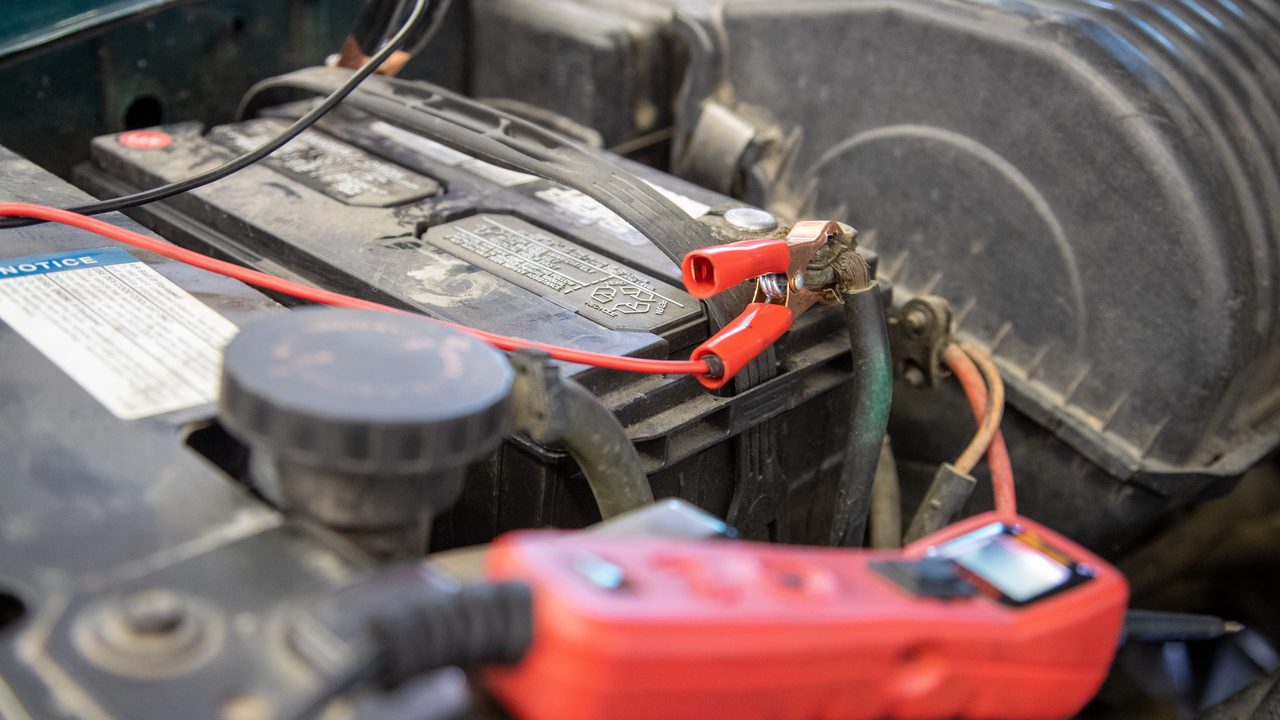
From there, a technician checks voltage at the motor connector with the fan on every speed setting. If the motor is getting full voltage and still will not spin, or spins weakly, the motor itself is the problem. If voltage drops out on certain speeds but not others, the blower motor resistor, a small part that controls fan speed by limiting current, is usually the culprit. A scan tool check on newer vehicles with electronically controlled blower modules can also pull stored fault codes tied to the HVAC control module itself.
This step-by-step process is what separates a real repair from a parts-swap guess. Diagnostic time is a paid service here, quoted upfront before any work begins, because tracing electrical faults correctly takes real time with a multimeter and a wiring diagram, not a quick look under the dash.
What Blower Motor Replacement Actually Involves
Once the motor itself is confirmed as the failure, replacement means accessing the HVAC housing, which on most vehicles sits behind the glovebox or under the dash on the passenger side. The glovebox, lower dash panels, and sometimes the blower motor resistor module have to come out first to reach the mounting screws.
The old motor and its fan wheel come out as one assembly on most vehicles. The new motor gets the fan wheel transferred or replaced if it is cracked or unbalanced, since a damaged fan wheel will cause the same noise and airflow complaints even with a brand new motor installed. The connector gets a close inspection for corrosion or melted pins, a common side effect of a motor that was drawing too much current before it failed.
After the new motor is in, the system gets tested on every fan speed, confirming smooth, quiet operation with no electrical warning lights before any panels go back together. On some vehicles this is a straightforward hour of work. On others, where the dash has to come apart further to reach the housing, it takes longer. Either way, it is not a job that benefits from rushing, since a poorly reseated connector is one of the most common comebacks for this repair.
The cabin air filter typically gets replaced at the same time, since it is already exposed during this job and a fresh filter protects the new motor from the same dust exposure that likely contributed to the original failure. It is a small add, but skipping it means paying for access to that area twice instead of once.
Can You Keep Driving With a Bad Blower Motor?
A weak or dead blower motor will not strand you on the side of the road, so it is not an emergency repair the way a brake or steering failure is. But in Gilbert, driving without working cabin airflow is a real comfort and safety issue, not just an inconvenience.
Without A/C airflow in summer, cabin temperatures climb fast enough to be genuinely dangerous on longer drives, especially with kids, pets, or anyone with a heat sensitivity in the car. Without defrost airflow in the cooler months, fogged or frosted windshields on an early morning drive become a visibility problem. Neither situation is one to put off indefinitely, even though neither will leave you stranded today.
There is also a cost reason not to wait. A blower motor that is overheating or drawing excess current from worn bearings can take out the blower motor resistor or blow fuses repeatedly, turning a single-part repair into a multi-part one if it sits unaddressed.
There is one situation that does need prompt attention rather than a wait-and-see approach: a burning smell along with weak or dead airflow. That combination can point to an overheating motor or a melting connector, and continuing to run the fan on any setting in that case risks more than just the blower circuit. If you notice heat, melting plastic, or a burning smell anywhere near the dash vents, stop running the fan and get the car looked at.
What to Do Right Now
If your vents have gone quiet or weak, start by checking your cabin air filter yourself, since a severely clogged filter can choke airflow and mimic a failing motor, and it is a cheap, fast thing to rule out. If the filter looks normal, or you are already hearing grinding or clicking from behind the dash, it is time to get it looked at.
Book an appointment at /book-appointment-choose-location/ or call (480) 444-0242 to get a straight answer on whether it is the motor, the resistor, a fuse, or a relay before anything gets replaced.
Why Choose Network Automotive
Network Automotive has been family owned and operated since 1995, and that kind of longevity in the Valley comes from fixing things right the first time, not from guessing and hoping. Our ASE-certified technicians diagnose electrical and HVAC airflow problems with the right tools, not by swapping parts until something works.
Every repair is backed by a 24-month / 24,000-mile nationwide warranty, so a blower motor replacement done here travels with you, whether you are driving across town or across the country. Our team sees Gilbert's heat-and-dust failure pattern often enough to know exactly what to check first, which keeps your diagnostic time, and your bill, as short as the problem allows.
Service Area
We work on vehicles across the East Valley, with convenient options near /auto-repair-gilbert-az/, /auto-repair-mesa-az/, and /auto-repair-queen-creek-az/. Whichever location is closer to your daily route, our team runs the same diagnostic process before recommending a repair. See all of our /services/, or check current /coupons-network-automotive-service-center/ before you book.
If your symptoms sound more like warm air than no air, our guide on car AC blowing hot air in Gilbert covers the refrigerant and compressor side of the system. If you are also dealing with electrical issues elsewhere in the car, our posts on why your car battery keeps dying and starter replacement warning signs cover two of the other most common Gilbert electrical complaints.
Next step
Want this looked at by someone who does it every day?
Book online at any of our six Arizona shops, or call and talk to a real person. Family owned since 1995.