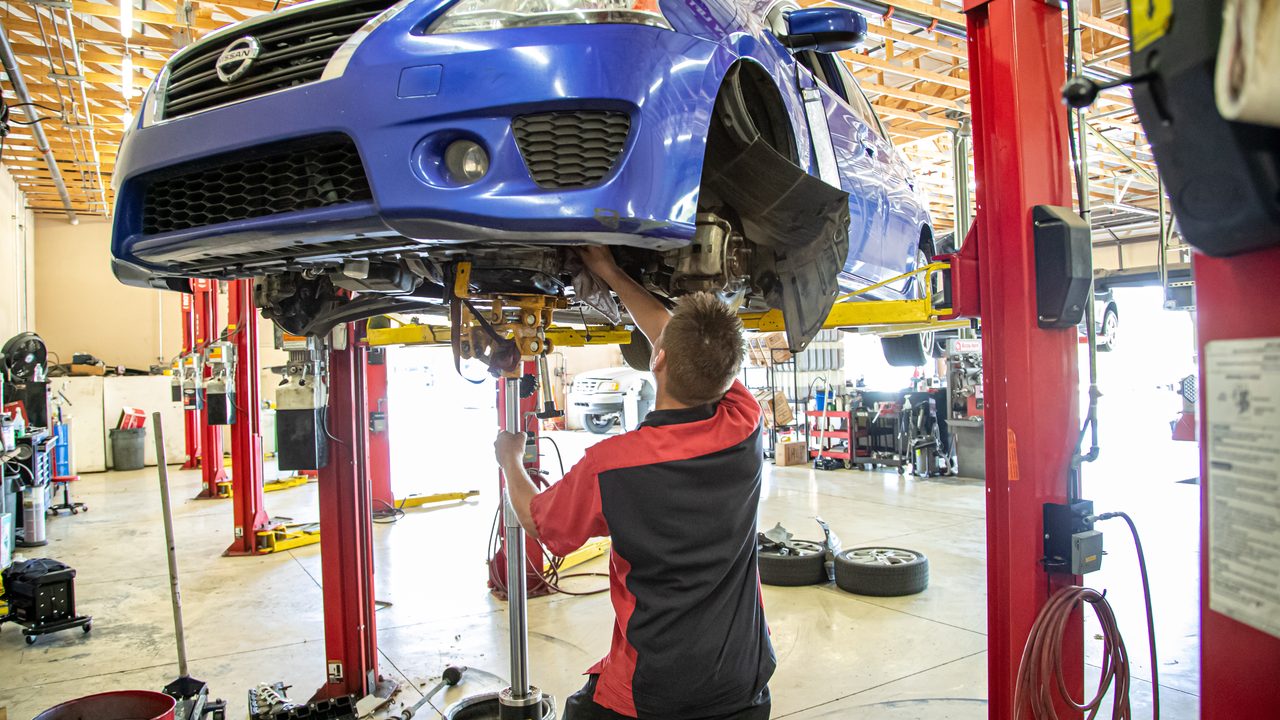
Your exhaust system does a lot more than keep the car quiet. It routes toxic gases safely away from the cabin, cleans up emissions through the catalytic converter, feeds data to the engine computer, and even affects fuel economy. Because most of it lives underneath the car where you never see it, exhaust problems tend to sneak up on drivers. Here are the most common issues we see, how to recognize them early, and when it is time to bring your vehicle to a Mesa, AZ auto repair shop.
Exhaust Leaks: The Most Common and Most Serious Problem
Every joint, gasket, and weld in the exhaust system is a potential leak point, and years of heating and cooling cycles eventually take their toll. The signs of a leak include a ticking or puffing sound that changes with engine speed, a louder engine note than usual, vibration you can feel through the floor or pedals, and exhaust smell inside or around the car.
A leak is not just a noise problem. Exhaust gases contain carbon monoxide, which is odorless, colorless, and dangerous in enclosed spaces, including your cabin. Any exhaust smell inside the car deserves immediate attention. Drive with the windows down until it is inspected, and do not idle in the garage.
Catalytic Converter Trouble
The catalytic converter chemically scrubs pollutants from the exhaust stream, and it is one of the most expensive components on the entire vehicle. Converters rarely fail on their own. They are usually killed by an upstream problem, most often a long-running engine misfire that dumps raw fuel into the converter and overheats it.
Warning signs include a rotten egg smell, noticeably reduced power or acceleration, rattling from under the car, and a check engine light with converter-related codes. The important lesson: fixing misfires and other engine issues promptly is how you protect the converter. Ignoring a flashing check engine light is one of the fastest ways to turn a minor repair into a major one. Our engine diagnostics articles explain what those warning lights mean.
Failing Oxygen Sensors
Oxygen sensors measure how much oxygen is in the exhaust so the engine computer can fine-tune the fuel mixture. When a sensor ages or fails, the computer starts guessing, and the results show up at the gas pump. A car running with a bad oxygen sensor typically burns noticeably more fuel, may idle roughly or hesitate, and will usually turn on the check engine light.
Oxygen sensors are wear items. They live in a brutally hot, chemically harsh environment, and they degrade gradually enough that many drivers never notice the slow slide in fuel economy. If your mileage has slipped and the check engine light is on, sensors are one of the first things worth checking.
Muffler and Pipe Damage
Arizona spares us the road salt that rusts out exhaust systems back east, but Valley driving still takes a toll. Speed bumps, steep driveway transitions, road debris, and construction zones can dent pipes or knock exhaust hangers loose. A hanging or rattling exhaust component will only get worse as vibration works on it, and a dragging pipe is a road hazard.
Listen for rattles over bumps, clunks when accelerating or decelerating, and any new droning or booming sound at highway speed. These usually mean a mount, hanger, or pipe section needs attention, and caught early the fix is often simple.
Emissions Test Failures
Drivers in the Phoenix metro area are required to pass periodic emissions testing, and the exhaust system plays a starring role in whether you pass. A failing converter, a leaking pipe that lets in outside air, or a bad oxygen sensor can each push your readings out of spec. If your vehicle fails an emissions test, do not just re-test and hope. A proper diagnosis identifies the specific cause so you fix the right thing once. You can read more about common causes and fixes in our exhaust and emissions articles, and our team handles emissions-related repair every week. Call a Shop if your car did not pass and you want it handled correctly.
How to Catch Exhaust Problems Early
You do not need to crawl under the car. Just stay alert to changes:
- Any new sound from the exhaust, from ticking to droning to rattling.
- Any exhaust or sulfur smell, especially inside the cabin.
- A drop in fuel economy or engine power.
- A check engine light, even if the car seems to run fine.
- Visible smoke from the tailpipe beyond normal morning vapor.
Because the system runs from the engine to the rear bumper, symptoms in one area often trace back to causes in another. That is why a systematic inspection beats guesswork.
The Hidden Cost: Exhaust Problems and Fuel Economy
Drivers usually think of exhaust issues in terms of noise and smell, but the quiet cost shows up at the gas pump. Your engine computer constantly adjusts the fuel mixture based on readings from sensors in the exhaust stream. A leak upstream of an oxygen sensor lets outside air skew those readings, and the computer responds by adding fuel it does not need. A lazy or failing sensor has the same effect. Either way, you pay for the error on every mile.
A partially clogged catalytic converter adds a different penalty. The engine has to push exhaust through the restriction, which saps power and forces deeper throttle for the same acceleration. Drivers often describe it as the car feeling tired or strained on the freeway. If your fuel economy has slipped noticeably and your engine feels down on power, the exhaust system belongs on the list of suspects, and a proper inspection can confirm or rule it out quickly.
Get It Inspected Before It Gets Expensive
Exhaust problems follow a predictable pattern: quiet and cheap early, loud and costly late. A small leak repaired promptly protects the converter, your fuel budget, your emissions compliance, and most importantly the air inside your cabin. Network Automotive Service Center has been family-owned since 1995, serving Mesa and the entire East Valley. Take a look at our services and call Call a Shop to schedule an exhaust inspection. We will find the real problem and fix it right.
Next step
Want this looked at by someone who does it every day?
Book online at any of our six Arizona shops, or call and talk to a real person. Family owned since 1995.