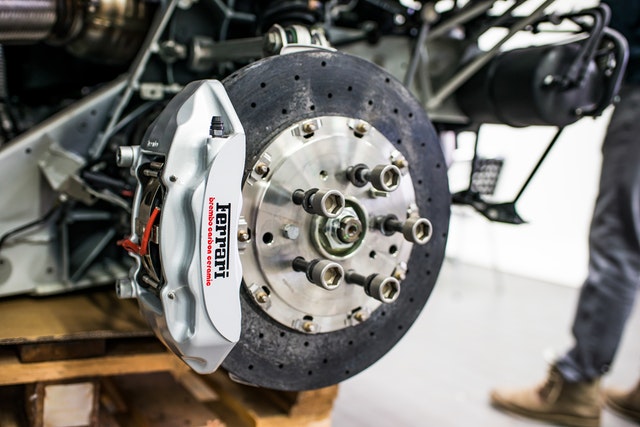
Most drivers know brake pads wear out, but the rotors those pads clamp against get far less attention, right up until the steering wheel starts shaking during a highway stop. Rotors are the large metal discs that spin with your wheels, and their condition directly determines how quickly, smoothly, and safely your vehicle stops. Bad rotors give clear warnings if you know what to feel and listen for. Here is how to recognize them, why Arizona driving is especially hard on rotors, and when to bring your vehicle to a Mesa, AZ auto repair shop.

What Rotors Do and Why They Wear Out
Every time you press the brake pedal, calipers squeeze the brake pads against the spinning rotors, converting your car’s motion into heat. That heat is the whole story. Rotors routinely run at very high temperatures in normal driving, and repeated heating and cooling cycles gradually change the metal. Over thousands of stops, rotors wear thinner, can develop uneven surfaces, and can form hard spots that no longer match the rest of the disc.
Thin rotors are a real safety concern, because a rotor needs enough metal mass to absorb and shed heat. A rotor worn below its minimum thickness overheats faster, stops the car less effectively, and in extreme cases can crack.
The Telltale Signs of Bad Rotors
Rotor problems announce themselves through your hands, feet, and ears:
- Vibration or pulsing when braking. The classic symptom. If the steering wheel shakes or the brake pedal pulses under your foot during stops, especially from highway speed, the rotor surfaces have likely become uneven.
- Grooves or ridges you can see or feel. Deep circular scoring on the rotor face, or a pronounced lip at the outer edge, indicates significant wear.
- Squealing or grinding. Persistent noise during braking can mean pads have worn down and are damaging the rotor surface. Grinding is metal on metal and needs immediate attention.
- Longer stopping distances. Damaged or overheated rotors simply do not generate the same stopping force.
- Blue discoloration or visible cracks. Signs of severe overheating, and a rotor in this condition should be replaced, not resurfaced.
Any of these deserves an inspection soon. Vibration in particular tends to worsen steadily, because uneven rotors wear pads unevenly, which wears the rotors further.
Why East Valley Driving Punishes Rotors
Rotors survive by shedding heat into the surrounding air, and that job is a lot harder when the ambient air is 110 degrees. Add Mesa’s daily reality of stop-and-go traffic, long signal-heavy arterials, and freeway slowdowns, and rotors here endure more heat cycles with less cooling than in most of the country. Mountain trips make it tougher still, since long descents from Arizona’s high country can push brakes toward overheating, which is why experienced drivers downshift and brake in firm, intermittent applications rather than dragging the brakes continuously downhill.
The practical takeaway: brake components in the Valley often need attention sooner than generic national estimates suggest, and periodic inspections matter more here. Our brake repair articles cover the rest of the system too, because rotors rarely fail alone.
Resurface or Replace?
Not every worn rotor needs replacement. Rotors with adequate thickness and only minor surface unevenness can sometimes be resurfaced, machining a thin layer off to restore a flat, smooth braking surface. But resurfacing removes metal, and every rotor has a minimum safe thickness stamped on it. A rotor that is too thin, too heat-damaged, or too deeply scored must be replaced.
This is a measurement decision, not a guess. A technician measures rotor thickness and runout with precision tools and tells you which side of the line your rotors fall on. Honest shops will also tell you when rotors are fine and only pads are needed. If you are unsure what your symptoms mean, call us at (480) 444-0242 and describe what you are feeling, and we will help you figure out the urgency.
Do Not Replace Pads Alone Without Checking Rotors
One common and costly mistake is installing new pads against damaged rotors. Uneven or scored rotors chew up new pads quickly, and the vibration you hoped to cure comes right back. Pads and rotors work as a matched system, which is why a proper brake job always includes measuring and evaluating the rotors, not just swapping pads. Doing it right the first time costs less than doing it twice.
How Long Do Rotors Last?
Rotors generally outlast brake pads, and it is common for a set of rotors to survive one or more pad changes before needing replacement. But their real lifespan depends on the same forces that wear pads: traffic, temperature, load, and driving style. Heavy stop-and-go commuting, towing, aggressive braking, and our relentless summer heat all shorten rotor life, while smooth highway driving extends it.
A few habits help your rotors last longer. Brake early and progressively instead of late and hard, which keeps temperatures down. Do not rest your foot on the brake pedal while driving, since even light constant contact builds heat. On long mountain descents, use lower gears and firm intermittent braking rather than dragging the brakes the whole way down. And replace pads on time, because worn pads damage the rotor surface they press against. Treat the brake system well and it rewards you with longer intervals between every kind of brake repair.
Keep in mind that rotors also age even when the car sits. A vehicle parked outside for weeks can develop surface rust on the rotor faces, which usually cleans off after a few gentle stops. If a vibration or scraping sound persists beyond the first short drive, though, the rotors may have developed deeper corrosion or uneven spots that need a professional look before they wear into the new pads.
Stop With Confidence Again
Brakes are the one system where “wait and see” is the wrong strategy. If your steering wheel shakes when you brake, your stops feel longer, or you hear grinding, have the rotors inspected promptly. Network Automotive Service Center has been family-owned since 1995, serving Mesa and the East Valley with complete brake service. Take a look at our services and call (480) 444-0242 to schedule a brake inspection. Smooth, confident stops are worth it every single drive.