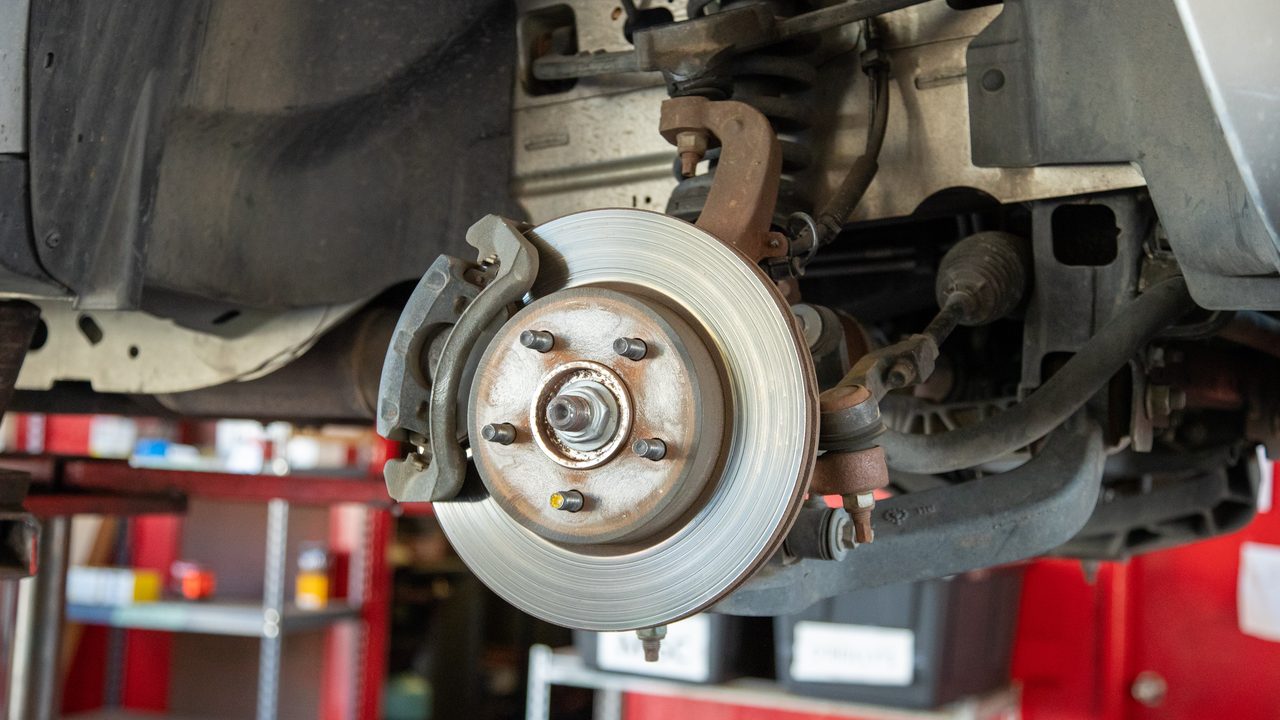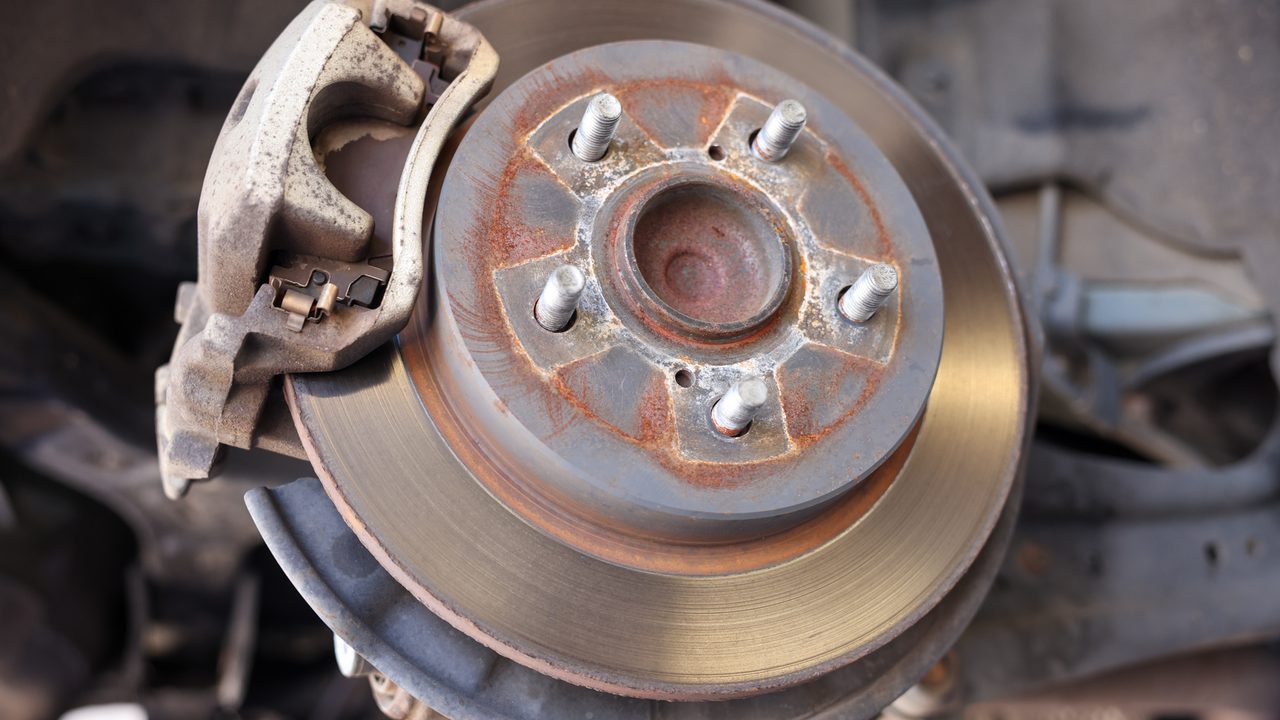
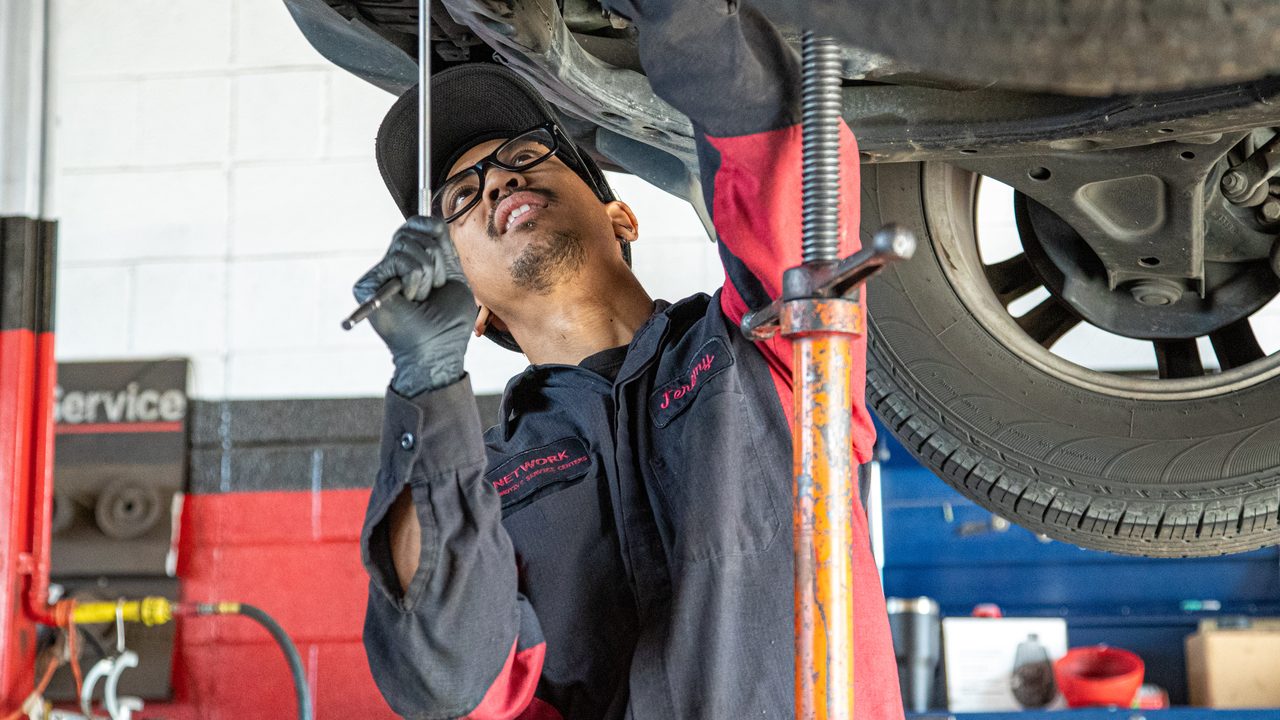
A steering wheel that wanders on its own, a growl or grinding sound every time you turn the wheel, or a sudden leak of thick fluid under the front of the car are usually the first signs of a failing rack and pinion in a Mesa, AZ driver's vehicle. The rack and pinion steers the car, so when it starts to go, the symptoms show up fast and they tend to get worse on every drive, not better.
What a Failing Rack and Pinion Actually Feels Like in Mesa AZ
The rack and pinion is the steering gear between the steering column and the front wheels. A pinion gear on the end of the steering shaft turns against a toothed bar, the "rack," which slides side to side and pushes the wheels left or right through the tie rods. Power steering fluid pressurizes the unit to make that turning effortless. When any part of that system wears out, the connection between your hands on the wheel and the tires on the road gets loose, noisy, or leaky.
The most common complaints Mesa drivers bring in are:
- A clunk or knock from the front of the car when turning the wheel, especially at low speed in a parking lot or driveway.
- Looseness or "play" in the steering wheel, where you can turn it a few degrees before the wheels respond at all.
- Grinding or whining noise that gets louder the farther you turn the wheel toward full lock.
- Wandering on the highway, where the car drifts and needs constant small corrections to stay in the lane.
- Fluid under the car, usually reddish or amber, pooling near the front wheels after the car has been parked.
Any one of these on its own could point to something smaller, like a worn tie rod end. Two or three together, especially a fluid leak paired with looseness or noise, usually mean the rack and pinion assembly itself is wearing out.
Why Mesa Heat and Stop-and-Go Driving Wear Out Steering Racks Faster
A rack and pinion can last well past 100,000 miles in a lot of climates. In Mesa, several local factors push that number down.
Arizona summer heat is hard on every rubber and seal in a vehicle, and the rack and pinion has several: the inner and outer tie rod boots, the rack seals that keep power steering fluid pressurized, and the mounting bushings that isolate it from the frame. Pavement temperatures routinely climb well above the surrounding air temperature, and the steering gear sits low in the engine bay where it absorbs that heat from below as well as from the running engine above. Rubber that bakes every afternoon for months at a time cracks and hardens years earlier than it would in a milder climate.
Stop-and-go traffic on commuter corridors like the US 60, Loop 202, and Country Club Drive adds constant small steering corrections, lock-to-lock turns into parking lots, and idling engine heat soaking into the steering gear while the car sits still. Dust and grit from unpaved shoulders and washboard side roads work into any boot that has already started to crack, accelerating wear on the rack's internal bushings once dirt and moisture get past a torn seal. None of this means a Mesa rack and pinion is doomed early, but it does mean the warning signs above deserve attention sooner rather than later.
Heat and mileage are not the only causes. A hard hit to a curb, a deep pothole on a side street, or an off-road excursion near Apache Junction can bend a tie rod or crack a rack mount even on a newer vehicle, and that kind of impact damage does not always show up as a leak right away. Contaminated power steering fluid, usually from topping off with the wrong fluid or going long past a recommended flush interval, breaks down the seals from the inside and leads to the same leaks and whining noise as ordinary age-related wear, just years ahead of schedule. A torn inner or outer tie rod boot is one of the most overlooked causes: once that rubber boot splits, dust and moisture from Mesa's roads work directly into the rack's internal bushings every time the wheel turns, turning what would have been a simple boot replacement into a full rack replacement a few months later.
Rack and Pinion vs. a Worn Tie Rod: How to Tell Them Apart
Tie rod ends attach to the outer edges of the rack and connect it to the steering knuckle at each wheel. A worn tie rod can feel a lot like a failing rack and pinion, but the fix and the cost are very different, so a correct diagnosis matters.
| Symptom | More likely a tie rod | More likely the rack and pinion |
|---|---|---|
| Clunk when turning | Clunk only at one wheel, often worse over bumps | Clunk felt through the whole steering wheel |
| Fluid leak | No leak; tie rods are a dry mechanical joint | Reddish or amber fluid under the front of the car |
| Tire wear | Uneven wear on the inner or outer tire edge | Even wear, but steering feels vague overall |
| Steering play | Slight looseness, usually paired with a clunk | Noticeable play before the wheels respond at all |
| Noise at full lock | Rare | Common; whining or grinding at the end of the turn |
A worn tie rod end is a smaller, less expensive repair, but it still throws off the wheel alignment and should be checked whenever the car is going in for steering work. If you suspect a tie rod rather than the full rack, that is worth mentioning to the shop before they start the inspection.
How a Shop Diagnoses a Failing Rack and Pinion
A proper diagnosis starts on a lift, not a guess from the driver's seat. A technician checks for play at the steering rack itself by having a second person turn the wheel while they watch and feel the rack, tie rods, and mounting bushings move. They look for fluid at the rack seals, the pressure and return line fittings, and the boots at each end, since a leak at any one of those points can mimic a leak from the rack body itself.
The technician also inspects the tie rod ends and ball joints separately, because a loose tie rod can be mistaken for rack play if it is not isolated first. On vehicles with electric power steering, a scan tool checks for stored codes related to the steering assist motor or torque sensor, since some "failing rack" complaints on newer vehicles are actually an electric power steering fault rather than a worn mechanical rack. A diagnostic fee applies for this inspection and is quoted upfront before any work begins.
What a Rack and Pinion Replacement Actually Involves
Once the rack and pinion is confirmed as the source of the problem, the repair is a significant undercarriage job, not a quick parts swap. The front end is raised, the tie rod ends are disconnected from the steering knuckles, and on power-assisted systems the pressure and return lines are disconnected and the fluid is drained. The old rack is unbolted from its mounts, often requiring the removal of nearby components like the subframe brace or lower splash shield to get clearance.
The new or remanufactured rack is installed, the tie rods are reconnected, and on hydraulic systems the power steering fluid is refilled and the system is bled of air. The last step, and one that should never be skipped, is a full wheel alignment. Disconnecting and reconnecting the tie rods changes the toe setting every time, so a rack and pinion replacement without a follow-up alignment will leave the car pulling to one side and wearing the new tires unevenly within a few thousand miles.
Most shops also take the opportunity to inspect the tie rod boots, the power steering pump and hoses on hydraulic systems, and the lower control arm bushings while everything is already apart, since those components are right next to the rack and share the same exposure to heat and road grime. Replacing a worn boot or bushing at the same time avoids a second front-end job a few months later for a part that was already showing wear during the first repair.
What Affects the Cost of a Rack and Pinion Replacement
The price of this repair varies with the vehicle and the extent of the damage, so it is not a one-size figure. A few factors that move the cost up or down: whether the system is hydraulic or electric power steering, how much labor it takes to access the rack on a given platform, whether a new versus remanufactured unit is used, and whether the alignment reveals additional worn suspension parts that need attention at the same time. A shop should walk through these factors and quote the job before starting any work, not after.
Is It Safe to Keep Driving on a Failing Rack and Pinion?
This is a steering component, so the honest answer depends on how far along the wear is. Mild play or an occasional clunk at low speed is not an immediate emergency, but it will get worse, and it should be looked at soon rather than left for months. A steady fluid leak, a steering wheel that feels loose at highway speed, or any grinding that has started to affect how the car responds to steering input is a different situation. That combination means the steering system is losing its margin for error, and it belongs in a shop before the next long highway drive, not after.
If the power steering fluid runs low enough on a hydraulic system, the pump can start to whine and the steering can suddenly go heavy, which is its own hazard in traffic. If that happens, pull over safely when you can and have the car looked at before driving it further.
Why Mesa Drivers Choose Network Automotive
Network Automotive has been family owned and operated since 1995, with ASE-certified technicians who see this exact failure pattern across Mesa's commuter traffic and summer heat every year. Every repair, including rack and pinion replacement, is backed by a 24-month / 24,000-mile nationwide warranty, so the work is covered well past the drive home. The shop gives an honest answer about whether a problem is a cheaper tie rod fix or a full rack replacement before any work starts, rather than defaulting to the bigger job.
Service Areas Near Mesa, AZ
Network Automotive serves drivers across the East Valley with locations including Mesa, Gilbert, Apache Junction, Queen Creek, and Prescott. Wherever your commute runs, a full range of steering and suspension services is available, and you can see current service coupons before you come in. If you are also hearing a grinding noise specifically when turning, our grinding noise when turning guide walks through how that symptom is narrowed down, and a related wheel alignment guide explains why an alignment always follows steering work. Drivers dealing with a bouncy ride on top of steering trouble may also find our suspension repair overview useful.
Book an appointment at /book-appointment-choose-location/ or call (480) 444-0242 to get a steering noise or leak looked at.
Next step
Want this looked at by someone who does it every day?
Book online at any of our six Arizona shops, or call and talk to a real person. Family owned since 1995.