If your steering wheel feels loose, your car wanders across the lane on the US 60, or the inner edges of your front tires are wearing down faster than the rest of the tread, a worn tie rod is one of the most common culprits for Mesa drivers. Tie rods are a small, inexpensive part with an outsized job: they connect your steering rack to each front wheel and translate every turn of the wheel into a precise change in direction. When they wear out, steering feel and tire life both suffer, and an alignment performed on worn tie rods will not hold.
What a Tie Rod Actually Does
Each front wheel has an inner tie rod, which connects to the steering rack, and an outer tie rod, which connects to the steering knuckle at the wheel. Together they form a short, adjustable link that lets the rack push and pull the wheels left and right while still allowing the suspension to move up and down over bumps. The ends of each tie rod are ball joints, sealed with a rubber boot and packed with grease, so the link can pivot smoothly as the wheel steers and the suspension travels.
Because tie rods sit right at the connection between steering input and wheel direction, even a small amount of play changes how the car responds. A fraction of an inch of looseness at the tie rod end translates into noticeable wander at the steering wheel, and it means the wheel is no longer pointed exactly where the alignment specs say it should be.
Why Mesa Driving Wears Tie Rods Out Faster
Tie rod ends are wear parts everywhere, but a few things about driving in Mesa shorten their life compared to a milder climate.
- Heat soak on the rubber boots. Arizona summers push under-hood and underbody temperatures high enough to dry out and crack the rubber boots that seal grease inside the tie rod end. Rubber that would last for years in a cooler state becomes brittle years sooner here. Once a boot cracks, grit works its way in and grease works its way out, and the joint wears out from the inside long before the outside shows obvious damage.
- Stop-and-go traffic on arterials like Gilbert Road, Power Road, and the US 60 corridor. Constant small steering corrections at low speed, especially the kind of repeated lock-to-lock turning that happens in parking lots and tight intersections, put repeated load on the tie rod ends. That cumulative wear adds up faster than steady highway driving, which is one reason a car used mostly for short errands can show tie rod wear at a lower mileage than a highway commuter.
- Potholes, expansion joints, and washboard pavement. A sharp impact at speed, especially hitting a pothole at an angle, can bend a tie rod or knock a joint loose instantly rather than wearing it out gradually. Drivers sometimes come in certain they have a brand-new problem right after hitting something hard on the road, and a bent tie rod from that single impact is often exactly what we find.
- Fine desert sand and dust. Once a boot is cracked, Arizona's fine dust works past the seal more easily than coarser road debris would elsewhere, accelerating wear once that barrier is compromised. It also means a tie rod that looks intact from the outside can still have abrasive grit grinding away inside the joint.
- High overall mileage from spread-out commutes. The East Valley's distances mean more miles per year for a lot of commuters, and tie rod ends are rated for a certain number of steering cycles and miles regardless of climate. More miles simply means reaching that wear point sooner.
Warning Signs Your Tie Rods Are Worn
Tie rod wear rarely fails without warning. The signs build gradually, and catching them early keeps the repair simple.
| What You Notice | What It Usually Means |
|---|---|
| Steering wheel feels loose or has extra play before the car turns | Worn tie rod end allowing slack between steering input and wheel movement |
| Car wanders or drifts without you steering | Play in the tie rod lets the wheel toe angle shift on its own |
| Uneven or feathered wear on the inner edge of a front tire | Toe angle has drifted out of spec because the tie rod can no longer hold it |
| Clunking or rattling over bumps from the front end | Loose tie rod end knocking inside its socket |
| Squealing or clicking noise when turning the wheel | Dry or damaged tie rod end, often from a cracked boot |
| Vibration in the steering wheel at speed | Can point to a worn tie rod, but also to tire balance or wheel bearing issues |
If more than one of these shows up at the same time, especially loose steering feel paired with inner tire wear, it is worth having the front end checked before it gets worse.
How We Diagnose a Worn Tie Rod
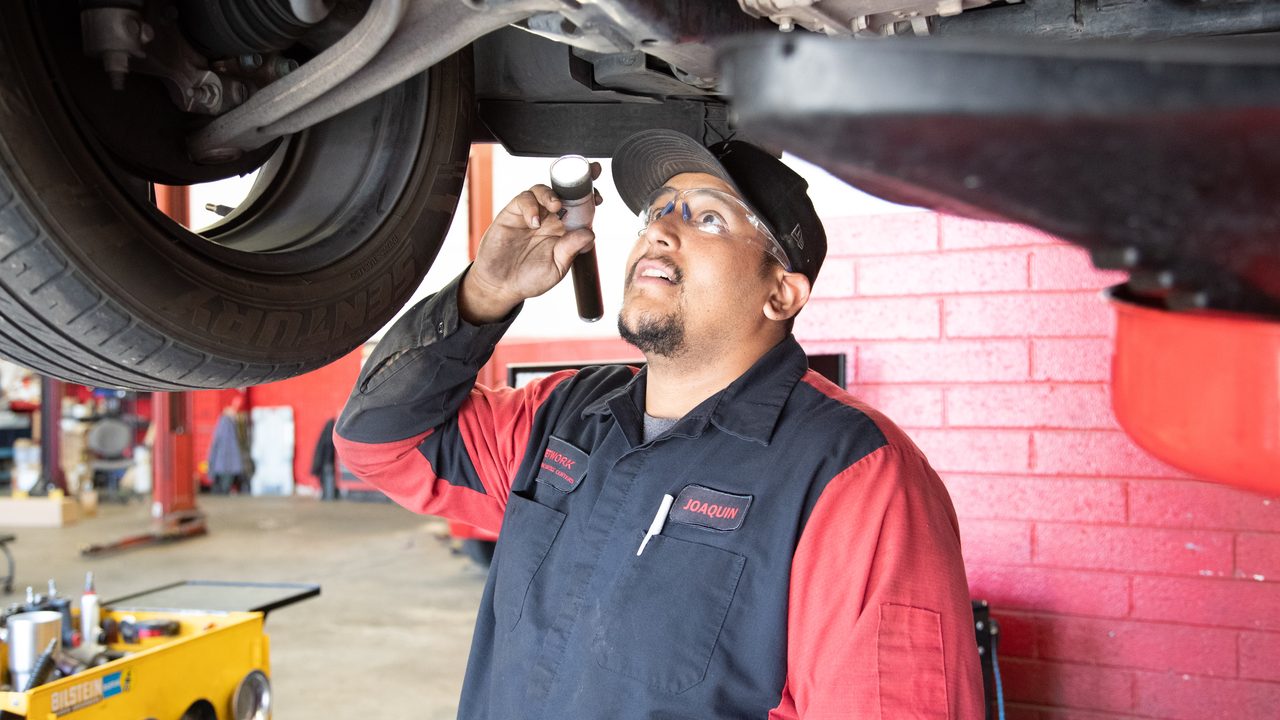
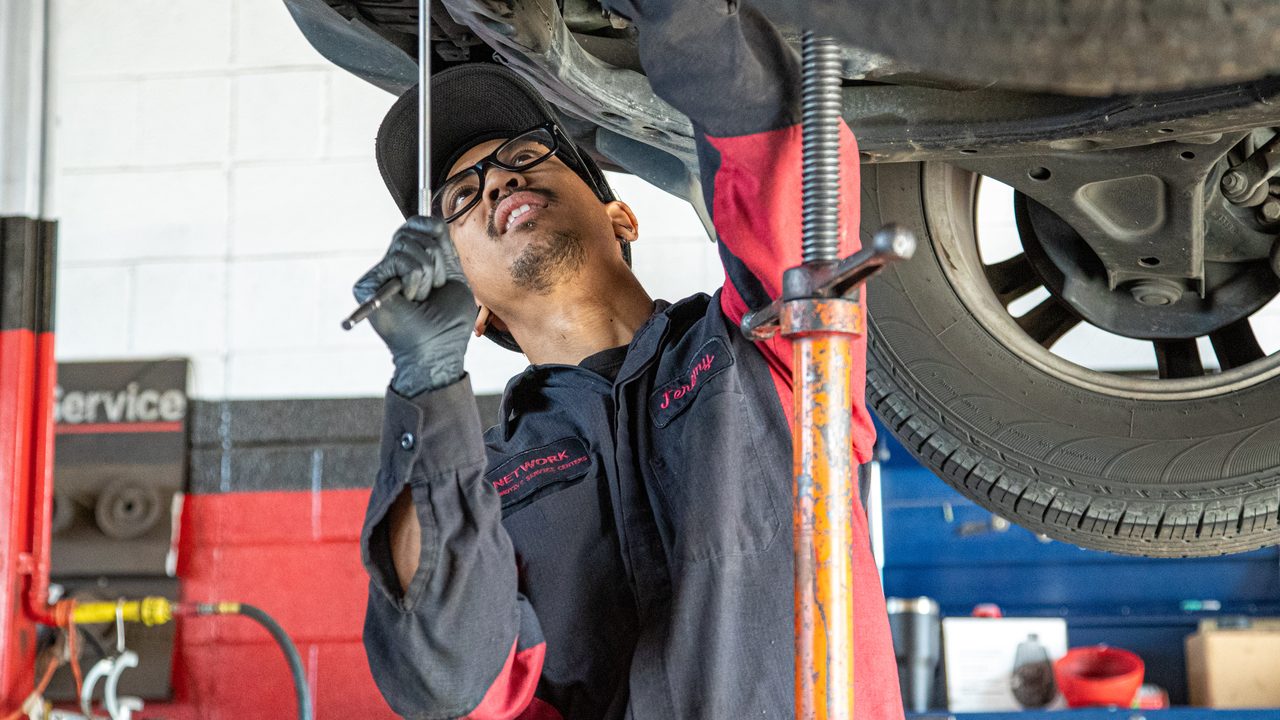
A visual check alone can miss a tie rod that still looks fine sitting still but has play under load. Our technicians check tie rod ends with the vehicle raised and the suspension loaded, grabbing each tire at the top and bottom and at the front and back to feel for movement at the tie rod, ball joint, and wheel bearing separately. Each of those three parts can produce a similar clunk or play, so isolating exactly which one is loose matters before any part gets replaced.
We also check the rubber boots for cracks or missing grease, inspect the inner tie rod by feel through the boot since it cannot be seen directly without removing other components, and look at tire wear patterns for the telltale inner-edge feathering that points to a toe problem. A pry bar or dial indicator is sometimes used to measure exactly how much play exists at the joint, since "some" play is normal even on a healthy tie rod and the question is whether it exceeds the manufacturer's tolerance. A diagnostic fee applies for this inspection and is quoted upfront before any work begins.
Because loose steering can come from a tie rod, a ball joint, a wheel bearing, or worn control arm bushings, and those parts often fail around the same mileage on a vehicle that has covered enough Arizona miles, a proper diagnosis checks the whole front end rather than assuming it is only the tie rod. We would rather tell you three parts are fine and one needs attention than replace a tie rod and have you back a month later for a wheel bearing that was the real source of the noise.
What Tie Rod Replacement Involves
Most front-wheel-drive vehicles have an outer tie rod end, which bolts to the steering knuckle at the wheel, and an inner tie rod, which threads into the steering rack itself and is covered by the rubber steering boot. Outer tie rods fail and get replaced far more often, since they are exposed to road grime, heat, and impacts more directly than the inner rod sitting behind the boot. Inner tie rod replacement usually only comes up when the vehicle has higher mileage or when a technician finds play that the outer tie rod cannot explain.
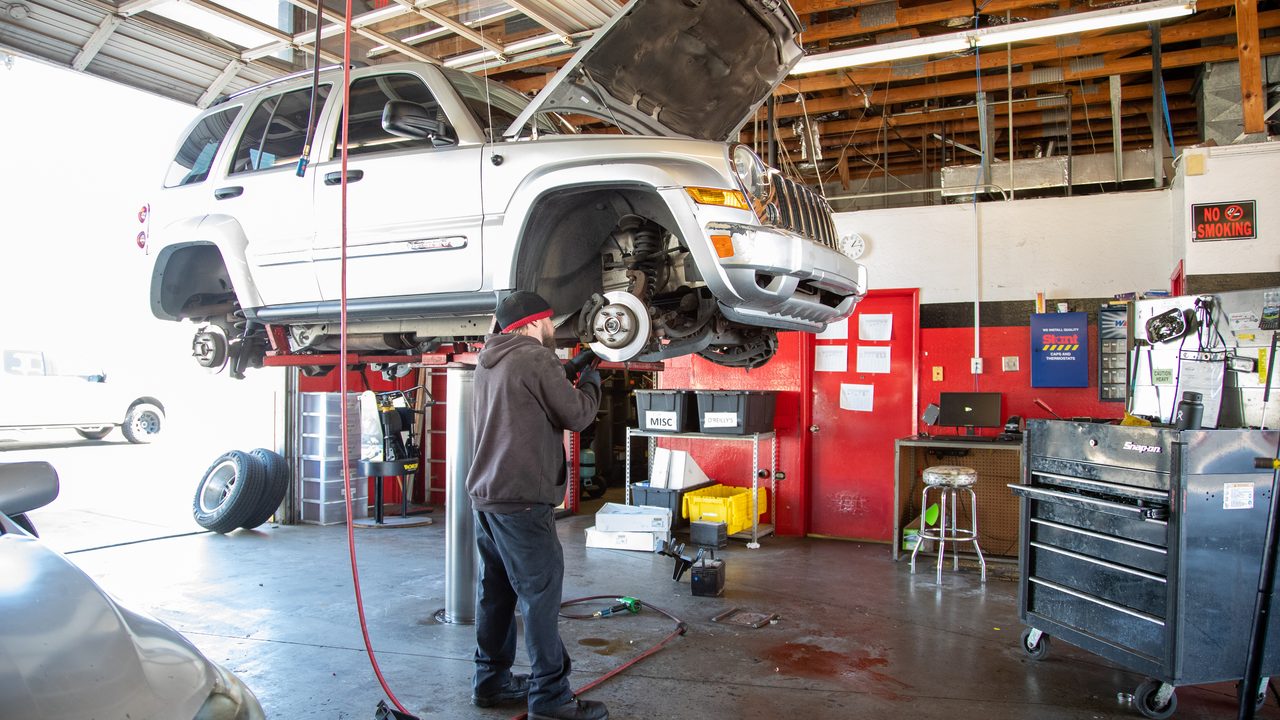
Replacing an outer tie rod means removing the old tie rod end from the steering knuckle using a tie rod separator or press, threading on the new one, and setting it to roughly the same number of threads as the old part so the toe angle is close before the car ever goes on the alignment rack. The nut is torqued to the manufacturer's specification and secured with a new cotter pin or locking nut depending on the vehicle. Inner tie rod replacement additionally requires removing the outer tie rod, unclamping the steering boot, and unthreading the inner rod from the rack, which takes longer and is why it costs more labor than an outer tie rod alone.
Tie rods are sold individually on most vehicles, so if only one side shows wear, only that side needs a new part. That said, if one tie rod end has failed from age and mileage rather than an impact, the other side is usually close behind on the same number of miles and the same years of heat exposure, and we will tell you honestly what we see on both sides rather than replacing a part that still has life left in it.
Every tie rod replacement should end with a wheel alignment. Changing the length of the tie rod, even slightly, changes the toe angle, and driving on a fresh tie rod with the old alignment settings just wears the new tire edges the same way the old ones wore. Skipping the alignment after a tie rod job is the single most common reason a repair does not fully solve the original complaint of wander or uneven wear.
Tie Rod Wear vs. Other Steering and Suspension Problems
Loose or wandering steering has more than one possible cause, and it helps to know roughly how tie rods differ from the other usual suspects before you assume which part is at fault.
- Tie rod vs. ball joint. Both are ball-and-socket joints that can develop play, but a ball joint connects the control arm to the steering knuckle and tends to produce a clunk over bumps more than a loose steering wheel feel. A tie rod issue shows up more directly in how the steering wheel itself behaves.
- Tie rod vs. wheel bearing. A bad wheel bearing usually produces a hum or roar that changes pitch with vehicle speed and gets louder in a turn, rather than looseness at the steering wheel. The two can coexist on an older vehicle, which is part of why a full front-end check matters.
- Tie rod vs. rack and pinion. A worn or leaking steering rack can produce looseness too, along with whining noises during turns and sometimes a slow leak of power steering fluid. A rack problem is a bigger repair than a tie rod, so it is worth ruling out rather than assuming.
- Tie rod vs. control arm bushings. Worn bushings tend to show up as clunking and vague handling over rough pavement more than a loose steering wheel at rest, though both wear out on roughly similar timelines on a desert-driven vehicle.
This is exactly why a hands-on inspection matters more than guessing from symptoms alone. The fix for each of these parts is different, and the cost and urgency differ too.
Is It Safe to Keep Driving on a Worn Tie Rod?
A tie rod with mild play is not an immediate emergency, but it is not something to put off indefinitely either. Steering response degrades gradually, which makes it easy to adjust to without noticing how much has changed, until the day it does not respond the way you expect in an emergency lane change. A tie rod end that is severely worn or has a detached boot packed with contaminated grease can separate, and a separated tie rod means that wheel is no longer connected to the steering rack at all. That is a sudden, complete loss of steering control on that wheel, which is why a tie rod with a loose or clunking feel should be inspected soon rather than scheduled for whenever is convenient.
If you hear a loud clunk from the front end combined with the steering suddenly feeling vague or unresponsive, do not continue driving. Pull over safely and have the vehicle towed in rather than driven.
What to Do Right Now
If you are noticing loose steering, wander, or uneven inner tire wear, a few practical steps help in the meantime:
- Avoid hard cornering or quick lane changes until the front end is inspected.
- Note when the symptom happens, such as only over bumps, only at highway speed, or all the time, since that detail helps narrow down the cause faster.
- Check your tires visually for feathered wear on the inner edge, which supports a toe or tie rod issue rather than a balance problem.
- Book an appointment at /book-appointment-choose-location/ rather than waiting for the next scheduled oil change, since steering components are not something to defer.
Why Choose Network Automotive
Network Automotive has been family owned and operated since 1995, and our ASE-certified technicians work on steering and suspension systems every day across our Arizona locations. Every tie rod replacement is backed by our 24-month / 24,000-mile nationwide warranty, so you are covered well past the drive home. We will show you the worn part we pulled off your car, explain what we found in plain language, and quote the repair before we start, including the alignment that should go with it.
Check current offers at /coupons-network-automotive-service-center/, or see the full range of what we handle at /services/.
Service Area
We work on tie rods and front-end steering components for drivers throughout Mesa and the surrounding East Valley, including Gilbert, Apache Junction, and Queen Creek. If a tie rod job turns up related wear, our control arm replacement and rack and pinion replacement articles cover the other steering and suspension parts that commonly wear out around the same mileage, and our wheel alignment guide explains why an alignment always follows a tie rod replacement. Find your nearest location at /auto-repair-mesa-az/, or reach us directly through /contact-us/ or by calling (480) 444-0242.
Next step
Want this looked at by someone who does it every day?
Book online at any of our six Arizona shops, or call and talk to a real person. Family owned since 1995.