If braking in Queen Creek has started to sound like metal dragging on metal instead of a smooth, quiet stop, that grinding noise is not something to wait out. A grinding sound when braking almost always means the soft friction material on your brake pads is gone and metal is now contacting metal, and the longer that continues, the more expensive the repair gets.
What That Grinding Sound Actually Means
Brake pads are built with a layer of friction material, ceramic, semi-metallic, or organic depending on the vehicle, bonded to a steel backing plate. That friction material is designed to wear down gradually every time you press the brake pedal, which is normal and expected over tens of thousands of miles. A grinding or metallic scraping noise shows up once that friction material is worn away completely, leaving the bare steel backing plate to drag directly against the rotor's metal surface. At that point you are no longer braking with friction material designed for the job. You are braking with raw steel on steel, which is far less effective and tears up the rotor with every stop.
Some pads include a built-in wear indicator, a small metal tab that is designed to touch the rotor once the pad gets thin, producing a lighter, higher-pitched squeal specifically to warn you before full metal-to-metal contact happens. That squeal is intentional. It is engineered into the pad so you get a warning while there is still time to schedule a repair instead of reacting to an emergency. A true grinding sound, as opposed to a squeal, usually means that warning stage has already passed and the pad is gone.
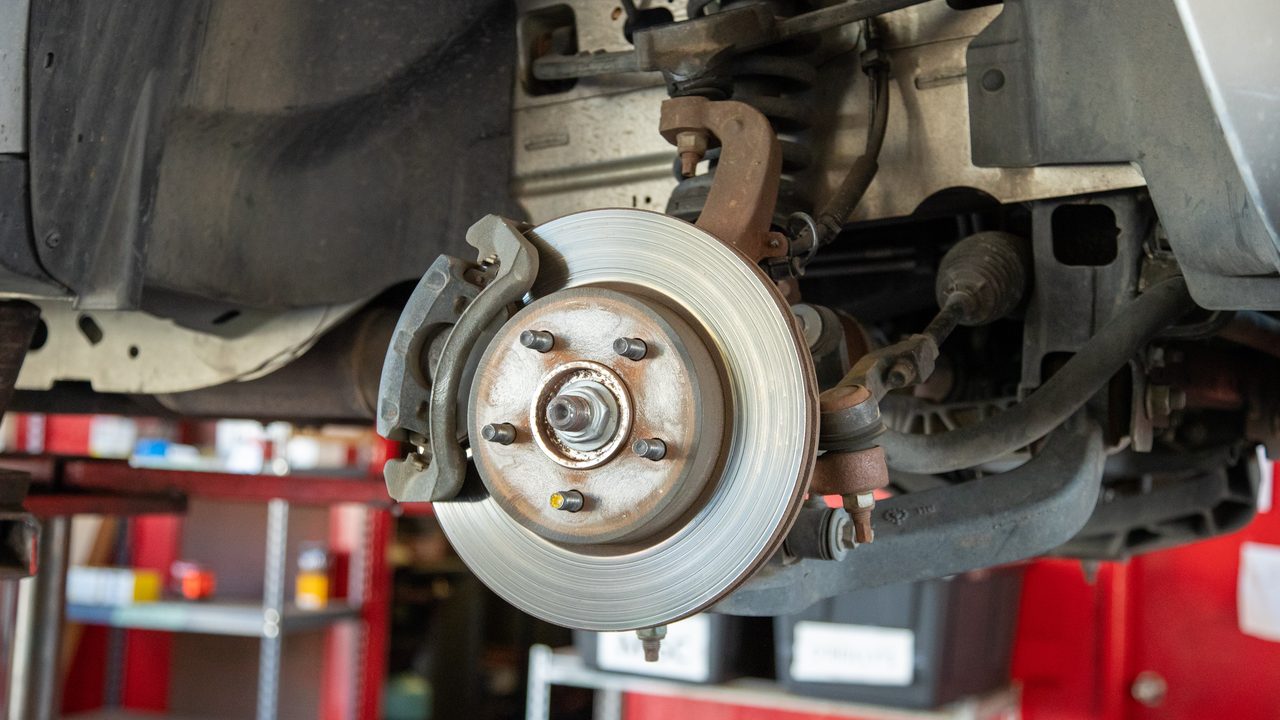
Once metal is grinding on metal, every stop is cutting grooves into the rotor's braking surface. A rotor that gets scored deeply enough can no longer be resurfaced and has to be replaced along with the pads, which turns what started as a simple pad swap into a bigger repair. The longer the grinding continues, the deeper those grooves get, and the more likely the repair grows from pads-and-rotors into pads, rotors, and hardware.
Grinding vs. Other Noises: How to Tell Them Apart
Not every noise from under your car when you slow down is a brake pad problem, and it helps to know the difference before you assume the worst or, just as often, assume it is nothing. A grinding noise tied specifically to braking, one that gets louder the harder you press the pedal and goes away once you let off, points squarely at pad or rotor contact. A clunk over bumps that has nothing to do with pedal pressure usually points toward suspension components instead. A rhythmic clicking that speeds up with vehicle speed rather than pedal pressure is more often a CV axle issue. A low grinding or roaring sound that changes when you turn the steering wheel one way more than the other can point toward a wheel bearing. The key test is simple: does the noise track with how hard you press the brake pedal, or does it track with vehicle speed and road surface instead? If it is the former, the brakes are almost certainly the source.
Common Causes of Grinding Brakes in Queen Creek
A few local conditions make brake wear move faster here than the manufacturer's maintenance schedule might suggest.
- Stop-and-go traffic on Ellsworth and Hunt Highway. Frequent stops wear friction material down faster than steady highway driving, and Queen Creek's growth has brought more signals, more roundabouts, and more congestion to those corridors than there were even a few years ago.
- Desert heat. High summer temperatures already push brake components closer to their thermal limits before you ever touch the pedal, and that heat accelerates wear on pads that are already thin, since hot friction material degrades faster than cool material under the same pressure.
- Fine desert dust. Dust works its way between the pad and rotor surface, acting like a mild abrasive that speeds up wear on both parts over time, especially on vehicles that spend a lot of time on dirt roads or unpaved driveways common on Queen Creek's acreage lots.
- Towing or hauling. Queen Creek's mix of acreage properties, horse trailers, and work trucks means more trailers, equipment, and loaded beds than a typical suburban commute, all of which put extra strain on a braking system that has to stop more weight than it was tuned for on a daily basis.
- Skipped brake inspections. Pads that are never checked between services are the most common reason a driver goes straight from a quiet brake pedal to a loud grinding noise with no warning squeal in between. By the time the squeal tab is worn past its own point of contact, the warning window has already closed.
How Fast Grinding Turns Into Rotor Damage
The gap between "pads are thin" and "rotors are ruined" is smaller than most drivers expect. Every mile driven on exposed metal backing plates cuts into the rotor surface a little more, and that damage does not heal or wear back out on its own. The table below shows how the stages typically progress from a first warning to a bigger repair.
| Stage | What You Hear or Feel | What Is Happening |
|---|---|---|
| Early wear | Light, intermittent squeal, especially on the first stop of the day | Wear indicator tab is contacting the rotor as a warning |
| Advanced wear | Steady metallic grinding on every stop | Friction material is gone, backing plate is contacting the rotor |
| Rotor damage | Grinding plus a pulsing or vibrating pedal | Rotor surface is scored or grooved and can no longer be resurfaced |
| Severe neglect | Grinding, pulling to one side, or a soft or low pedal | Caliper or hardware damage from prolonged metal-to-metal contact |
Once a car reaches the rotor damage stage, a pad-only replacement is no longer enough. Both pads and rotors have to come off together to restore a smooth, even braking surface, since mixing a new pad against a damaged rotor just transfers the uneven wear straight back onto the new pad within a short time.
How We Diagnose a Grinding Brake
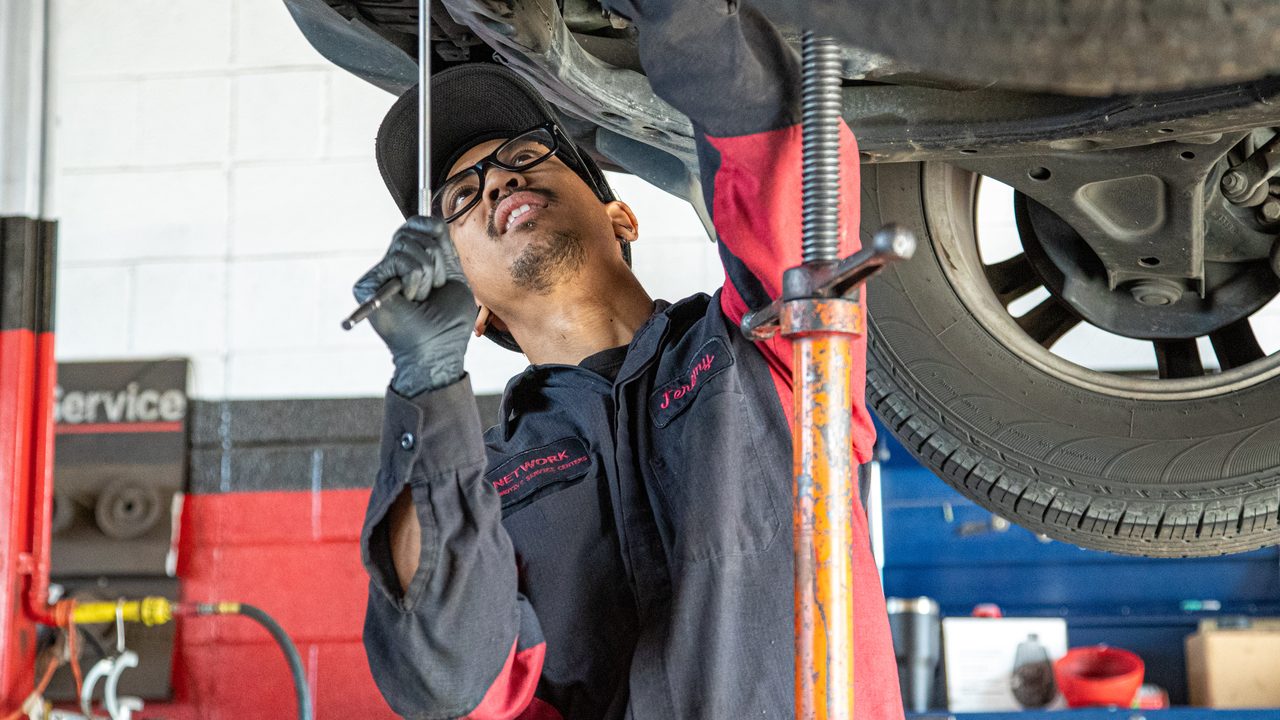
A grinding noise is a strong clue, but it is not the whole picture. A technician pulls each wheel to physically measure remaining pad thickness, inspects the rotor surface for scoring, grooves, or uneven wear, and checks rotor thickness against the manufacturer's minimum spec with a micrometer. Calipers, slide pins, and brake hardware get inspected at the same time, since a caliper that is dragging or sticking can wear one side of the car's brakes much faster than the other and cause the grinding to come back quickly even after a straightforward pad replacement. A diagnostic fee applies to this inspection and is quoted upfront before any work begins.
This full inspection matters because a grinding noise with a pulsing pedal points toward warped or grooved rotors, while grinding with the car pulling to one side often points toward a stuck caliper rather than simple pad wear. Treating only the symptom that is loudest can leave the actual cause unaddressed, which is how a driver ends up back in the same bay a few months later with the same noise and a part that was already replaced once.
Brake fluid condition gets checked at the same visit. Fluid that has absorbed too much moisture over time lowers its boiling point, which can contribute to a soft or spongy pedal feel that sometimes gets blamed on the pads and rotors when the fluid itself is part of the picture.
Front and rear brakes rarely wear at the same rate, and that matters for diagnosis. On most vehicles, the front brakes do the majority of the stopping work, since weight shifts forward under braking, so front pads typically wear out first and are usually where a grinding noise originates. A grinding sound that is clearly coming from the rear instead can point toward a parking brake component, a rear caliper that is seizing, or hardware that has corroded, which is one more reason a technician checks all four corners rather than assuming the noisiest wheel tells the whole story.
What the Repair Involves
Once pads are worn past the point of grinding, the repair almost always includes both pads and rotors on the affected axle. A technician removes the wheel, unbolts the caliper, swaps the worn pads for new friction material, and either resurfaces or replaces the rotor depending on how deep the scoring goes. Rotors that have been ground on for any length of time are usually too thin or too grooved to resurface safely and need to be replaced outright. Brake hardware, the small clips and shims that keep the pad seated correctly against the caliper, gets replaced at the same time since reusing worn hardware is a common reason for a new squeak or vibration to show up within a few months of an otherwise good repair.
After the new pads and rotors are installed, a proper repair includes a bed-in process, a series of controlled stops that transfers an even layer of friction material onto the new rotor surface, and a test drive to confirm the pedal feels firm and the car stops straight, without pulling to either side.
Can You Just Replace the Pads and Skip the Rotors?
Sometimes, but only if the grinding was caught early and the rotor surface is still within spec. If a technician measures the rotor and finds it is only lightly marked and still above the manufacturer's minimum thickness, a resurface or even a straight pad swap on an otherwise healthy rotor can be a reasonable call. The risk is skipping that measurement step entirely and just bolting new pads onto a rotor that is already scored or too thin. New pads break in against an uneven or undersized rotor surface, which causes the same grinding, pulsing, or vibration to come right back within a short time, and now you are paying for pad labor twice instead of once. The measurement is what decides the right repair, not a guess based on how the old rotor looks from the outside.
Is It Safe to Keep Driving?
Grinding brakes are not something to put off until a convenient weekend. Once the pads are gone, your stopping distance is longer than it should be, and continuing to drive on exposed metal accelerates rotor damage with every stop. If the grinding is paired with a pulsing pedal, a car that pulls to one side, or a pedal that feels soft or sinks lower than normal, treat that as a sign to limit driving and get the car inspected as soon as possible rather than continuing a normal routine of errands and commuting. A short drive to a shop is a reasonable risk. Weeks of daily commuting on grinding brakes is not.
What to Do Right Now
If your brakes are grinding, avoid hard, sudden stops where possible and give yourself extra following distance, since your actual stopping distance is longer than it feels. Note whether the grinding happens on every stop or only sometimes, whether it is louder from the front or the rear, and whether the pedal feels different, softer, pulsing, or sinking, since those details help a technician narrow down whether it is pads alone or something further in the system before the wheel even comes off. Then get the car to a shop rather than waiting for the noise to go away on its own, because it will not. Book an appointment at your nearest Network Automotive location or call (480) 444-0242 to get it looked at before a pad replacement turns into a full brake job.
Why Choose Network Automotive
Network Automotive has been a family-owned Arizona shop since 1995, and our ASE-certified technicians measure pad and rotor wear with real tools instead of guessing from the sound alone. Every brake repair we perform is backed by a 24-month / 24,000-mile nationwide warranty, so you are covered well past the drive home. With six locations across the Valley and Prescott, there is a shop near wherever your Queen Creek commute actually takes you.
Service Area
Network Automotive serves drivers across Queen Creek, Gilbert, Mesa, Apache Junction, and Prescott. If grinding brakes have you worried, you can review our full diagnostic and repair services, check current service coupons, or book an appointment at your nearest location. For related reading, see our guides on brake caliper replacement and car shaking when braking if your symptoms involve more than just noise.
Next step
Want this looked at by someone who does it every day?
Book online at any of our six Arizona shops, or call and talk to a real person. Family owned since 1995.