If your car makes a rhythmic clicking or popping sound every time you turn the steering wheel, especially pulling out of a driveway or rounding a tight corner in Mesa, you are most likely hearing a worn CV joint. That sound is one of the most predictable noises in auto repair, and it almost always means the rubber boot protecting the joint has torn, let grease out, and let Mesa's dust and grit in. Catch it early and a shop can often save you from a full axle replacement. Ignore it, and the joint grinds itself apart until the only fix left is the whole axle.
What That Clicking Noise on Turns in Mesa Really Means
Every front-wheel-drive and all-wheel-drive car uses CV axles, short for constant velocity axles, to send power from the transmission to the wheels while still allowing the suspension to move up and down and the wheels to turn side to side. Each axle has a CV joint on the inner end and another on the outer end, right behind the wheel. The joint itself is a cluster of bearings packed in heavy grease, sealed inside a flexible rubber or synthetic boot that keeps the grease in and the dirt out.
When that boot cracks or splits, the grease slings out and road grit works its way in. Without lubrication, the bearings inside the joint start grinding against each other every time the joint flexes, which is exactly what happens when you turn the wheel. That grinding is the clicking, popping, or clunking sound you hear. It usually gets louder and more frequent the sharper you turn and the more speed and load you put through the wheel, like accelerating out of a corner.
Most drivers notice it first in a parking lot or driveway, at low speed with the wheels cranked over. That is not a coincidence. A tight turn asks the most of the outer CV joint's range of motion, so it is the first place a damaged joint will announce itself.
Why Mesa Heat and Dust Wear Out CV Boots Fast
CV boots are rubber or a rubber-like synthetic, and rubber has two enemies: extreme heat and abrasive grit. Mesa supplies both in abundance. Summer pavement temperatures routinely climb well past what the boot material was designed to handle over the long term, and that heat cycle, baking all day and cooling at night, dries the rubber out and makes it brittle years before a boot in a milder climate would fail.
At the same time, Mesa's dust, from construction sites, dirt lots, and the fine desert grit that settles on every road surface, acts like sandpaper on a boot that has even a small crack. Once the seal is broken, dust gets pulled into the joint every time it flexes, and the clean grease inside turns into an abrasive paste. That accelerates the damage dramatically. A boot that might have lasted another year on a clean highway can wear out a joint in a matter of weeks once contaminated.
Stop-and-go driving on surface streets like Main Street, Power Road, or the US 60 frontage roads adds another layer of stress. Each stop and turn flexes the joint under load, and heat-softened grease does not protect as well as it should. The combination of heat, dust, and constant turning is why CV boot failure shows up so often on vehicles that spend their life commuting around Mesa rather than cruising long highway stretches.
Heat and dust are the biggest factors in Mesa, but they are not the only way a CV axle gets damaged. A hard pothole strike or curb hit can tear a boot or bend an axle shaft instantly, even on a vehicle that is otherwise well maintained. Dragging through a flooded intersection or a dirt lot after a storm can push water and grit past a boot that was already starting to weaken. High-mileage vehicles simply wear out their CV joints over time the same way they wear out other moving parts, and a car that has spent years on Mesa's hot pavement is, on average, further along that curve than the same car driven somewhere cooler.
Aggressive driving habits play a role too. Cranking the wheel hard while still accelerating, common when pulling a tight U-turn or whipping into a parking spot, puts more angle and torque through the outer CV joint than gentle driving does. None of these causes change the diagnosis or the fix, but they explain why two similar vehicles can have very different CV axle lifespans.
Torn CV Boot vs a Failed CV Axle: What Is the Difference
Not every clicking noise means the whole axle needs to come out. Catching the problem while it is still just a torn boot, before the joint itself has been contaminated and worn, can mean a much smaller repair. The table below shows how the two stages usually look.
| Signs | Torn Boot, Joint Still Good | Failed CV Joint or Axle |
|---|---|---|
| Noise on turns | None yet, or a very faint tick | Clear clicking or popping, gets louder with speed |
| Grease evidence | Fresh grease flung on the inside of the wheel or splashed under the car | Grease may be gone entirely, joint running dry |
| Vibration | Usually none | Shudder or vibration during acceleration is common |
| Play in the joint | Little to none when checked by hand | Noticeable looseness or roughness when the joint is moved |
| Typical fix | Boot and grease repack, or a full pre-greased axle swap if labor favors it | Full CV axle replacement |
The window between "boot just tore" and "joint is ruined" can be short in Mesa's climate, which is why a flung grease pattern on the inside of a wheel or a faint tick that was not there last month is worth having looked at right away rather than waiting for the unmistakable clicking to start.
How a Real Diagnosis Finds a CV Joint Problem
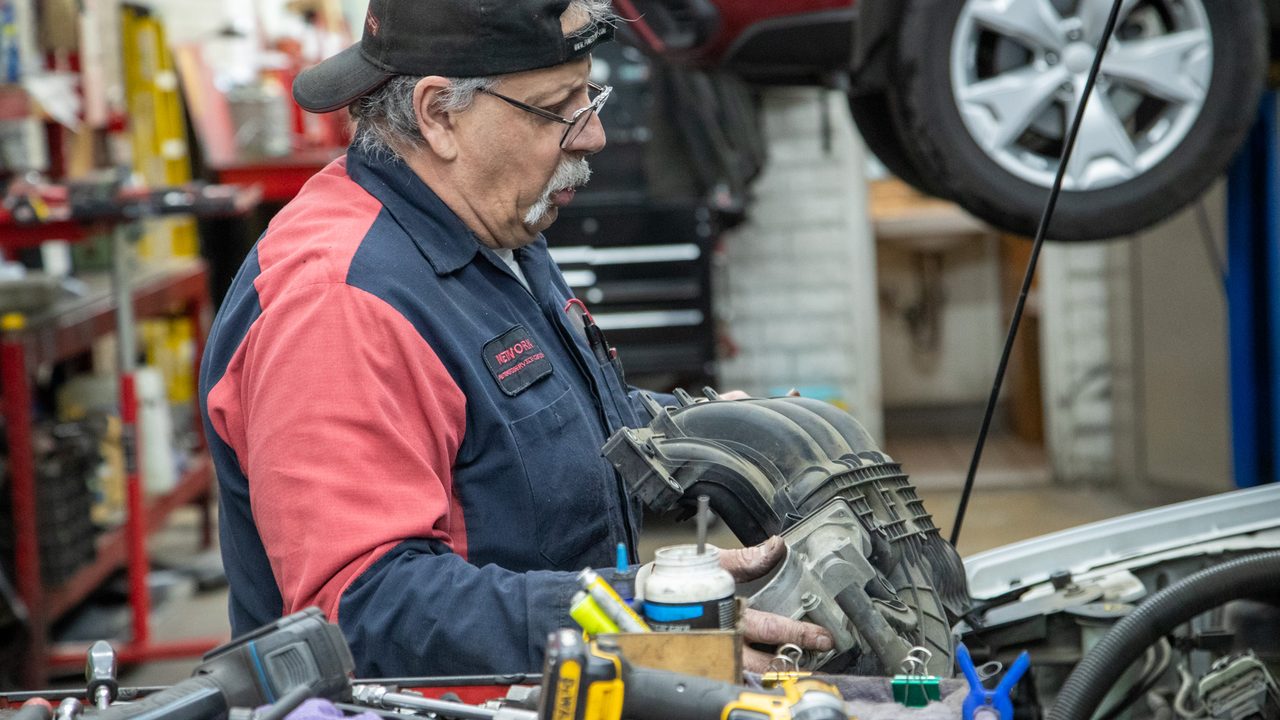
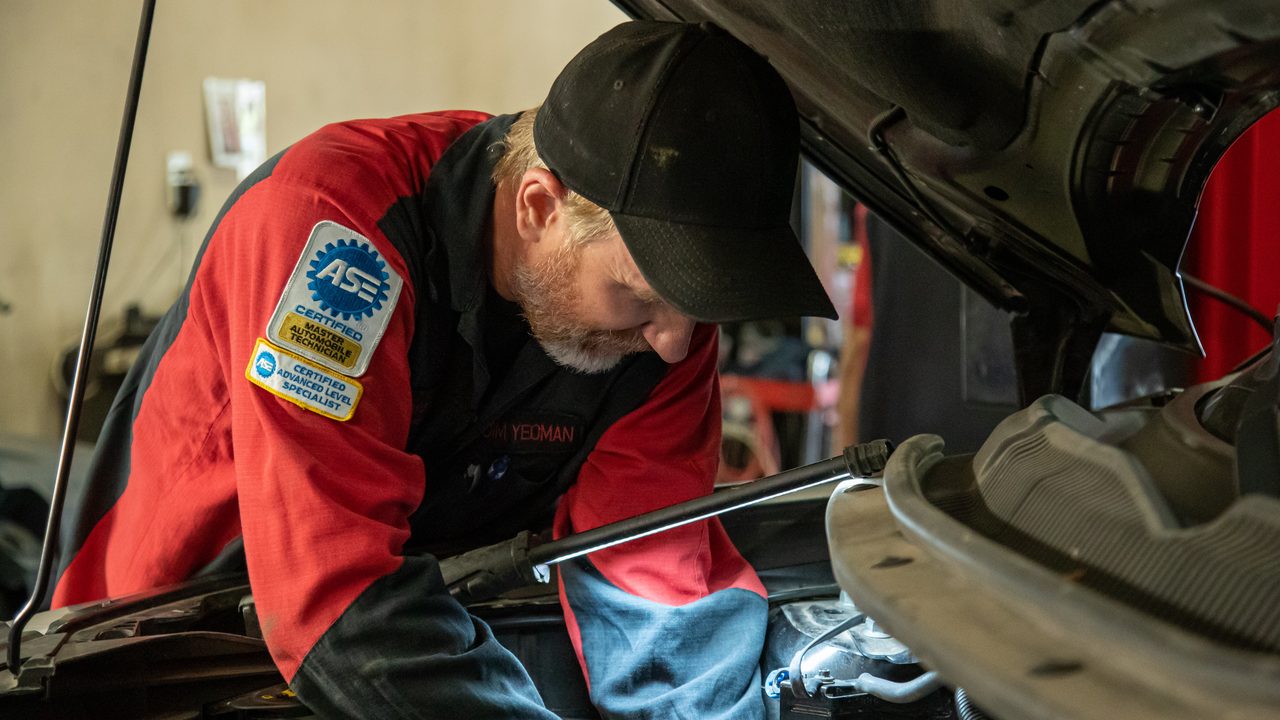
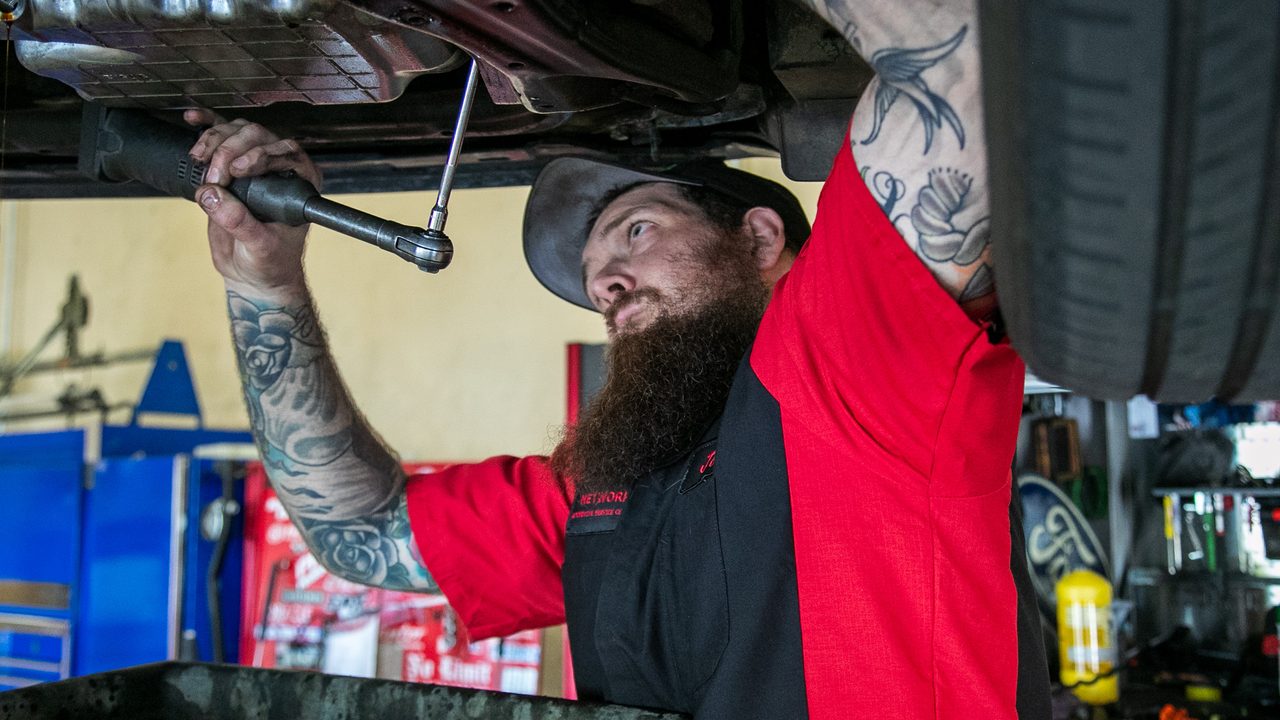
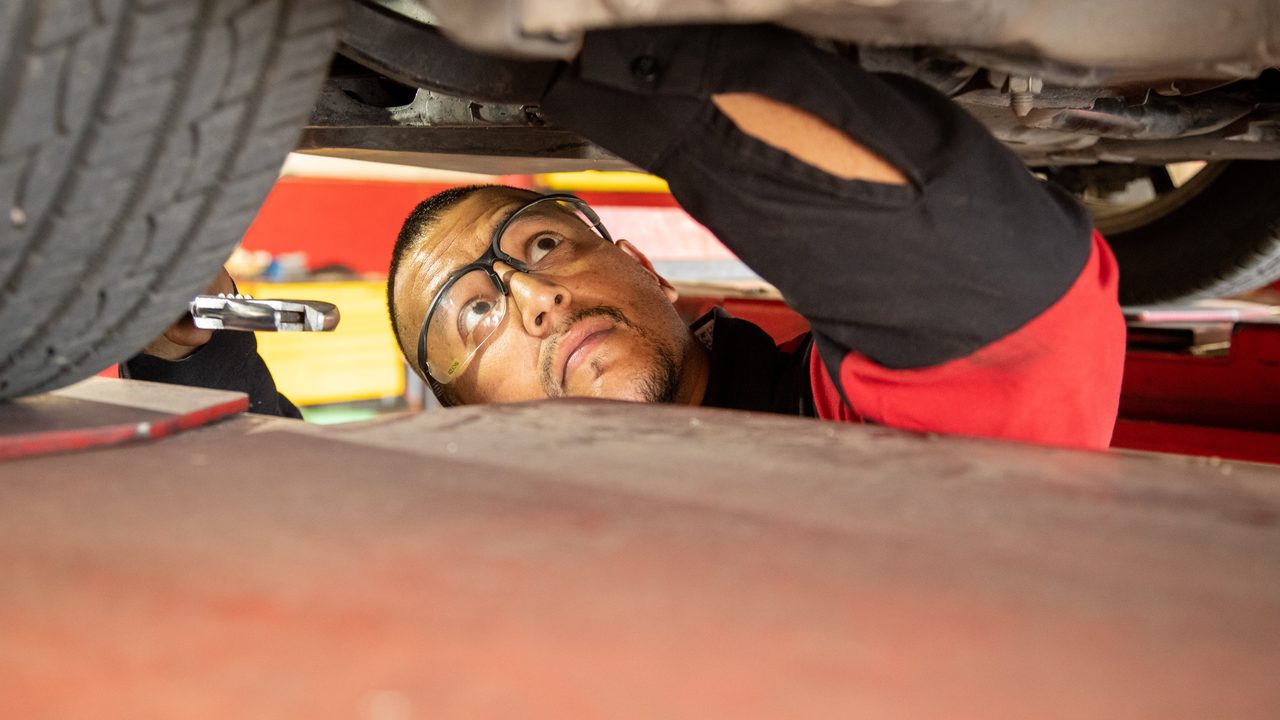
A technician confirms a CV axle problem with a hands-on inspection, not just by listening to the noise you describe. That typically includes putting the vehicle on a lift to visually check each boot for cracks, tears, or slung grease, physically moving each CV joint by hand to feel for looseness or grinding, and test driving the vehicle through tight, slow turns in both directions to reproduce and pinpoint the clicking. Because a clunk or click can also come from a worn wheel bearing, a loose sway bar link, or other suspension wear, a proper inspection rules those out rather than assuming the first thing that comes to mind.
This kind of hands-on diagnostic work is a paid service with the cost quoted upfront before any work begins, and it is worth it. Guessing which axle or joint is bad and swapping parts on a hunch is how repairs end up costing more than they should.
Part of a thorough inspection also includes checking the condition of the opposite axle. If one CV boot has torn from age and heat exposure, the other side has usually seen the same miles, the same summers, and the same driving habits. It is common for a shop to flag an aging boot on the other wheel that has not torn yet, giving you the choice to address it before it becomes a second repair trip a few months later.
What CV Axle Replacement Involves
In most cases, replacing a worn CV axle means removing the damaged axle as a complete assembly and installing a new pre-greased, pre-booted unit rather than trying to repair the old boot in place. That approach is faster and more reliable than repacking an old joint that has already been running dry or contaminated. The job generally involves removing the wheel, separating the axle from the hub and the transmission or differential, swapping in the new axle assembly, and reinstalling everything with fresh hardware where needed.
Afterward, a shop should check the vehicle's alignment settings and take it for a test drive through the same kind of tight turns that originally exposed the noise, confirming the clicking is gone before handing the keys back. Every CV axle replacement at Network Automotive is backed by our 24-month, 24,000-mile nationwide warranty, so you are covered if anything related to that repair does not hold up.
Is It Safe to Keep Driving With a Clicking CV Axle?
A clicking CV axle will not strand you the moment you hear it, but it is not something to put off indefinitely either. As the joint wears further, the clicking gets louder and more constant, eventually happening even when driving straight. In advanced cases, a CV joint can separate entirely while driving, which can mean a sudden loss of power to that wheel and, in some cases, damage to other drivetrain components nearby.
The practical answer: a mild, occasional click heard only on sharp turns at low speed is usually safe to schedule a repair within the next week or two. A loud, constant clicking, any clunking during acceleration, or a vibration that has joined the noise means the joint has progressed further and should be looked at promptly rather than waited out.
There is also a safety dimension beyond the noise itself. A CV joint that separates completely can affect how the vehicle handles, particularly during acceleration out of a turn, which is exactly the situation where you most need predictable power to both wheels. That risk, more than the cost of the repair, is the real reason to stop putting it off once the noise has become a regular part of every drive.
What to Do Right Now If You Hear This Noise
If you just noticed the clicking today, a few practical steps help in the short term. Avoid hard, fast turns while accelerating, since that is the motion that stresses a worn joint the most. Take a look at the inside edge of the wheel on the side where you hear the noise; a greasy film flung across the inner wheel face or the inside of the fender well is a strong clue that a boot has already torn. Note whether the sound happens turning left, right, or both, and whether it changes with speed, since that detail helps a technician narrow down which axle to check first.
From there, the right move is scheduling an inspection rather than waiting to see if it gets worse. CV joint wear does not reverse itself, and the Mesa combination of heat and dust tends to shorten the window between first noise and full failure compared to milder climates. Booking an appointment as soon as you notice a consistent clicking gives you the best odds of a smaller repair instead of a bigger one.
Why Mesa Drivers Choose Network Automotive
Network Automotive has been family owned and operated since 1995, and our ASE-certified technicians see CV axle wear constantly in vehicles driven around Mesa's heat and dust. We explain what we find in plain language, quote the diagnostic and repair cost upfront, and back every CV axle replacement with a 24-month, 24,000-mile nationwide warranty. You can book an appointment at one of our locations or check current service coupons before you come in. A full rundown of what we work on is on our services page.
Network Automotive serves drivers across the East Valley and beyond, with locations covering Mesa, Gilbert, Apache Junction, Queen Creek, and Prescott. If a clicking noise on turns has you wondering about related suspension or wheel noises, our posts on grinding noise when turning, wheel bearing replacement, and suspension repair cover the noises that sometimes get mistaken for a bad CV joint. If you are not sure which one matches what you are hearing, call (480) 444-0242 and describe the sound, and we will get you pointed in the right direction.
Next step
Want this looked at by someone who does it every day?
Book online at any of our six Arizona shops, or call and talk to a real person. Family owned since 1995.