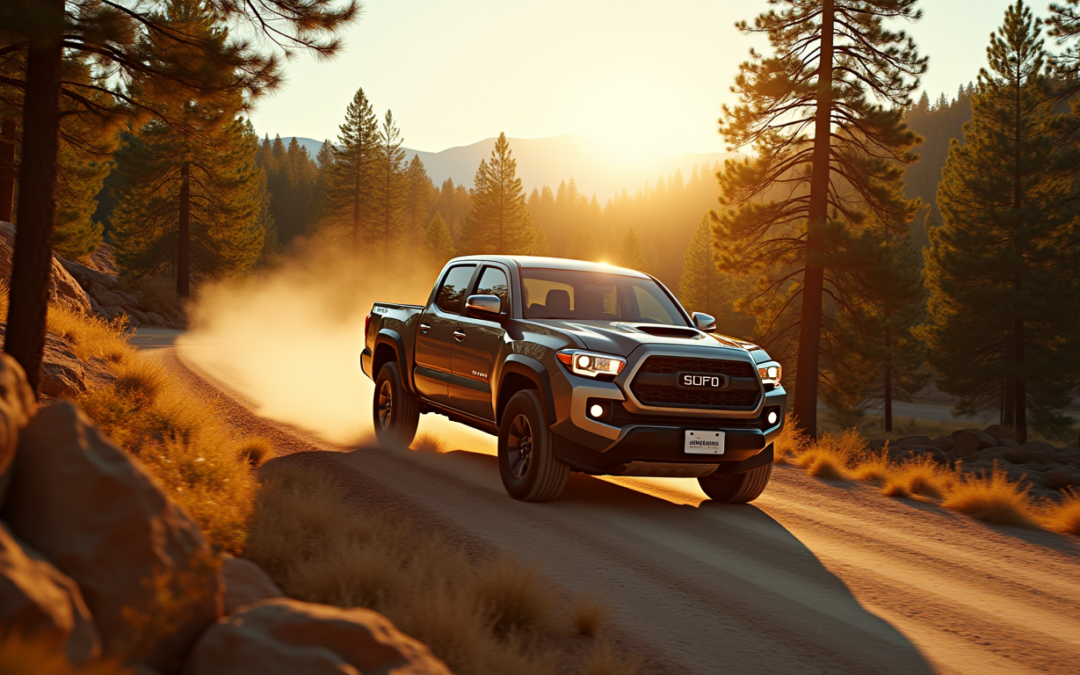
Shocks and Struts Replacement in Prescott, AZ: Signs, Costs & Same-Day Service
Shocks and Struts Replacement Prescott AZ
Prescott’s mountain roads and dramatic elevation changes put suspension systems under serious stress. Here’s how to know when your shocks or struts are failing — and what it costs to fix them.
Prescott, Arizona sits at 5,400 feet above sea level, surrounded by winding mountain roads, rocky terrain, and dramatic switchbacks that test your vehicle’s suspension every single day. Whether you’re navigating Thumb Butte Road, dropping down Senator Highway, or hauling gear up Iron Springs Road, your shocks and struts are working overtime compared to driving on flat valley pavement. Add in Arizona’s extreme heat (—which accelerates rubber bushing deterioration—) and it’s no surprise that shocks and struts replacement in Prescott, AZ is one of the most common repairs we handle for local drivers.
The problem is that worn suspension parts don’t always scream for attention. The ride gets gradually rougher, handling gets a little looser, and before you know it, you’re dealing with dangerous stopping distances, accelerated tire wear, and a vehicle that no longer responds predictably when you need it most. This guide will walk you through exactly what to look for, what replacement costs in 2026, and how Network Automotive’s certified technicians handle suspension work for Prescott-area drivers.
What Are Shocks and Struts — and Why Do They Matter?
Shocks and struts are often confused or used interchangeably, but they serve slightly different roles in your vehicle’s suspension system. Understanding the difference helps you have a more informed conversation when your mechanic diagnoses a problem.
Shock absorbers (commonly just called “shocks”) are standalone hydraulic cylinders that dampen the energy transferred from road irregularities through your springs into the vehicle body. They don’t bear vehicle weight — their job is purely to control motion. Shocks are typically found on the rear axle of many trucks and SUVs, and sometimes on both front and rear of older body-on-frame vehicles.
Struts are a structural component that combines the shock absorber with a coil spring into a single assembly. Because they’re integrated into the vehicle’s steering knuckle, struts also affect wheel alignment and steering geometry. Most modern front-wheel-drive cars and many AWD vehicles use struts on the front axle. Replacing them requires more labor than shock replacement and almost always necessitates a wheel alignment afterward.
In Prescott’s driving environment, both types face accelerated wear. The elevation means colder winters with freeze-thaw road damage, while the summers are punishing on rubber seals and bushings. Off-pavement excursions to Watson Lake, the Granite Dells, or Lynx Lake put even well-maintained suspension components through the kind of punishment designed into off-road vehicles. Most manufacturers recommend inspecting shocks and struts every 50,000 miles — but for Prescott drivers, that interval often comes faster.
A quick home test: push down hard on each corner of your vehicle and release. It should bounce back once and settle. If it bounces two or more times, that corner’s shock or strut is likely worn. This “bounce test” takes 30 seconds and can tell you a lot before you ever visit a shop.
Free Suspension Inspection
Not sure if your shocks or struts need replacement? We’ll do a full suspension check at no cost — test drive, visual inspection, bounce test, and written estimate included.
Warning Signs Your Shocks or Struts Are Failing
The challenge with suspension wear is that it happens slowly over thousands of miles. Your brain adapts to the gradual change in ride quality, so you may not notice how bad things have gotten until you ride in a well-maintained vehicle and feel the difference. Here are the six clearest signals that your suspension needs attention:
| Symptom | What You Feel | Most Likely Cause |
|---|---|---|
| Bouncy / Floaty Ride | Vehicle keeps rocking or bouncing well after hitting a bump instead of settling quickly | Worn shock absorbers — no longer damping spring oscillation |
| Nose-Dive When Braking | Front of vehicle dips sharply forward under braking, even in routine stops | Blown or weak front struts unable to resist weight transfer |
| Body Roll in Corners | Excessive lean when turning; feels like the vehicle wants to tip outward | Worn shocks and/or strut top mounts allowing too much body movement |
| Clunking or Knocking | Metal-on-metal or hollow thud sound over speed bumps, railroad tracks, or rough pavement | Worn strut mounts, end links, or jounce bumpers |
| Uneven Tire Wear | Cupped, scalloped, or patchy tread wear pattern visible on inside or outside edges | Shocks not keeping tires in consistent contact with the road surface |
| Oily Residue on Shock Body | Dark, oily film or drip visible on the shock absorber casing | Blown internal seal — hydraulic fluid leaking out, shock effectively dead |
Any one of these symptoms warrants a professional inspection. Two or more is a strong indicator that replacement is overdue. Don’t wait for multiple symptoms to pile up — in Prescott’s mountain terrain, compromised suspension is a genuine safety hazard. Emergency maneuvers on steep grades, tight switchbacks, or gravel shoulders demand that your vehicle respond exactly as expected.
Our Shock & Strut Replacement Process at Network Automotive
When you bring your vehicle in for a suspension inspection at Network Automotive, here’s exactly what happens from drive-in to drive-out:
- Test Drive & Initial Assessment — One of our ASE-certified technicians drives your vehicle over varied surfaces to replicate the symptoms you described. We note handling characteristics, noise points, and any pulling or drift before lifting the vehicle.
- Full Lift Inspection — With the vehicle on the lift and wheels off, we physically inspect every suspension component: shock and strut bodies, mounting hardware, strut top plates and bearings, control arm bushings, ball joints, sway bar links, and tie rods. Nothing gets missed.
- Written Estimate Before We Touch Anything — We present you with a complete, itemized estimate and explain exactly what needs to be replaced and why. No surprises. You approve the work before we proceed.
- Component Removal & Disassembly — Worn shocks or strut assemblies are removed. On strut jobs, we use a spring compressor to safely disassemble the old unit and transfer any reusable hardware (such as spring seats and bump stops) to the new assembly.
- Inspect Related Components — While everything is apart, we check parts we can’t easily see during the initial inspection: CV axle boots, wheel bearing play, brake hardware condition. If something else needs attention, we let you know immediately.
- Install New Components to Factory Spec — We use quality replacement parts — OEM or OEM-equivalent — and torque every fastener to manufacturer specifications. Correct torque matters: under-torqued suspension hardware can work loose; over-torqued can damage threads and crush bushings.
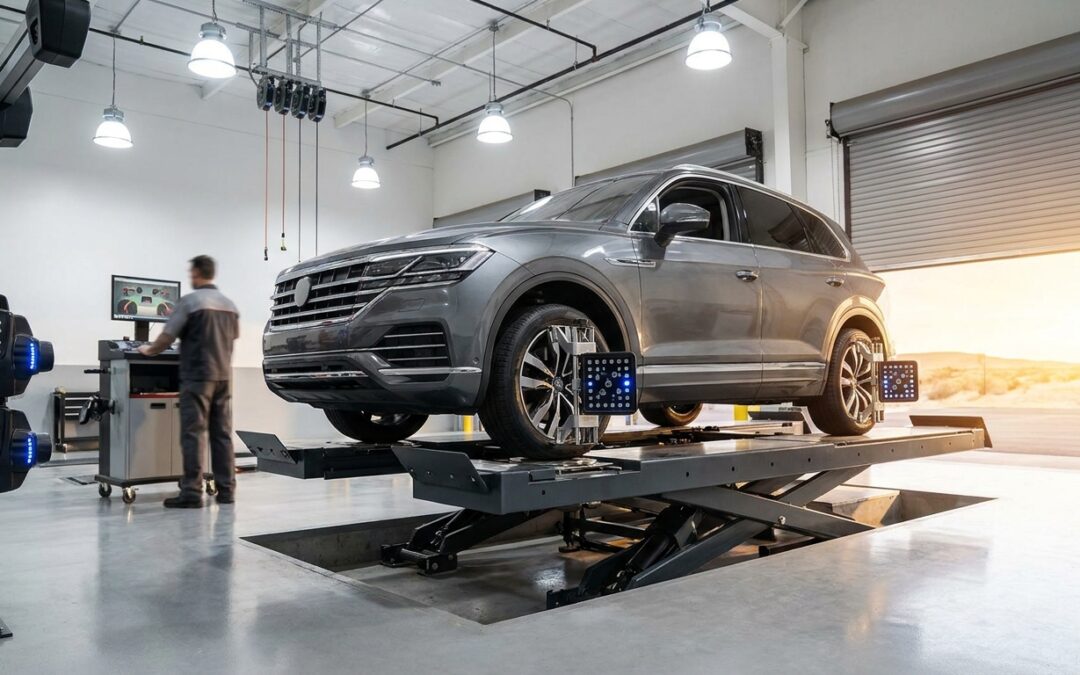
- Four-Wheel Alignment — Strut replacement always changes wheel alignment angles. We perform a computerized four-wheel alignment after every strut job to restore factory geometry and prevent uneven tire wear.
- Road Test & Confirmation — We take the vehicle through the same driving conditions as the initial test drive to confirm the repair is complete and the ride quality is back where it should be. You get a car back that handles the way it was designed to.
Cost & Turnaround Time for Prescott Drivers
Suspension repair costs vary significantly based on vehicle type, whether you need shocks or struts, and how many corners need attention. Here’s a realistic breakdown of what Prescott-area drivers typically pay in 2026:
- Rear shock absorbers (pair): $180–$380 installed — most trucks, SUVs, and older sedans. Labor is typically 1–1.5 hours. No alignment required for rear shocks on most vehicles.
- Front strut assembly (pair): $420–$780 installed — includes new strut cartridge, spring, mount, and bearing plate. Alignment required after; included in our quote.
- Complete strut assembly (both axles): $700–$1,400 depending on vehicle — full four-corner replacement for high-mileage vehicles where rear struts are also worn. Most economical per-corner.
- Quick Strut or loaded strut assemblies: $100–$200 more per axle but cut labor time and use new spring + hardware — often the better value on vehicles over 100K miles.
- Four-wheel alignment: Included after strut replacement; $89–$129 as standalone service. Never skip this after strut work.
- Turnaround time: Rear shocks: 1.5–2.5 hours. Front struts: 2.5–4 hours. Full suspension refresh: 4–6 hours. Same-day service is available for most jobs when you call ahead.
If your vehicle is under 80,000 miles and the original shocks or struts have never been replaced, a single-axle job is often sufficient. If you’re over 100,000 miles or started having issues at the rear after already replacing the front, it’s worth addressing all four corners — the labor savings on a complete job usually offset the additional parts cost.
Get a Same-Day Suspension Quote
Tell us your vehicle and symptoms. We’ll give you a firm price over the phone or schedule a free inspection — no obligation, no pressure.
When Is It Urgent? AZ Safety Warnings
Not every worn shock or strut needs emergency same-day attention — but some situations do. Here are the conditions where driving on compromised suspension becomes genuinely dangerous, especially for Prescott’s mountain terrain:
- Visible fluid leaking from the shock body — A blown seal means the shock is no longer functioning. There is no “a little bit leaking” — once the hydraulic fluid is out, the component is effectively dead.
- Vehicle bottoming out over normal road irregularities — If you’re hitting the bump stops on regular road bumps (not off-road obstacles), the shock has lost all its damping capacity.
- Severe nose-dive causing delayed braking response — On steep Prescott grades, front weight transfer under braking must be controlled by functioning struts. Without them, stopping distance increases unpredictably.
- Clunking or grinding that changes with steering input — This can indicate a strut bearing plate or top mount that is cracking, which can cause sudden steering loss in extreme cases.
- Vehicle pulling hard to one side on level road — Combined with suspension wear, this can signal a strut so badly misaligned that a blowout or loss of vehicle control is possible under sudden swerve conditions.
- Any suspension symptom combined with ABS or stability control warnings — Your vehicle’s electronic safety systems rely on wheel speed sensors that function correctly only when tires maintain proper road contact. Worn shocks can cause enough wheel hop to confuse these systems.
What to Do Right Now
If you’re reading this because something feels off with your vehicle’s ride, here’s a practical sequence to follow before you book anything:
- Do the bounce test — Push down firmly on each corner of your vehicle and let go. Count the bounces before it settles. One bounce and stop is normal. Two or more means that corner needs attention.
- Check for fluid on the shock body — Reach your hand behind each rear wheel and feel the shock absorber body. Any oily residue is a red flag. Do the same for the front strut towers if you can access them without the wheel being off.
- Inspect your tire tread pattern — Look for cupping (high-low pattern around the circumference) or uneven wear between the inner and outer edges. Either pattern can indicate suspension problems versus a simple inflation issue.
- Note when symptoms are worst — Over bumps? During braking? In corners? In cold weather? This information helps the technician isolate the problem faster and saves you diagnostic time.
- Call Network Automotive at (480) 444-0242 — Describe what you found and what you’re experiencing. We can often give you a ballpark estimate over the phone and schedule a same-day inspection if the situation is urgent.
- Avoid rough roads until inspected — If you’re seeing multiple warning signs, minimize off-pavement driving and avoid high-speed highway runs until a technician confirms the extent of the wear.
Why Prescott Drivers Choose Network Automotive
We know you have options when it comes to suspension repair. Here’s what consistently brings Prescott-area drivers to Network Automotive over the national chain shops and independent garages:
- ASE-Certified Technicians — Every technician on our suspension team holds current ASE certification in suspension and steering. This isn’t a shop where your car gets handed to whoever’s available — suspension work goes to specialists.
- Free Suspension Inspection — we put it on the lift and show you what’s worn. The visual inspection, bounce test, and test drive are included, and you’ll leave with a written estimate before any decision is required.
- Transparent, Itemized Quotes — We don’t give you a single number and walk away. Every estimate breaks down parts, labor, and any alignment charges so you understand exactly what you’re approving. See our full services list and current coupons.
- Quality Parts with Warranty — We use OEM and OEM-equivalent parts backed by a parts-and-labor warranty. Cheap shocks from a bargain supplier might save money on day one and cost you again in 18 months. We don’t take that shortcut.
- Alignment Included After Strut Jobs — Some shops charge alignment as an add-on after every strut replacement. We build it into the strut quote so there are no “by the way” surprises at pickup.
- Same-Day Service Available — Most single-axle shock and strut jobs can be completed same day when you call ahead. We’ll tell you honestly when that’s possible and when it isn’t. Learn more about our team.
- Honest Assessment — Not Upselling — If one axle is worn and the other is fine, we tell you to replace one axle. We’re not going to recommend all four corners when only two need attention. Trust is how we build long-term relationships with Prescott-area customers.
Prescott & Surrounding Service Area
Network Automotive serves customers throughout the greater Prescott region and surrounding communities. If you’re driving in from any of these areas, we can help:
- Prescott — Including downtown, Prescott Lakes, Hassayampa Village, and Forest Trails
- Prescott Valley — Including Glassford Hill, Viewpoint, and Long Valley areas
- Dewey-Humboldt — Including Mayer and the Agua Fria River corridor
- Chino Valley — Including Del Rio Springs and Paulden
- Skull Valley — Serving ranchers and rural drivers in the Kirkland corridor
- Congress & Yarnell — Serving drivers coming off Highway 89
- Cordes Lakes & Black Canyon City — Interstate 17 corridor customers
- Wickenburg — Via Highway 93 for drivers in the far western service area
Not sure if we can help someone in your area? Call (480) 444-0242 — we’ll tell you straight. We also serve customers in our primary East Valley locations including Mesa, Gilbert, Apache Junction, and Queen Creek.
Prescott Shocks & Struts FAQ
How do I know if my shocks or struts are bad?
The most reliable home test is the bounce test: push down firmly on each corner of your vehicle and let go. If it bounces more than once before settling, that corner’s shock or strut is likely worn. Other signs include a bouncy or floaty ride, nose-diving under braking, body roll in corners, clunking over bumps, uneven tire wear, and visible oily residue on the shock body. Any of these warrant a professional inspection.
How much does shock and strut replacement cost in Prescott, AZ?
Rear shocks typically run $180–$380 installed for a pair on most trucks and SUVs. Front strut assemblies (which include the spring, mount, and bearing plate) usually cost $420–$780 per axle installed, including the required wheel alignment. Full four-corner suspension refreshes range from $700–$1,400 depending on the vehicle. Call (480) 444-0242 for a vehicle-specific quote — we can often give you a number over the phone.
Can I drive on bad shocks and struts?
You can, but it becomes increasingly risky the worse they get. Worn shocks increase stopping distance, reduce tire contact during braking and cornering, and cause handling unpredictability in emergency situations. On Prescott’s mountain grades and winding roads, these risks are amplified. If your shocks are leaking fluid, you should have the vehicle inspected before extended driving. Mild wear can typically wait a few weeks; severe wear should be addressed promptly.
How long do shocks and struts typically last?
Most manufacturers recommend inspection at 50,000 miles and replacement consideration around 75,000–100,000 miles under normal conditions. In Prescott’s environment — extreme heat damaging rubber bushings, freeze-thaw cycles, and mountain road stress — that interval often comes earlier. Trucks used for towing or off-pavement driving typically see suspension wear at 40,000–60,000 miles. Annual visual inspections are the best way to catch wear before it becomes a safety issue.
Do I need to replace shocks and struts in pairs?
Industry best practice is to replace in axle pairs (both front or both rear) even if only one side shows clear symptoms. Mismatched shock dampening — one side firm and one side soft — causes the vehicle to pull and handle unpredictably. Replacing only the worst side sets you up for the same problem in 6–18 months when the other side catches up. Replacing per axle is more cost-effective long-term and keeps your handling balanced.
Do I need an alignment after strut replacement?
Yes, always. Struts are part of the steering knuckle and directly affect camber and caster alignment angles. Removing and reinstalling a strut assembly, even with OEM parts, changes these angles. Driving on misaligned wheels after strut replacement accelerates tire wear and can cause handling pull. We include a four-wheel computerized alignment in every strut replacement quote — it’s not optional, it’s part of the job done correctly.
Does Network Automotive service vehicles in Prescott?
Yes. We serve customers throughout the greater Prescott region, including Prescott Valley, Dewey-Humboldt, Chino Valley, and surrounding areas. Many Prescott-area drivers make the trip to our East Valley locations because of our transparent pricing, free suspension inspections, and same-day availability. Call (480) 444-0242 to confirm we can help with your specific vehicle and schedule an appointment that works for the drive from your area.
How long does shock and strut replacement take?
Rear shock replacement on most trucks and SUVs takes 1.5–2.5 hours. Front strut replacement (both sides) typically takes 2.5–4 hours including the wheel alignment. A full four-corner suspension refresh runs 4–6 hours. Same-day service is available for most single-axle jobs when you call ahead and drop off before 10 AM. We’ll give you a realistic time estimate when you book so you can plan accordingly.
Ready to Fix Your Ride?
Don’t let worn shocks or struts turn Prescott’s mountain roads into a white-knuckle experience. Network Automotive’s certified technicians offer free suspension inspections and same-day service for most jobs. Get a firm quote today.