
by | Mar 15, 2021 | Car Care & Driving Tips
Handing your teen the keys for the first time is one of parenting’s biggest deep-breath moments. You have spent months on driving practice, but there is a second half to teen driving safety that gets far less attention: the condition of the car itself. New drivers are the least equipped to notice a failing brake or a worn tire, and the most likely to be flustered when something goes wrong on the road. Making sure the vehicle is mechanically sound, and teaching your teen a few basics, goes a long way toward peace of mind for everyone. Here is a practical checklist for Mesa area parents.

Start With a Full Inspection
Before your teen starts driving a car regularly, have a professional look it over bumper to bumper. This matters most for the typical teen car, an older hand-me-down or an inexpensive used purchase, because age and miles are exactly what create hidden problems. A thorough inspection covers brakes, tires, suspension, steering, belts, hoses, fluids, lights, and the battery, and it surfaces issues you would never spot in the driveway.
The goal is not to gold-plate the car. It is to find the things that actually affect safety, fix what needs fixing now, and know what is coming later. An honest shop will separate the two, so you can budget instead of guessing.
Prioritize Brakes and Tires
If you only invest in two systems on a teen’s car, make them brakes and tires. They determine whether the car stops in time, and new drivers rely on hard stops more often than experienced ones because they read traffic later.
- Brakes: have pad thickness, rotors, and brake fluid checked, and take squeals, grinding, or a soft pedal seriously. Our brake articles explain the warning signs in more detail.
- Tires: check tread depth, even wear, and age. In Arizona, heat ages rubber from the inside out, so a tire can look fine and still be past its safe life. Correct pressure matters too, and it changes with our big seasonal temperature swings.
Good tires and confident brakes also make the car more forgiving of the small misjudgments every new driver makes.
Put Maintenance on Autopilot
Teens are not going to track oil change intervals, so build the system for them. Put service reminders on the family calendar, schedule appointments in advance, and treat maintenance dates like any other commitment. Consistent oil changes, fluid checks, and tire rotations are what keep an older car reliable, and reliability is safety when the alternative is a teenager broken down alone.
Arizona driving deserves special attention here. Extreme heat is hard on batteries, which often fail with little warning in the summer, and it stresses cooling systems and A/C. A car that strands your teen in 110 degree heat is a genuine safety issue, not just an inconvenience, so keep the battery tested and the cooling system serviced on schedule.
Teach the Basics Every Driver Should Know
A safe car still needs a driver who notices problems early. Spend an afternoon covering:
- What the main dashboard warning lights mean, and which ones mean pull over now (oil pressure, temperature) versus schedule service soon
- How to check tire pressure and add air, and where the correct pressure is listed (the driver’s door jamb, not the tire sidewall)
- How to check the oil level
- What to do in a breakdown: get off the road, turn on hazards, stay in the car in traffic, and who to call
- Why new noises, smells, or changes in how the car drives should be reported to you right away
That last habit is the most valuable. Teens tend to ignore problems because they do not want to lose car privileges, so make it clear that reporting a problem is always the right move.
Build a Simple Emergency Kit
Every teen’s car should carry water (non-negotiable in Arizona), a phone charger, a flashlight, jumper cables or a jump pack, a basic first aid kit, and a card with emergency contacts and insurance information. Show them where the spare tire and jack live, even if the realistic plan is calling for help. Knowing the kit is there reduces panic, and panic is what turns small roadside problems into dangerous ones. If you want help deciding what the car itself needs before your teen starts driving, call us at (480) 444-0242 and we will walk you through it.
Involve Your Teen in the Car’s Care
The fastest way to raise a driver who takes care of a car is to include them in the process from the start. Bring your teen along to service appointments and let them hear the technician explain what was found and why it matters. A teenager who has seen a worn brake pad next to a new one understands braking distance in a way no lecture achieves.
Give them age-appropriate ownership too. Make checking tire pressure a monthly job that belongs to them. Have them keep a simple log in the glovebox of fuel fill-ups and any warning lights, which builds the habit of paying attention. When the car goes in for an oil change, let them schedule it or drop it off. These small responsibilities cost nothing, and they turn the car from a magic appliance into a machine the teen respects.
It also changes the conversation when something goes wrong. A teen who feels like a partner in maintaining the car is far more likely to tell you about the curb they clipped or the new rattle they heard, and early honesty is worth more than any single repair.
Peace of Mind for the Whole Family
You cannot ride along on every trip, but you can make sure the car is ready for the ones you are not on. Network Automotive Service Center has been family-owned since 1995, and we understand exactly what is riding on a teen driver’s car because we have been there as parents too. Explore our services, then call (480) 444-0242 to schedule an inspection before your new driver hits the road.

by | Mar 1, 2021 | Car Care & Driving Tips
If your car is broken down you may be stressed and worried about your next move. You might be trying to fix it yourself or you may be looking for the right Mesa, AZ auto repair shop to do the repairs for you. It’s important to take care of mechanical issues with your car as soon as they arrive. Not only will it help you get back on the road, but it will also ensure that other problems are less likely and that your vehicle is safe and ready for travel. Here are some things you can do when your car is broken down.
Call The Mechanic
Before you do anything else, you will want to call the mechanic and make sure they are ready for your car. If your car is able to be driven at all, you will want to make an appointment for services. You will want to try to find a mechanic or auto repair shop that is willing to work around your schedule and help you get your car checked as soon as possible. You also want to make sure you are choosing someone who has plenty of experience with your vehicle.
Check Your Budget
While your car may need to be serviced immediately, make sure you can afford the repairs. Depending on the issue with your car, you may need to save up some money or even get a loan to cover the cost of repairs. Some repairs are simple and aren’t very expensive but other can be very difficult, require a lot of parts and take a lot of time and money. Make sure you ask for an estimate from the auto repair shop and shop around to make sure you are getting the best deal on the services and are paying a fair price for them.
The Right Parts
If you are thinking about fixing your car yourself, already know what it needs and need to plan the repairs quickly, you can go ahead and order the part ahead of time. You may want to check with the auto repair shop who will be making the repairs to make sure they are okay with you ordering the parts ahead of time and will not include the cost of new parts your estimate for service. This can help save you money and time.
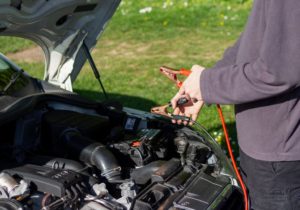
If your car is broken down and you are stressed and worried about getting back on the road, you might be wondering what you should do. The above tips can come in handy. You will want to choose a Mesa, AZ auto repair shop to help with all your plans. You will also want to make sure you are ready for the repairs. If you are ready to learn more about these services, be sure to reach out to Network Automotive Service Center. We are here to assist you with all your auto repairs. Give us a call today to learn more.
by | Feb 22, 2021 | Car Care & Driving Tips
Every car owner eventually faces the question: fix it myself, or take it to a shop? YouTube makes everything look doable, parts stores will sell you anything, and there is real satisfaction in doing your own work. But there is also a reason professional technicians spend years learning the trade and shops invest in diagnostic equipment. The honest answer is that some jobs are great DIY candidates and others are traps that cost far more to un-fix than they would have cost to do right. Here is a straightforward guide to deciding when to grab your own wrench and when to call a Chandler, AZ auto repair shop.

Jobs That Make Sense to DIY
If you are reasonably handy and willing to follow instructions carefully, several maintenance tasks are genuinely beginner-friendly:
- Engine air filter and cabin air filter: Usually accessible without tools, and worth checking often in Arizona because monsoon dust clogs filters fast.
- Wiper blades: Five-minute job, and our sun destroys blades yearly.
- Bulbs: Many exterior bulbs are simple swaps, though some vehicles bury them frustratingly.
- Checking fluids and tire pressures: Not really repairs, but the single best DIY habit you can build.
- Battery terminal cleaning: Simple with basic precautions, and corrosion is common in our heat.
These tasks share the same traits: low risk if done imperfectly, no specialized tools, and no safety-critical systems involved. They are also a great way to stay connected to your car’s condition, because hands-on owners notice changes earlier.
Jobs That Belong at a Professional Shop
Other repairs carry consequences that make professional service the smart call:
- Brakes: The stakes are obvious. A pad slap done wrong, a caliper pin left dry, or air in the hydraulic system turns a routine job into a safety problem.
- Anything involving the fuel system, airbags, or high-voltage hybrid components: These systems can injure you or total the car when handled incorrectly.
- Transmission work: Modern transmissions are complex, fluid-specific, and unforgiving of mistakes.
- Air conditioning: Refrigerant handling requires equipment and know-how, and an overcharged system fails just like an undercharged one.
- Suspension and steering: Alignment-critical and safety-critical at the same time.
Emissions-related repairs deserve a mention too. Phoenix-area vehicles have to pass emissions testing, and chasing an emissions failure without proper diagnostic equipment often becomes an expensive guessing game of swapped parts.
The pattern here: high consequence of error, specialized tools, or hidden complexity. Saving money on the parts does not help if the job has to be done twice, or if a mistake damages something more expensive than the original problem.
The Diagnostic Gap Is Bigger Than Most People Think
The hardest part of modern auto repair is usually not turning the wrench; it is knowing which wrench to turn. Today’s vehicles run dozens of computers and sensors, and a single symptom can have many possible causes. A check engine light code does not tell you what part failed; it tells you which system reported something out of range, and interpreting that correctly is a skill.
This is where DIY repairs most often go wrong: replacing parts based on a guess. Owners swap sensor after sensor chasing a code, spending more on parts than a proper diagnosis would have cost. Professional engine diagnostics exist precisely to close that gap, using scan data, testing procedures, and experience to identify the actual cause before any parts are bought.
Be Honest About Tools, Time, and Arizona Realities
Three practical questions decide most DIY-versus-shop calls:
Do you have the tools? Torque wrenches, jack stands, scan tools, and specialty sockets add up quickly. Buying a tool for one job often erases the savings, and factor in disposal too: used oil, coolant, and worn parts all need somewhere responsible to go.
Do you have the time and a safe workspace? A job that takes a shop an hour can take a first-timer a full weekend. And be realistic about working conditions: a driveway wrenching session in a Chandler summer is not just unpleasant, it is a genuine heat-safety risk for you, and hot pavement and hot components raise the difficulty of everything.
What happens if it goes wrong on Friday night? A car stuck on jack stands with a stripped bolt has no warranty and no loaner. A shop stands behind its work; your garage does not.
If You Do DIY, Do It Like a Professional
For the jobs you keep, borrow the habits that make professionals reliable. Work from the vehicle’s actual service information rather than a video filmed on a different model year. Use jack stands on solid ground, never just a jack, and chock the wheels. Torque fasteners to spec instead of guessing tight. Label what you disconnect, photograph before you disassemble, and buy quality parts rather than the cheapest listing. And respect the desert calendar: schedule driveway work for early mornings in summer, keep water within reach, and let hot components cool before touching them. Good process is what separates a satisfying Saturday job from a Sunday tow.
A Sensible Middle Path
You do not have to pick a side permanently. Plenty of our customers handle their own filters, blades, and fluid checks, then bring the vehicle in for everything involving safety systems, diagnostics, or specialized equipment. That split keeps you engaged with your car, saves money where saving is easy, and puts professionals on the jobs where mistakes are expensive. If you start a job and get in over your head, do not force it; call (480) 444-0242 and describe where things stand, and you will get a straight answer about the best way forward. It also never hurts to check our current coupons before assuming the shop route costs more.
DIY or professional is not a loyalty test; it is a judgment call you make job by job. For everything on the professional side of the line, Network Automotive Service Center, family-owned since 1995, is ready to help. Explore our services or call (480) 444-0242 to schedule a visit, and keep your own wrench for the jobs that deserve it.

by | Feb 8, 2021 | Car Care & Driving Tips
When you are ready to take your car to a repair shop and want to make sure you are getting the right repairs and everything done as needed, you have a lot of things to think about. You don’t want to try to make your own repairs unless you have plenty of experience with your vehicle and the issue. Trying to work on your car on your own could result in some serious problems. Here are some things you should remember when taking your car to a Chandler, AZ auto repair shop.
Scheduling Frequent Changes
Normally when you get your oil changed at a shop, they will put a sticker on your windshield disclosing to you when the oil was last changed. The sticker works as an update, and tells you when the following oil change is expected. On the off chance that you are replacing your own oil, make sure to monitor the mileage and date, so you realize when it’s an ideal opportunity to get help with the servicing. You’ll be attempting to follow the specific date and mileage of your last change, or you may neglect to do your oil change as often as necessary.
 Tire Rotations
Oil changes frequently go with the tire producers’ suggested tire revolution plan. Pivoting your tires each oil change can be a lot of work and something you don’t want to attempt to do on your own. Instead, you can take your car to a trusted auto repair shop where you will be able to ensure the vehicle gets the attention it needs and that both the oil and the tires are tended to as needed to make sure the vehicle is safe.
Oil Gasket
On certain vehicles, the oil filter gasket will need to be changed. These gaskets are regularly not reusable on the grounds that they are meant to be taken off and thrown away when it comes time to change the oil. On the off chance that you don’t change your gasket too, you may wind up with a leak that could cause you to lose oil pressure. In the event that your vehicle utilizes a replaceable gasket rather than a typical one, you should consider replacing the gasket anyways to ensure it has a good fit and seal for your vehicle.
If you are ready to take your vehicle to a Chandler, AZ auto repair shop and you want to make sure you are getting everything in order, you want to keep the above tips and suggestions in mind. If you need help changing your oil or don’t have a clue how to do it yourself it’s best to let the professionals do it. You can reach out to Network Automotive Service Center for help with all your auto repair needs. Give us a call or stop by to learn more about our services and all the ways we can help with an oil change.

by | Dec 28, 2020 | Car Care & Driving Tips
The holidays are here and you may find that you are rushing around and trying to get a lot of things done in a short amount of time. Many people are out doing their holiday shopping and running other holiday errands. If you need to find some time to have your car maintenance or serviced, you could get it done while you are doing your shopping. Here are a few reasons why you should call a Chandler, AZ auto repair shop.
Convenient
If you are shopping with other people or if you have more than one vehicle, it can be a good idea to have a family member drop off your car and pock you up so the car can be serviced while you are out shopping. This can be a time when you don’t need your vehicle and will be able to drop it off so you can do other things. The service center will work on your vehicle while you are out doing your holiday shopping and call you when it is finished. This will allow to get two things done at once and help you save some time.
Prepare For Holiday Trips
When you are doing your holiday shopping, it’s important to remember that you will likely be traveling to deliver the gifts you are buying. Some people travel across the country and others just a few houses down. Regardless of the distance, you want to make sure your car is ready for the holidays and will get you and your vehicle to your destination safely. The repairs will also ensure that your car is ready for other winter travels and won’t stall while you are driving on cold snowy roads all season.
Save Money
 You may be wondering if you can afford to have your vehicle services during the holidays when you have so many other things that need to be purchased. If your car is having issues, it’s best to have them repaired now. The longer you let them go the worse they will become. This can mean that the repairs become more costly too. Taking care of them now can help save you money that you may not have after or during the holidays to put towards the repairs.
If you are planning to do some holiday shopping during the season and you need to have your vehicle services, you should consider taking it to a Chandler, AZ auto repair shop while you are doing your shopping. Not only will this allow you to get the repairs done in a timely manner, it can save you time and money that can be focused on other things that will help prepare you for the holidays. If you need some help finding the right repair shop for your needs, be sure to call Network Automotive Service Center. We are here to help with all your vehicle repair needs. Make an appointment today to get your car taken care of.

by | Dec 21, 2020 | Car Care & Driving Tips
At some point, many of us take over the car questions for our parents. Maybe Dad is not comfortable crawling under the hood anymore, or Mom mentions a noise her car has been making for months, and you realize nobody has looked at it. Helping elderly parents with vehicle care is one of those quiet responsibilities that sneaks up on families, and it matters more than most people think: for older drivers, a reliable car is independence itself. The right Mesa, AZ auto repair shop can carry most of that load for you. Here is why partnering with a trusted local shop is one of the best things you can do for your parents, and what to look for when you choose one.

Reliability Is a Safety Issue for Older Drivers
A breakdown that is an inconvenience for a thirty-year-old can be a genuine emergency for an eighty-year-old. Standing on the shoulder of a Mesa road in July heat is dangerous for anyone, and far more so for someone with health concerns or limited mobility. Regular professional maintenance dramatically reduces the odds of a roadside failure by catching weak batteries, worn belts, aging hoses, and low fluids before they strand anyone.
Arizona adds urgency here. Our summer heat kills car batteries faster than almost anywhere, often with little warning, and an older driver stuck in a hot parking lot with a car that will not start is exactly the scenario a routine battery test exists to prevent.
Tires deserve special mention. Older drivers often put so few miles on a car that the tread looks fine long after the rubber itself has aged and hardened, and aged tires lose grip even with plenty of tread remaining. Ask to have tires evaluated by age as well as wear, and make sure the spare or inflation kit is actually usable.
Vehicles Driven Gently Still Age
Many older drivers put very few miles on their cars, and families assume low mileage means low maintenance. It does not work that way. Time degrades vehicles independently of mileage:
- Rubber components like belts, hoses, and tires dry out and crack, a process our desert heat accelerates.
- Fluids absorb moisture and break down even when the car sits.
- Batteries age chemically whether or not they are used.
- Short, infrequent trips never fully warm the engine, which is actually harder on oil than regular driving.
A car that only goes to church and the grocery store still needs scheduled service. In some ways it needs it more, because problems have fewer chances to reveal themselves before they become failures.
A Good Shop Becomes a Second Set of Eyes
Older drivers sometimes miss, or quietly tolerate, symptoms that deserve attention: brakes that need more pedal pressure, a pull to one side, a slipping shift. When the same shop services your parents’ car regularly, technicians notice these changes and flag them. Systems like brakes, steering, and tires are exactly where gradual wear intersects with driver safety, and where an honest professional inspection protects people who may not notice the decline themselves.
This is also where adult children get peace of mind. Instead of wondering whether Mom’s car is safe, you know it was inspected by someone whose job is to check.
Look for a Shop That Communicates With Family
The best arrangement for many families is a triangle: the parent brings the car in, and the shop is happy to explain findings and recommendations to a son or daughter by phone. When you are evaluating a shop for your parents, ask about exactly that. A trustworthy shop will welcome the conversation, explain what needs doing now versus what can wait, and never pressure an older customer into work they do not understand. A shop that knows the family can also keep things simple on logistics, like knowing who to call with questions before work begins. If you want to talk through your parents’ vehicle and how to set up that kind of relationship, call (480) 444-0242 and have that conversation before the first appointment.
A few other things worth looking for: a shop close to where your parents live or where family can easily help with drop-off, clear written estimates, and patience in explaining repairs in plain language rather than jargon.
Practical Ways to Make It Easy for Everyone
A few logistics turn good intentions into a system that actually happens:
- Put service on the calendar, not on memory. Tie maintenance visits to fixed points like birthdays or registration renewal so they are never skipped by accident.
- Keep records in one folder. A simple envelope in the glovebox with invoices gives any family member, and the shop, the full picture at a glance.
- Combine trips. Schedule service when a son or daughter can drive the second car, so nobody waits alone.
- Agree on a spending threshold. Decide together that repairs above a certain amount trigger a family conversation first, which protects parents from pressure anywhere they take the car.
- Check the basics between visits. When you visit your parents, a thirty-second walk around the car for tire condition, lights, and new dents tells you a lot.
Why Families Choose a Long-Standing Local Shop
Trust is the entire game when someone else is caring for your parents’ car. A shop that has served the same community for decades has a reputation it protects with every repair. Network Automotive Service Center has been family-owned since 1995, and being a family business shapes how we treat other families: we service plenty of vehicles that belong to customers’ parents, and we understand that the person paying attention to the invoice may not be the person driving the car. You can read more about who we are on our about page.
Helping your parents keep a safe, reliable car does not require you to become a mechanic. It requires a shop you trust, a regular maintenance rhythm, and open communication. If you are ready to set that up, explore our services or call Network Automotive Service Center at (480) 444-0242. We will help you keep the people you love safely on the road, and take one recurring worry off your plate.