Home › Blog › AZ Emissions Test Failure Repair Mesa AZ
AZ Emissions Test Failure Repair in Mesa: What Failed, What It Costs, and How to Pass Next Time
By Network Automotive Service CenterMesa, AZUpdated June 2026
You drove out of the AZ emissions station with a failed slip and a registration deadline ticking. Now what? This is the mechanic-written guide to AZ emissions test failure repair in Mesa — what each failure code actually means, what it costs to fix, why a code clear right before the re-test usually fails, and how to pass on your next try without spending more than you have to.
It usually goes like this: you pulled into the AZ emissions test station at Apache Trail or Country Club Drive, paid your fee, sat through the test, and got handed a failure slip. Maybe the check engine light was on. Maybe a readiness monitor wasn’t set. Maybe your tailpipe numbers were over the limit. Either way, your registration is on hold and you’ve got about 30 days to figure this out. If you’ve been Googling “AZ emissions test failure repair Mesa AZ” from a parking lot with a failed slip in your hand, you’re in the right place.
At Network Automotive Service Center, we’ve been helping East Valley drivers pass AZ emissions since 1995. The Maricopa County emissions program has changed several times over the years, but the basic reality stays the same: a failed emissions test means something specific is broken or not yet verified by the vehicle’s onboard computer. This guide walks you through every common failure type, what it actually costs to fix in Mesa in 2026, why “clearing the code” before retesting almost never works, and the readiness-monitor drive cycle expertise that gets you a pass on the first re-test instead of the third.
2x
The number of times a typical “cleared the code and re-tested” vehicle fails before passing — because the onboard readiness monitors haven’t completed yet. We get you to one trip in instead of three.
How AZ Emissions Testing Actually Works in 2026
Arizona’s vehicle emissions program is run by ADEQ (Arizona Department of Environmental Quality) and applies to vehicles registered in Maricopa County (Phoenix metro, including Mesa, Gilbert, Chandler, Queen Creek, Tempe, Scottsdale) and parts of Pinal County (including Apache Junction, San Tan Valley areas).
Gas vehicles 1981 and newer: OBD-II test (the computer is queried)
Gas vehicles 1980 and older: tailpipe test only
Diesel vehicles 1967 and newer (under 8,500 lbs GVWR): opacity test
Vehicles 5 model years old or newer: exempt
Some hybrids and EVs: partial or full exemption
Test frequency: typically every 2 years at registration renewal
Test cost: $13.50 (gas OBD-II) to $25.50+ (older vehicles / opacity)
Re-test: first re-test typically free if completed within 60 days at the same station
The Three Ways Your Vehicle Can Fail an AZ Emissions Test
Check engine light is on. Automatic failure regardless of what the code is. Even a $30 gas cap code fails you.
Readiness monitors not complete. Your OBD-II computer has 8–11 self-test “monitors” (oxygen, catalyst, EVAP, EGR, secondary air, etc.). The state allows 2 incomplete on 1996–2000 vehicles and 1 incomplete on 2001+ vehicles. More than that = automatic failure.
Stored DTCs (diagnostic trouble codes) in the emissions-related computer modules, even if the CEL isn’t currently on. Some codes will fail you while “pending.”
Tailpipe / opacity numbers above limit (older gas vehicles or diesels) — HC, CO, NOx, or smoke opacity over state thresholds.
Mesa emissions tip: The single most common reason East Valley drivers fail their re-test is that they (or their mechanic) cleared the check engine light right before re-testing — without driving the vehicle long enough for the readiness monitors to complete. The CEL is off, so they think they’re fine. The state computer queries the monitors, sees them incomplete, and fails them. Solution: never test within 100 miles of a code clear.
AZ Emissions Pre-Test & Quote
Bring us your failed emissions slip and your vehicle. We’ll scan all modules, read freeze-frame data, identify root cause, and give you a written estimate to pass your next test on the first try.
Secondary air injection (mostly older Audi/VW/BMW)
$480–$1,800
P0496 / P0497
EVAP flow during non-purge
$320–$680
P0700 / P0720
Transmission codes affecting emissions monitor
$220–$1,400
Multiple codes / multiple failed monitors
Usually 2 or more underlying issues
Quoted in writing
Pre-1996 vehicles or those that fail on tailpipe numbers can be very different — if you’re driving an older vehicle, an in-person diagnosis is essential because the failure modes don’t map cleanly to OBD-II codes.
Readiness Monitors: Why “Clearing The Code” Usually Fails You
This is the single most misunderstood part of AZ emissions testing. Even mechanics get it wrong. Here’s the deal:
Your vehicle’s OBD-II computer runs continuous self-tests called “readiness monitors” on the emissions systems. There are typically 8–11 of them (depending on vehicle):
Misfire monitor
Fuel system monitor
Comprehensive components monitor
Catalyst monitor
Heated catalyst monitor
EVAP system monitor
Secondary air monitor
O2 sensor monitor
O2 sensor heater monitor
EGR system monitor
A/C system monitor (older vehicles)
When the battery is disconnected, or codes are cleared with a scanner, every monitor resets to “not ready”. They’ll only re-set after the vehicle completes specific operating conditions:
Specific drive cycle — usually a combination of city stop-and-go AND sustained highway speed at consistent throttle
Fuel level between roughly 1/4 and 3/4 tank (for EVAP monitor)
Multiple cold-start cycles over 2–5 days for some monitors
If you clear the code in the morning, drive to the test station 10 minutes later, and test — you’ll fail. The state will say “monitors incomplete.” Most vehicles need 50–200 miles of mixed driving over 1–5 days after a code clear before all monitors set. We program drive cycles for customers as part of our emissions repair process.
How Network Automotive Handles AZ Emissions Failure Repair
Bring us the failure slip. The slip itself often shows exactly which codes failed, plus tailpipe numbers if applicable.
Full multi-module code scan. We pull codes from engine, transmission, body, and ABS modules — not just emissions codes, because related codes elsewhere often explain why an emissions code stored.
Freeze-frame data review. What the engine was doing when the code stored is often the diagnostic clue.
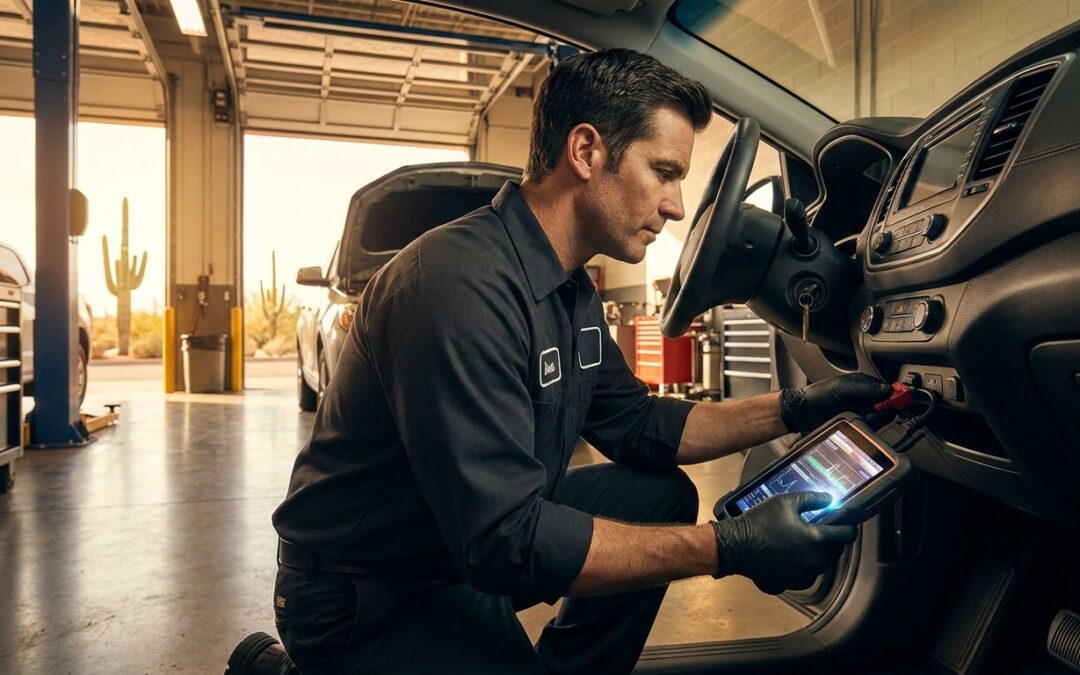
Live data analysis. Engine running, we watch fuel trims, O2 sensor activity, MAF readings, misfire counters, EGR command vs. position. This is where dealer-grade scan tools earn their keep.
Component testing. Smoke machine for EVAP leaks. Multimeter for sensor circuits. Bi-directional commands for solenoids and valves. Real diagnosis, not just guessing.
Written estimate. Itemized parts and labor. We tell you up-front if it’s one fix or multiple. No surprises.
Repair authorization. Your call — we don’t touch the vehicle until you approve.
Repair with quality parts. OEM-spec sensors, EPA-compliant catalytic converters, real EGR valves — not bargain-bin parts that throw codes again in months.
Drive cycle. This is the step almost every shop skips. We drive your vehicle through a properly-engineered drive cycle to set all required readiness monitors.
Pre-test scan. Before you go to the emissions station, we run a final scan and confirm all required monitors are set and no codes are stored or pending.
You pass the re-test on the first try. Or come back and we sort it — we stand behind every emissions repair.
30+
Years passing Mesa drivers through AZ emissions. Network Automotive has been family-owned and ASE-certified since 1995 — the East Valley shop most often recommended for emissions repair.
What Does AZ Emissions Repair Cost in Mesa in 2026?
Emissions diagnostic and code scan when you bring us your failure slip: Diagnostic fee applies, quoted upfront
Full emissions diagnostic with smoke test and component testing (when the initial scan isn’t conclusive): $120–$220, typically credited toward repair
Secondary air injection repair (luxury European mostly): $480–$1,800
Drive cycle service only (vehicle already repaired, monitors need setting): $80–$140
Pre-test scan only before you go to the emissions station: Diagnostic fee applies, quoted upfront
How long does emissions repair take in Mesa?
Most repairs are same-day or next-day. The longest part of the process is often the drive cycle to set readiness monitors — depending on what was fixed, that can take 1–3 days of mixed driving (we either do it for you or guide you through it). Plan on 3–5 days end-to-end from the failed test to the re-test pass.
Pass on the First Re-Test, Not the Third
Most emissions repair customers fail their re-test once or twice before passing — usually because monitors weren’t ready. Network Automotive’s drive-cycle expertise gets you through on the first try.
Arizona has a repair waiver program for low-income drivers who can’t afford emissions repairs. Here’s how it works:
Repair cost cap: $200 for 1980 and older, $450 for 1981–1995, $750 for 1996 and newer
You must spend the cap amount on emissions-related repair at a licensed AZ emissions repair facility
Documentation matters — written estimates and itemized invoices required
If repaired and still failing after spending the cap, you can apply for a waiver to register the vehicle anyway
One waiver per vehicle every 2 years maximum
Network Automotive provides waiver-ready documentation when applicable
This isn’t free registration — you’ll still need to actually spend the repair cap amount, and you’ll need to apply for the waiver through ADEQ. But it’s a real option for drivers in a tight spot.
Why Mesa Drivers Trust Network Automotive for Emissions Repair
Family-owned since 1995. Thousands of East Valley emissions repairs through every iteration of the AZ program.
Diagnostic fee applies, quoted upfront. Bring us the slip, get a written quote.
Dealer-grade scan tools across all major brands. Autel MaxiSYS, Snap-on Zeus, OEM-specific tools.
Drive-cycle expertise. Almost no shop in Mesa actually services drive cycles — we do, and it’s why our customers pass on the first try.
EPA & CARB-compliant parts. Including catalytic converters.
Waiver-ready documentation if you qualify for the AZ repair waiver program.
24-month / 24,000-mile nationwide warranty on parts and labor.
Pre-test scan available — bring us your repaired vehicle before re-testing and we’ll confirm readiness.
Written estimates up-front. No phone-tag, no “while we were in there.”
Network Automotive Service Center handles AZ emissions repair across:
Mesa — East Mesa, West Mesa, Las Sendas, Red Mountain, Dobson Ranch, Alta Mesa, downtown corridor
Gilbert — Agritopia, Morrison Ranch, Seville, Power Ranch
Queen Creek — Cortina, Ironwood Crossing, San Tan Heights
Apache Junction — Superstition, Gold Canyon
San Tan Valley — via the Queen Creek shop
Chandler, Tempe — convenient to our East Mesa shop
Most emissions customers book at our East Mesa shop near Power Road & US-60 — close to the Apache Trail and Country Club emissions stations.
Mesa AZ Emissions Failure Repair FAQ
How much does AZ emissions repair cost in Mesa?
It depends on what failed. Gas cap is $25–$80. EVAP system $280–$620. O2 sensor $220–$520. EGR $320–$1,200. Misfire repair $220–$900. Catalytic converter $1,200–$3,800. Our emissions diagnostic with your failure slip tells you exactly what failed and what it costs before any work is authorized. Call (480) 444-0242.
Why did my vehicle fail emissions if the check engine light isn’t on?
Two most likely reasons: (1) readiness monitors aren’t complete — the OBD-II self-tests need to run before the state computer will pass the vehicle, and they reset every time the battery is disconnected or codes are cleared. (2) Stored or pending codes that haven’t triggered the CEL yet. Both fail an AZ test even with the dashboard light off.
Why does my vehicle keep failing the re-test after the mechanic fixed it?
Almost always because the mechanic cleared the codes too close to the re-test and the readiness monitors haven’t had time to complete. The state needs to see 7–10 monitors all reading “ready” before they’ll pass the vehicle. After a code clear, most vehicles need 50–200 miles of mixed driving over 1–5 days before all monitors set. Network Automotive specifically runs drive cycles as part of the repair process.
How long does it take to pass AZ emissions after a repair?
Most repairs are same-day or next-day. The drive cycle to set readiness monitors typically takes 1–3 days of mixed driving. End-to-end, plan on 3–5 days from failed test to passed re-test if everything goes smoothly. We do a pre-test scan before you go to confirm you’re ready.
Can I clear the check engine light and just drive carefully to pass?
No — this is the #1 reason East Valley drivers fail their re-test. Clearing the CEL resets all readiness monitors to “not ready,” and the state will fail you for incomplete monitors even if the dashboard light is off. The fix is to actually repair the issue, then complete a proper drive cycle so monitors set legitimately.
What is the AZ emissions repair waiver?
Arizona offers a waiver for low-income drivers who can’t afford emissions repairs. Repair cost caps are $200 (pre-1980), $450 (1981–1995), and $750 (1996+). If you’ve spent the cap amount at a licensed AZ emissions repair shop and the vehicle still fails, you can apply for a waiver through ADEQ to register the vehicle. Network Automotive provides waiver-ready documentation when applicable.
Does my hybrid or EV need emissions testing in Arizona?
Pure EVs are exempt. Hybrids vary — most newer hybrids are exempt or partial-exempt, but some older or plug-in hybrid models still need OBD-II testing. Check with ADEQ or your registration renewal notice for your specific vehicle.
Does Network Automotive warranty emissions repairs?
Yes. Every emissions repair is backed by our 24-month / 24,000-mile nationwide warranty on parts and labor at participating NAPA AutoCare shops across the country.
Pass AZ Emissions on the First Re-Test
Failure slip? Bring it to us. Diagnostic, written estimate, real repairs with quality parts, drive-cycle expertise so your monitors set before re-testing. 24-month / 24,000-mile nationwide warranty. Family-owned in Mesa since 1995.
Home › Blog › Catalytic Converter Replacement Mesa AZ
Catalytic Converter Replacement in Mesa, AZ: Theft, Repair Costs, Insurance, and How to Get Back on the Road Fast
By Network Automotive Service CenterMesa, AZUpdated May 2026
Walked outside and your truck sounds like a Harley? You almost certainly lost a catalytic converter to overnight theft — Arizona ranks among the top three states in the country for cat theft. This is the mechanic-written guide to catalytic converter replacement in Mesa: what was stolen, what it costs to replace, how the insurance claim works, the legal stuff most shops won’t tell you, and how to make sure it doesn’t happen again.
It usually goes like this: you walk out to your driveway in Mesa at 6:30 AM, hit the start button, and the truck roars to life sounding like a tractor. Loud, rough, deafening. You crawl under to look and there’s a clean, bright-cut section of exhaust pipe where the catalytic converter used to be. Or sometimes you didn’t notice for a few days because your car was already a little loud. Either way, your morning just got expensive. If you’ve been Googling “catalytic converter replacement Mesa AZ” from a driveway, a Walmart parking lot, or your insurance agent’s phone tree, this guide walks you through everything that comes next.
At Network Automotive Service Center, we’ve been replacing catalytic converters for East Valley drivers since 1995 — and in the last 4 years specifically, we’ve seen an explosion of theft-related jobs. Arizona ranks among the top three states for catalytic converter theft per capita; Mesa, Gilbert, and Queen Creek are all heavy-volume hotspots. This article explains the real costs in 2026, what insurance does and doesn’t cover, the legal situation in AZ, and how to protect yourself going forward.
$1,800+
Average Mesa catalytic converter replacement cost when stolen. Trucks and SUVs with multiple cats can hit $4,500+. Insurance often covers it minus your deductible — but only if you have comprehensive coverage and file fast.
What Just Happened? Theft vs. Failure
There are two reasons you’re reading this article. They have very different cost ranges and very different processes:
1. Stolen catalytic converter (most common in Mesa)
Thieves slide under your vehicle — usually overnight, usually in a quiet driveway or parking lot — and cut the cat out with a reciprocating saw in 60–120 seconds. The cat itself is worth $50–$400 in raw metals (platinum, palladium, rhodium) at a scrap yard, but the damage they leave behind costs you ten times that to repair.
How to tell it was stolen:
Vehicle suddenly sounds extremely loud at startup — like a race car or a tractor
Visible clean-cut sections of exhaust pipe missing under the vehicle
Pieces of cut exhaust pipe possibly left on the ground
Check engine light typically comes on (P0420 / P0430 code) within a few miles
Sudden loss of fuel economy and power
2. Failed catalytic converter (slow death)
The cat fails internally from age, overheating, contaminated fuel, oil burning, coolant entering the exhaust (head gasket), or simply having lived too long. The vehicle stays quiet but throws a check engine light, fails AZ emissions, loses power, and gets bad MPG.
How to tell it failed naturally:
Check engine light with P0420 (Bank 1) or P0430 (Bank 2) — catalyst efficiency below threshold
Failed AZ emissions test
Rotten egg smell from the exhaust
Sluggish acceleration, especially on hills
Vehicle volume sounds normal (cat is still physically there, just not working)
Free Mesa Catalytic Converter Assessment
Bring your vehicle in — we’ll confirm whether it’s theft or failure, give you a written estimate, document everything for your insurance claim, and walk you through what happens next. No charge.
What Does Catalytic Converter Replacement Cost in Mesa in 2026?
Real Mesa numbers. The wide range is because some vehicles have one cat, some have two, some have four (V8 with downstream cats), and emissions-compliant cats vary enormously in cost by make and model:
Vehicle Type
Cats Stolen / Needed
Mesa Replacement Cost
Compact car (Civic, Corolla, Camry)
1 cat
$1,200–$2,200
Mid-size sedan / crossover
1–2 cats
$1,500–$2,800
Most full-size SUVs (Tahoe, Suburban)
2 cats
$2,400–$3,800
Pickup trucks (F-150, Silverado, RAM 1500)
2 cats
$2,200–$4,200
Heavy-duty trucks (F-250/350, RAM 2500/3500)
1–2 cats + diesel DPF
$2,800–$5,500
Hybrid vehicles (Prius is a #1 theft target)
1 cat (expensive OEM)
$2,500–$3,800
Toyota Tacoma / 4Runner (top theft targets)
2 cats
$2,400–$3,800
European luxury (BMW, Mercedes, Audi)
2–4 cats
$3,200–$6,500
Add to that any related exhaust components the thief damaged on the way out: O2 sensors ($180–$420 each), flex pipes, oxygen sensor wiring, exhaust hangers, and sometimes heat shields. Most theft jobs also include a 4-wheel alignment check because the thief usually jacks the vehicle at a non-jacking point.
Aftermarket vs. OEM Catalytic Converters in Arizona
This is where shops get sketchy. Aftermarket catalytic converters are not all legal in Arizona. Here’s the breakdown:
OEM (factory) cats — always legal, always pass AZ emissions, always the most expensive ($800–$2,500 each)
EPA-compliant aftermarket cats — legal in 47 states (NOT California, NOT Colorado, NOT New York). Acceptable in AZ.
CARB-compliant aftermarket cats — legal everywhere, slightly more expensive than EPA, often the smart middle ground if your vehicle is newer or higher-mileage
“Universal” cats — the cheapest option but often won’t pass AZ emissions long-term, may trigger P0420 codes within months. Avoid for daily drivers.
Always ask which type of catalytic converter a shop is quoting you. The price difference between universal ($150) and OEM-equivalent EPA-compliant ($600–$900) is enormous, but so is the difference in how long it lasts and whether your car passes emissions next year.
Insurance Claims for Stolen Catalytic Converters in Mesa
If you have comprehensive coverage on your auto insurance, catalytic converter theft is usually covered — minus your deductible. If you have liability-only coverage, it’s not.
Here’s how the claim process typically works in Mesa:
File a police report immediately. Most insurance companies require it. Mesa PD non-emergency: (480) 644-2211. Some companies will let you file online if you can’t get to the precinct.
Photograph the damage. Take multiple photos from underneath showing the cut exhaust ends, the missing cat section, and any tire/jacking marks.
Call your insurance company. File the claim. Get a claim number.
Tow to a shop (or drive carefully). Most insurers prefer their preferred shop network — but you have the right to choose any shop in Arizona. Network Automotive accepts most insurance work directly.
Shop provides written estimate. Including parts, labor, alignment if needed, and any related damaged components.
Insurance adjuster reviews. Sometimes in person, sometimes via photos. They may push back on aftermarket vs. OEM — you can usually request OEM if you want it.
Repair authorized. Insurance pays the shop directly minus your deductible (typically $500–$1,000).
You pay deductible at pickup. Many drivers walk out paying only $500–$1,000 out of pocket on a $3,000+ repair.
Mesa insurance tip: You are NOT required to use your insurance company’s preferred shop. Arizona law gives you the right to choose any licensed shop. If your insurer pushes you toward a shop you don’t want, you can decline. Network Automotive works directly with all major Arizona insurers and handles the paperwork on your behalf.
The Legal Side: Can You Drive Without a Cat in AZ?
Federally illegal: driving without a catalytic converter on a road vehicle violates the Clean Air Act. Maximum federal fine is $2,500 per occurrence.
Arizona-level: ARS § 49-571.01 and emissions requirements apply — vehicle cannot legally pass AZ emissions without functioning cats
Enforcement reality: short-term enforcement of catless driving is rare. DPS won’t pull you over for being loud, but a major traffic stop can result in a citation
Insurance reality: if you have a wreck while driving without a cat, your liability claim may be compromised
Registration reality: the moment you need to renew registration, AZ emissions will fail you. You cannot register a vehicle without cats.
Bottom line: you can drive briefly to a shop, but driving for weeks without a cat is a real legal and registration risk in Arizona.
Stolen Cat? Insurance? We Handle Both.
Network Automotive Mesa: free written assessment for your insurance claim, direct billing to most carriers, EPA/CARB-compliant cats in stock for most vehicles, 24-month / 24,000-mile nationwide warranty. Same-week service in most cases.
Thieves target vehicles where the cat sits high (easy access), contains more precious metal, and the vehicle is commonly found unattended. The Mesa hit list:
Toyota Prius — #1 nationally and in AZ. Contains roughly 2x the precious metals of most cats. Cat replacement is expensive ($2,500–$3,800).
Toyota Tacoma & 4Runner — high ground clearance, two cats, common in Mesa.
Honda Element & CR-V — same as above.
Ford F-150 / F-250 / F-350 — lifted trucks are especially easy access.
How Network Automotive Replaces a Catalytic Converter in Mesa
Initial assessment. Photographic inspection of damage, confirm theft vs. failure, check for collateral damage (O2 sensors, wiring, hangers, flex pipe, heat shields).
Code scan. Pull stored and pending codes. Verify other systems weren’t affected.
Written estimate. Itemized parts and labor, including EPA-compliant vs. OEM options. Insurance-friendly format.
Insurance coordination. If you’re filing a claim, we coordinate directly with the adjuster, including photos, parts numbers, and labor breakdowns.
Parts ordering. Most common applications in stock or available same-day to next-day from regional warehouse.
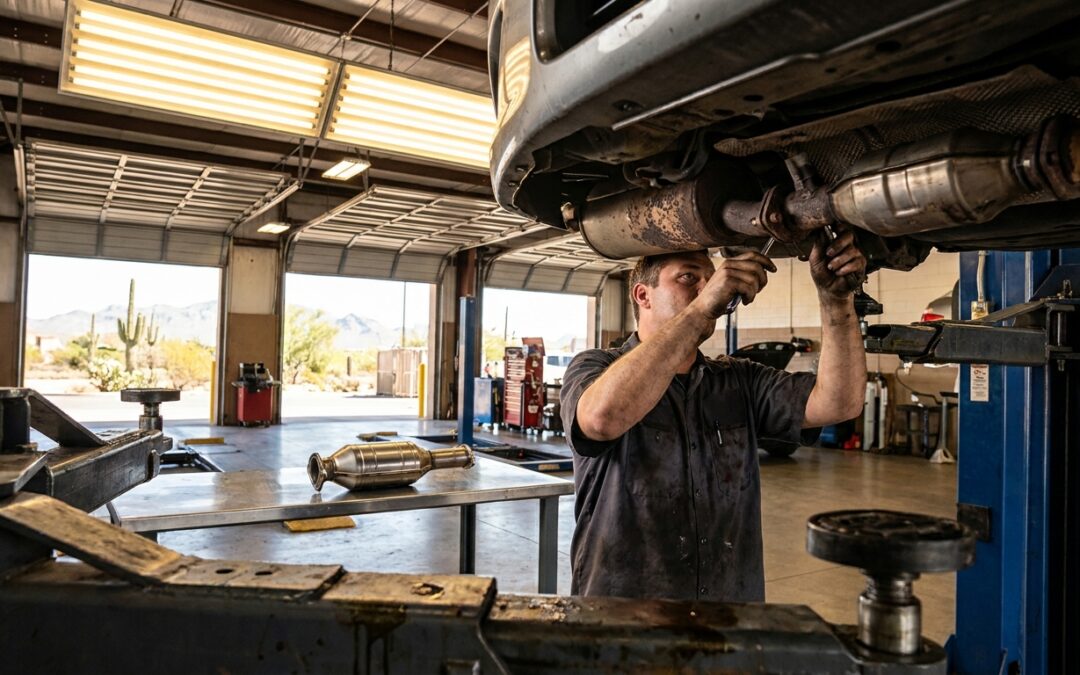
Installation. Removal of damaged components, fabrication and welding where needed, new gaskets, new hangers, new O2 sensors if damaged or recommended.
Anti-theft cage / shield installation if requested — we offer aftermarket cat shields that add a significant theft deterrent.
Code reset and emissions readiness drive cycle. Critical for AZ emissions — readiness monitors must reset before you take it to the test station.
Verification road test. Confirm no leaks, no codes, normal engine performance.
30+
Years serving Mesa. Network Automotive has been family-owned and ASE-certified since 1995 — one of the East Valley’s most experienced shops on catalytic converter and emissions work.
How to Prevent Catalytic Converter Theft in Mesa
Park in a garage when possible. The single biggest deterrent. Cat thieves don’t hit garaged vehicles.
Park in well-lit areas with foot traffic. Driveway with motion lighting, parking lot near building entrances, near security cameras.
Install a catalytic converter shield / cage. Aftermarket cages from MillerCAT, CatStrap, or vehicle-specific manufacturers. We install them in Mesa. Adds 5–15 minutes to a thief’s job — usually enough to send them elsewhere.
Get your VIN etched on the cat. Some Mesa PD events and Network Automotive offer cat-etching services. Stolen etched cats are useless to scrap yards that comply with state law.
Add a car alarm with tilt sensor. Detects the vehicle being jacked up.
Park nose-first into your garage or against a wall. Makes it harder for thieves to access from underneath.
Use a steel cable lock running through the exhaust system — cheap deterrent
For Prius, Tacoma, and 4Runner owners: seriously consider a cat shield. Your vehicle is on every Mesa theft hot list.
Why Mesa Drivers Trust Network Automotive for Catalytic Converter Work
Family-owned since 1995. Three decades of East Valley emissions and exhaust work.
Free assessment with written insurance-ready estimate. No charge whether you proceed or shop around.
Direct insurance billing for most major carriers (State Farm, Geico, Progressive, Allstate, USAA, Farmers, etc.).
EPA & CARB-compliant cats in stock for most common applications.
OEM cats available when you want them — we don’t push the cheapest option.
Cat shield installation for theft-target vehicles — ask about it.
24-month / 24,000-mile nationwide warranty on parts and labor.
Emissions readiness drive-cycle expertise so your vehicle passes AZ emissions on the first try.
Network Automotive Service Center handles catalytic converter replacement and theft repair across:
Mesa — East Mesa, West Mesa, Las Sendas, Red Mountain, Dobson Ranch, Alta Mesa, downtown corridor
Gilbert — Agritopia, Morrison Ranch, Seville, Power Ranch
Queen Creek — Cortina, Ironwood Crossing, San Tan Heights
Apache Junction — Superstition, Gold Canyon
San Tan Valley — via the Queen Creek shop
Prescott — Prescott Valley and surrounding
Most Mesa customers book at our East Mesa shop near Power Road & US-60 — fastest in-and-out for catalytic converter work and emissions readiness drive cycles.
Mesa Catalytic Converter Replacement FAQ
How much does catalytic converter replacement cost in Mesa?
It depends on the vehicle and how many cats were stolen or failed. Compact cars typically run $1,200–$2,200. Mid-size sedans and crossovers $1,500–$2,800. Most pickups $2,200–$4,200. HD diesel trucks $2,800–$5,500. Prius and Toyota Tacoma (top theft targets) $2,400–$3,800. Add $180–$420 for each damaged O2 sensor. Free assessment with insurance-ready written estimate at Network Automotive. Call (480) 444-0242.
Will my insurance cover catalytic converter theft in Arizona?
If you have comprehensive coverage, yes — minus your deductible (typically $500–$1,000). If you have liability-only, no. File a police report first (Mesa PD non-emergency: 480-644-2211), photograph the damage, then call your insurance company. Network Automotive handles direct billing with most major carriers and provides insurance-ready written estimates at no charge.
Is it illegal to drive without a catalytic converter in Arizona?
Yes — both federally (Clean Air Act, up to $2,500 fine per occurrence) and at the state level for emissions compliance. Short-term enforcement (a traffic stop just because you’re loud) is rare, but you cannot pass AZ emissions or register the vehicle without cats. Drive directly to a shop — do not drive long-term.
How long does catalytic converter replacement take in Mesa?
Most replacements take 2–4 hours of actual shop time. Including parts ordering (when not in stock), insurance authorization, and emissions readiness drive cycle, most customers are back on the road within 2–5 business days. Same-week service is typical at Network Automotive for common applications.
OEM, EPA-compliant, or universal catalytic converter — what should I choose?
For an Arizona daily driver, EPA-compliant aftermarket is the smart middle ground — legal in AZ, will pass emissions, lasts the life of the vehicle, costs significantly less than OEM. Insurance often covers OEM if you request it. Avoid “universal” cats — they’re the cheapest but often fail AZ emissions within months and trigger P0420 codes.
How can I prevent catalytic converter theft in Mesa?
Park in a garage when possible (single biggest deterrent). If you can’t, install a cat shield or cage — aftermarket steel cages add 5–15 minutes to a thief’s job and they typically move on to an easier target. Park in well-lit areas with cameras. Etch your VIN on the cat. Get a tilt-sensor car alarm. For Prius, Tacoma, and 4Runner owners specifically, install a cat shield — your vehicle is on every theft hot list.
What’s the difference between a stolen cat and a failed cat?
A stolen cat = vehicle suddenly extremely loud, visible cut exhaust pipe under the vehicle, sometimes pieces left on the ground. A failed cat = vehicle sounds normal, check engine light with P0420 or P0430 code, failed AZ emissions, rotten egg smell, sluggish acceleration. Both cost similar to replace, but the insurance and process are completely different.
Does Network Automotive warranty catalytic converter work?
Yes. Every catalytic converter replacement is backed by a 24-month / 24,000-mile nationwide warranty on parts and labor at participating NAPA AutoCare shops across the country.
Lost a Cat to Theft? We’ll Handle Everything.
Free insurance-ready assessment, direct billing with most carriers, EPA/CARB-compliant cats in stock, cat shield installation, 24-month / 24,000-mile nationwide warranty. Family-owned in Mesa since 1995.
It is important to know why your car’s exhaust pipe exists. Combustion requires the expulsion of fuel and air. Pumping out used-up gaseous mixtures through pipes and filters results in engine exhaust emissions. Fuel-air mixtures that are operating normally have no odor or color. A properly operating automobile’s tailpipe appears to emit nothing when viewed from behind. When a vehicle’s smoke exhaust is anything but odorless and colorless, it is not operating at peak efficiency. There is a high probability that there is a problem. The following reasons are why your exhaust may be smoking and what you should do about it when you take it to an auto repair shop in Chandler, AZ.
Condensation
Starting with the best-case scenario, let’s examine the worst-case scenario. Your car’s exhaust pipe emits a white fume on a cold morning that scares you. A minute after warm-up, the emissions will return to normal if smoke replaces steam. On cold days, the gaseous fuel-air mixtures in your exhaust pipe condense into liquid as your vehicle sits. During the starting process, the car generates heat, which turns the liquid into steam, causing the white smoke exhaust. As the car warms up, the emissions become colorless gaseous.
Oil Leak
There is often a leak in the system causing white smoke exhaust that is not caused by condensation. Lubricating moving parts such as pistons and keeping them running smoothly is the purpose of motor oil. A leaky oil filter mixes with fuel, air, and exhaust gases when it gets into the combustion chamber and blew out the tailpipe. In the process, white smoke is produced or bluish-white smoke is produced. The combustion chamber should not contain oil, so this is a problem. Spark plugs are corroded by it and interfere with the process. As a consequence, moving parts get less oil to lubricate them. It is possible for your car to run dangerously low on oil if the leak goes on long enough or for a long enough period of time. It is possible for oil to leak under the hood if o-rings, gaskets, or other seals fail. In the absence of a hard part repair, additives like are designed to rejuvenate worn seals and prevent oil loss. Then, drive the car 100 miles with half of a bottle in the crankcase. There should no longer be any white smoke. For the next oil and filter change, you can save the remainder of the bottle. Bad seals are almost always responsible for oil leaks on a car, but they can also result from blown head gaskets or damaged oil filters. An expert mechanic might be required to diagnose the source of the problem.
If you notice your car is smoking from the exhaust you may be looking for a way to make it stop. Finding the cause is the first step. You can take your car to an auto repair shop in Chandler, AZ. If you need some help, reach out to us to make your plans and arrange an appointment.
A loud exhaust has a way of announcing itself at the worst times: backing out of the driveway at 6 AM, idling in a school pickup line, or droning on the highway until your ears ring. Whether your car developed the noise gradually or woke up one day sounding like a race car, a loud exhaust is more than an annoyance. It is usually a symptom, sometimes of a simple worn part and sometimes of a leak that can affect performance, fuel economy, and even the air inside your cabin. Here is how to figure out why your exhaust got loud, what quiets it properly, and which noises should send you straight to a shop.
First, Understand Why Exhausts Get Loud
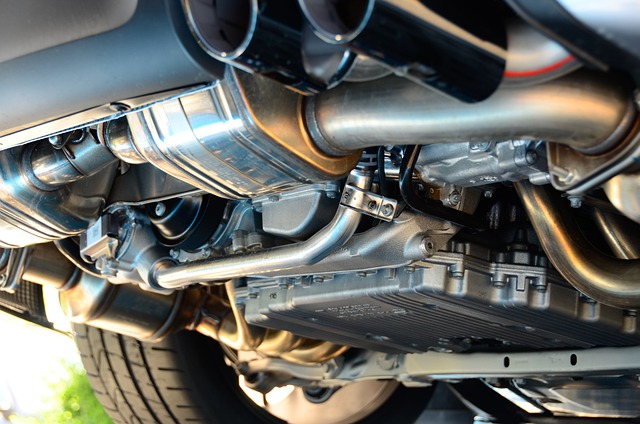
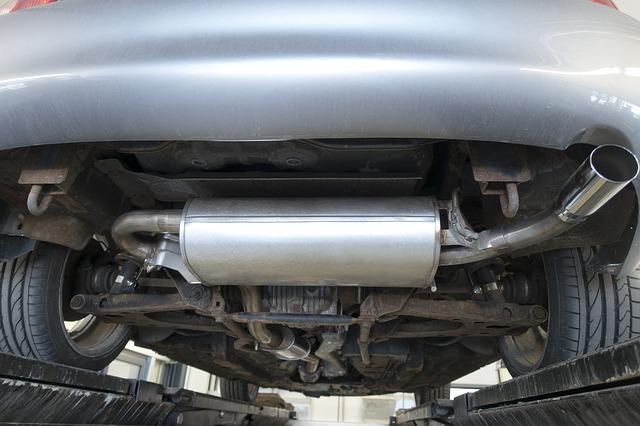
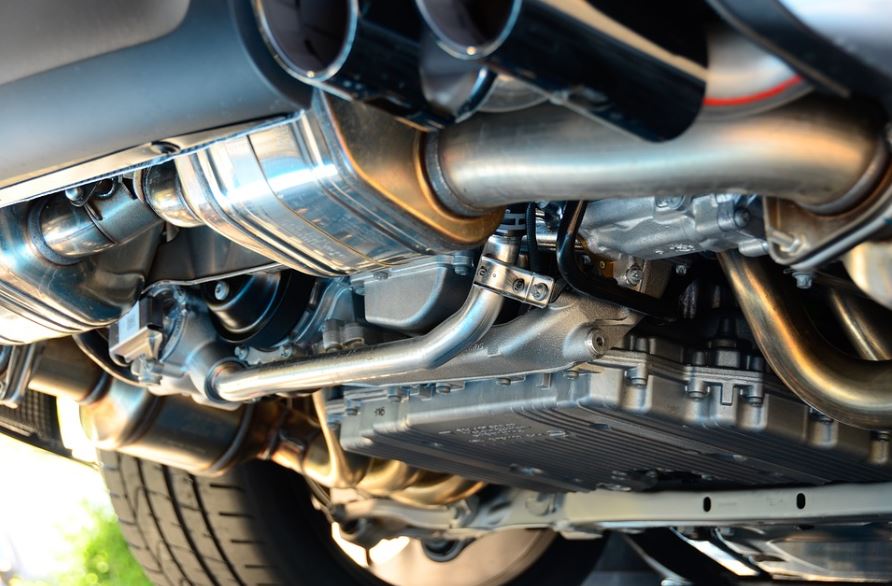
Your exhaust system routes combustion gases from the engine, through the catalytic converter and muffler, and out the tailpipe, quieting the engine’s pulses along the way. When the system is loud, something in that path has changed:
Rust and corrosion: Mufflers and pipes corrode from the inside out, since exhaust moisture collects in the system, especially on vehicles driven mostly on short trips.
Leaks at joints and gaskets: Flange gaskets, clamps, and welds fail with age and heat cycling, letting gases escape before the muffler can do its job.
Physical damage: Speed bumps, debris, and bottoming out can crack pipes or knock components loose.
Failed hangers: Broken rubber hangers let the system sag and rattle against the underbody.
Each cause has a different fix, which is why proper diagnosis beats bolting on parts and hoping.
Read the Noise: What Different Sounds Mean
The character of the sound narrows the search considerably. A deep rumble or roar that got worse over months usually means a muffler failing internally or a growing leak ahead of it. Ticking or puffing that is loudest on cold start often points to an exhaust manifold leak or cracked flange that seals up slightly as metal expands. Rattling over bumps suggests a loose heat shield or broken hanger. Hissing can mean a pinhole leak in a pipe or gasket. And a sudden change from quiet to very loud typically means something let go completely: a rusted-through pipe, a separated joint, or a failed muffler.
Take note of when the noise started and whether anything preceded it, like a pothole hit, a speed bump scrape, or recent work on the car. That history often points to the cause faster than the sound itself.
Location helps too. Noise from under the hood area points toward the manifold and front pipe; noise from under the cabin or rear points to the mid-pipe, resonator, or muffler.
Why a Loud Exhaust Deserves Prompt Attention
A loud exhaust is easy to procrastinate on, but three things make it worth fixing sooner:
Safety: Exhaust gases contain carbon monoxide, and a leak ahead of the tailpipe can allow fumes to find their way into the cabin, particularly at idle with windows up and AC running, which describes a lot of Arizona driving. Any exhaust smell inside the car is a stop-driving-and-get-it-checked symptom.
Performance and economy: Leaks upstream can confuse oxygen sensors, which skews the fuel mixture and hurts fuel economy and emissions. A neglected leak can also contribute to damaging the catalytic converter, one of the most expensive components on the car.
The ticket factor: Excessive exhaust noise can attract exactly the kind of attention no commuter wants, and a failing exhaust can also mean trouble at emissions testing time, which matters for drivers in the Phoenix metro area’s testing counties. Our exhaust and emissions archive digs deeper into that side of things.
How a Shop Actually Quiets an Exhaust
The right repair depends entirely on the cause, which a technician finds by getting the vehicle on a lift, inspecting the full system, and often listening with the engine running. From there, the fix might be tightening or replacing clamps and gaskets, welding a small crack, replacing a section of pipe, hanging the system properly on new hangers, or replacing a muffler or resonator that has failed internally. On older systems, a shop will give you an honest read on whether patching one spot makes sense or whether neighboring sections are close behind it.
Be cautious with the tempting shortcuts. Exhaust tape and paste are temporary at best on a system that gets extremely hot and vibrates constantly, and a patch that falls off on the freeway fixed nothing. If your exhaust got loud suddenly or you smell fumes, skip the experiments and call (480) 444-0242 to get it looked at properly.
A Word About Aftermarket Exhausts
Sometimes the loud exhaust was a choice, installed by a previous owner or a younger version of yourself, and now the drone on the freeway has outlived its charm. That is a fixable situation too. A shop can replace an aftermarket system with quieter components, add or replace a resonator to take the edge off a specific frequency, or repair poorly fitted joints that make even an intentional system louder than it should be. The goal is the sound you actually want at the volume you can live with, and there is a lot of room between showroom-silent and waking the neighbors.
Quiet Is Also a Sign of Health
There is a satisfying flip side: a quiet exhaust usually means a healthy one. When the system is sealed and solid, sensors read accurately, the engine breathes the way it was designed to, the cabin stays free of fumes, and early morning departures stop being a neighborhood event. Fixing a loud exhaust is one of those repairs where you feel the result every single drive.
If your car, truck, or SUV has gotten loud, do not settle in and live with it. Network Automotive Service Center has been family-owned since 1995, and diagnosing and repairing exhaust systems is everyday work for us. Explore our services, check our current coupons, or call (480) 444-0242 to schedule an exhaust inspection. We will find the noise, fix the cause, and give you back a quiet ride.
If you have a car that is experiencing muffler problems you may be frustrated and wondering what you can do to fix it. If you need to have the muffler repaired, you can take your car to a Mesa, AZ auto repair shop. Mufflers are an important part of a vehicle and making sure yours is working properly is important. Here are some things to keep in mind when it comes to your muffler.
What Are Mufflers For?
In the name is everything. Vehicles’ engines produce a lot of noise, which is muffled by their exhaust systems. Since engines need to produce a tremendous amount of power, they produce numerous pulsating sounds that echo through the exhaust valves. These pulses are made thousands of times a minute. Unless your vehicle’s muffler is working properly, it will be incredibly noisy. A lot of noise can indicate that your muffler needs to be replaced.
How Do Mufflers Stop Sound?
Opening a muffler would reveal tubes, baffles, and chambers. They reflect the sound waves produced by the engine. In an ideal world, the waves cancel each other out because they are reflected. Each muffler produces a unique sound. Some have been designed to be silent, but others are made to make sounds similar to growling.
What Causes Them To Go Bad?
A muffler can go bad for many reasons. Mufflers naturally degrade over time because they are exposed to moisture and heat. Rust occurs inside mufflers when they are exposed to moisture, which affects the quality of the product. In addition, your muffler can suffer damage if it is knocked against by something. You should inspect your exhaust system if your car becomes noisier, emits an unpleasant smell, or has a drastic decrease in fuel economy.
What Happens When They Go Bad?
The purpose of a muffler is primarily to reduce noise, but it can also affect the overall performance of your car. In order for an engine to generate more power, it needs to be able to exhaust its exhaust gases as quickly as possible. It is without a doubt true that mufflers slow down your engine by restricting the exhaust flow. However, it is required by law that your vehicle has a muffler, so some high-octane drivers will have to live with having such a vehicle. You can choose from many different muffler designs, though, so you shouldn’t have difficulty finding one that suits your lifestyle.
The performance of your vehicle and the environment is adversely affected when your muffler malfunctions. Your car will not only sound louder, but it will also release more emissions. That means fewer fumes. Our Mesa, AZ auto repair shop can inspect and repair your vehicle shop. Just call us today to make an appointment to have your muffler serviced or your car repaired. We are happy to help with all your auto repair needs. Just give us a call to get your car in to be serviced as soon as possible.
Your exhaust is made up of different things and one portion of it is the catalytic converter. It serves different purposes and while they don’t go bad often when it happens, you may experience a lot of different problems. If you do notice that your catalytic converter is going bad or if you are noticing problems with your car and you want to have it checked out, you may want to consider taking it to a Mesa, AZ auto repair shop. You may get your catalytic converter replaced or repaired so your car is fixed. Here are some signs that it’s time to do so.
Check Engine Light
The check engine light is an integral part of modern vehicles. A sensor will trigger this light when it detects something wrong with your car – this is when the catalytic converter will fail. Your catalytic converter operates within tolerance levels as it is monitored by oxygen and air/fuel sensors in more recent engines. Whenever you drive with a bad catalytic converter, your car’s internal computer will detect it and cause your check engine light to come on. However, this is one of the easiest ways to troubleshoot a catalytic converter, because your sensors don’t always detect the problem right away.
Lost Power
One of the most common symptoms of a clogged catalytic converter is sudden loss of power and difficulty accelerating. A clog in the exhaust system prevents your engine from taking in clean air and exhaling exhaust gas. When your converter is clogged, your engine won’t mix air and fuel efficiently, resulting in low combustion power, poor acceleration, and inefficient use of fuel. Your car may continue to lose power as the catalytic converter becomes worse.
Poor Gas Mileage
Is your fuel tank getting filled up more often than it used to be? Poor fuel efficiency is likely to result from a defective catalytic converter. Your engine relies on the sensors to create the perfect mixture that your car needs to run properly. If the buildup becomes to bad, it can cause your catalytic converter to break down and may even cause your to fail your emissions test or may cause your exhaust to stop working as it should. If you notice a change in your fuel efficiency suddenly, it may be due to a bad catalytic converter nad you may need to have it repaired or replaced.
If you believe that your catalytic converter may be broken or may have gone bad, you should arrange to take your vehicle to a Mesa, AZ auto repair. Here you will be able to have it inspected and repaired or replaced if necessary. If you are in need of a repair shop to work on your car, be sure to reach out to us for help. Call today and make an appointment to have your car inspected, repaired, or to learn more about our services. We are here to help with all your auto repair needs.


 Is your fuel tank getting filled up more often than it used to be? Poor fuel efficiency is likely to result from a defective catalytic converter. Your engine relies on the sensors to create the perfect mixture that your car needs to run properly. If the buildup becomes to bad, it can cause your catalytic converter to break down and may even cause your to fail your emissions test or may cause your exhaust to stop working as it should. If you notice a change in your fuel efficiency suddenly, it may be due to a bad catalytic converter nad you may need to have it repaired or replaced.