
Don’t Overpay for Brake Repair Prescott AZ (2026 Prices)
Brake Repair Prescott AZ: What It Actually Costs in 2026
Squeaking, grinding, or a soft pedal on Prescott’s mountain grades? Here’s the honest, mechanic-written guide to brake repair Prescott AZ drivers actually search for — real prices, warning signs, and what to do right now.
You’re dropping down Senator Highway or coming off the switchbacks on Iron Springs Road when you hear it — a squeal, a grind, or a pedal that sinks a little farther than it used to. At 5,400 feet, Prescott’s mountain terrain puts more demand on a braking system in one commute than a flat valley drive puts on in a week. If you’re searching “brake repair Prescott AZ” right now because something doesn’t feel right, this guide is for you.
At Network Automotive Service Center, we’ve been repairing brakes for East Valley and high-country drivers since 1995. Prescott-area customers make the drive to us because they want a straight answer, not an upsell — and because mountain grades wear brakes differently than flat pavement does. This article walks through exactly what causes brake wear and failure, what a proper brake repair Prescott AZ job costs in 2026, how to tell a routine pad job from a genuine emergency, and what our certified technicians actually do when your vehicle is on the lift.
What’s Happening to Your Brakes
Every time you press the pedal, brake pads clamp against a spinning rotor and convert your vehicle’s momentum into heat through friction. That’s simple physics — but it means brake pads are a wear item by design, not a defect when they wear down. The question is never “will they wear out,” it’s “how fast, and what does that mean for your specific vehicle.”
In Prescott’s driving environment, three factors accelerate that wear beyond what a typical valley commute produces. First, elevation and grade: long descents on roads like Highway 89, Senator Highway, and the Thumb Butte Road switchbacks force sustained braking rather than the intermittent stop-and-go of city driving, which builds heat far faster than pads and rotors are designed to dissipate on a flat road. Second, temperature swings: Prescott sees genuine winter cold that valley shops rarely deal with, and the freeze-thaw cycle causes rust to form on rotor surfaces overnight, which shows up as morning squeal and, over time, uneven rotor wear. Third, towing and hauling: a lot of Prescott-area vehicles pull trailers, haul firewood, or carry gear up forest roads, and added weight dramatically increases brake workload on every stop.
None of that means your brakes are failing prematurely — it means brake repair Prescott AZ follows a different wear curve than it does in Phoenix or Mesa, and your inspection schedule should account for that.
Squeaking vs. Grinding: There’s a Real Difference
- Occasional morning squeal: Usually just overnight rust flash on the rotor from Prescott’s cooler nights. It typically burns off within the first few stops of the day.
- Constant, high-pitched squeal: That’s the wear indicator — a small metal tab built into the pad that’s designed to make noise once the friction material is nearly gone. Schedule service soon; don’t ignore it.
- Grinding or a metal-on-metal sound: This is an emergency. The pad is completely worn through and the backing plate is now cutting into the rotor. Every mile makes the repair more expensive. Call us at (480) 444-0242 before you drive further than necessary.
Prescott drivers, remember: if you regularly descend grades like Senator Highway or haul a trailer up Iron Springs Road, get your brakes inspected more often than the standard interval. Sustained mountain braking ages pads faster than the mileage on your odometer suggests.
Free Brake Inspection
We’ll check pad thickness, rotor condition, fluid quality, and caliper function at no charge. You’ll leave knowing exactly where you stand — no pressure, no upsell.
Common Causes of Brake Problems & How the System Works
A modern disc brake system has four main wear points: pads, rotors, calipers, and fluid. Understanding each helps you have a more informed conversation when a technician explains what your vehicle needs.
- Worn friction pads. The single most common reason for a brake repair. Pads are engineered to wear down gradually and are replaced on a schedule — the question is always how many miles are left, not whether they’ll eventually need replacement.
- Warped or scored rotors. Heat cycling from mountain descents, combined with rust pitting from winter moisture, can warp a rotor enough to cause a pulsing brake pedal or steering wheel shake under braking.
- Sticking calipers. A caliper that doesn’t release fully drags the pad against the rotor constantly, causing uneven wear, a burning smell, and reduced fuel economy. This is one of the most commonly missed causes of one-sided brake wear.
- Contaminated or old brake fluid. Brake fluid absorbs moisture over time. Moisture-laden fluid boils at a lower temperature, which is exactly the scenario you don’t want during a long downhill stretch — this is called brake fade, and it’s dangerous.
- Worn ABS wheel-speed sensors. These don’t cause the wear itself, but a failing sensor can trigger dashboard warnings and disable traction control at the worst possible time on a wet mountain road.
A thorough brake repair Prescott AZ job addresses the actual cause, not just the symptom. Replacing pads on a vehicle with a sticking caliper, for example, just means you’ll be back in six months with the same complaint.
| Symptom | Likely Cause | Urgency |
|---|---|---|
| Occasional morning squeal | Overnight rust flash | Low — monitor |
| Constant high-pitched squeal | Wear indicator tab | Moderate — schedule soon |
| Grinding sound | Pad fully worn through | High — stop driving |
| Pulsing pedal or wheel shake | Warped/scored rotor | Moderate — schedule soon |
| Pulling to one side | Sticking caliper | Moderate — schedule soon |
| Soft or spongy pedal | Air or moisture in fluid | High — inspect promptly |
| Burning smell after descent | Overheated pads/dragging caliper | High — stop and let cool |
How Network Automotive Handles Brake Repair
Here’s exactly what happens when you bring your vehicle in for brake repair Prescott AZ service. No smoke, no mirrors — just the real workflow.
- Customer interview. We ask when the noise or feel started, whether it happens on every stop or only certain conditions, and whether you’ve been towing, hauling, or driving mountain grades recently.
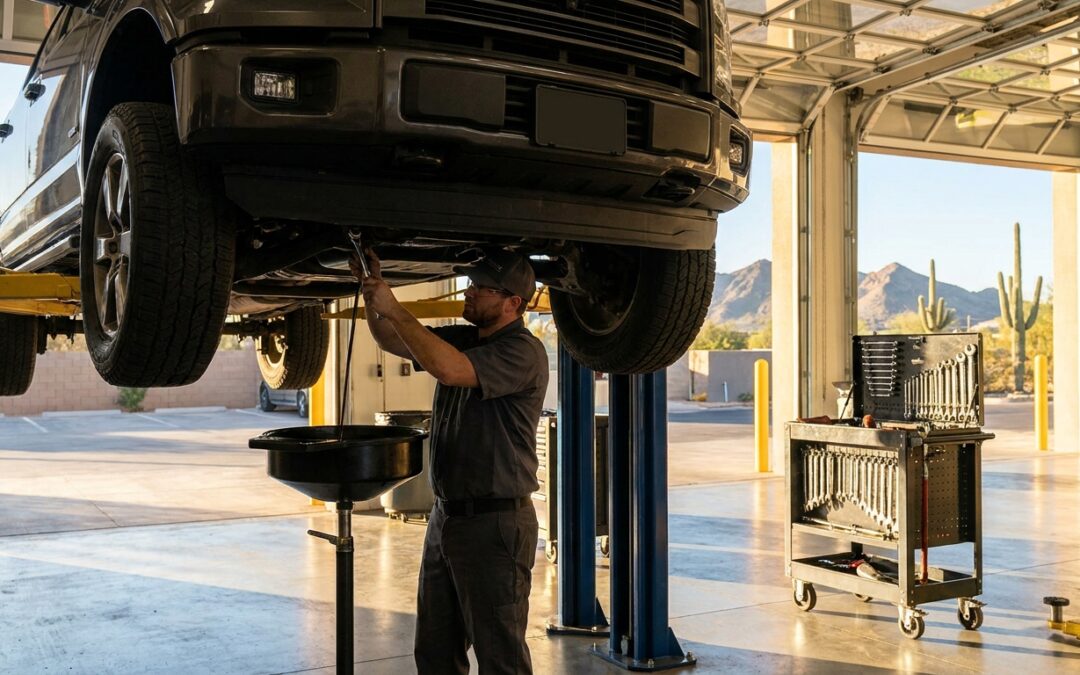
- Free visual inspection. We pull each wheel and measure remaining pad thickness, check rotor surface condition and thickness, and inspect caliper slide pins for binding or corrosion.
- Fluid check. We test brake fluid moisture content with a refractometer — not a guess. Fluid over 3% moisture is due for a flush regardless of pad condition.
- Rotor measurement. Every rotor gets measured against manufacturer minimum thickness specs. Most modern rotors are too thin by the time pads are due to safely resurface, so we measure rather than assume.
- Written estimate. You get a plain-English breakdown of exactly what needs attention, what can wait, and the parts-and-labor cost in writing before anything is touched.
- Repair approval — your call. Nothing happens until you authorize it. Want a second opinion? Take the estimate home. Ready now? We can usually start the same day.
- Torque-to-spec installation. Every caliper bolt and wheel lug is torqued to manufacturer spec with a calibrated wrench — not an impact gun guess.
- Bed-in and road test. New pads need a proper bed-in cycle to seat correctly against the rotor. We road-test every brake repair before handing back the keys.
What Does Brake Repair Cost in Prescott, AZ?
Straight numbers, because you deserve them. These are the real ranges we quote — not teaser pricing that balloons once you’re in the chair:
- Front pads + rotors, most passenger cars: $295 to $475 out the door, including labor and a road test.
- Rear pads + rotors, most passenger cars: $265 to $445 out the door.
- Half-ton trucks & large SUVs (F-150, Silverado, Tahoe, and similar): $425 to $650 per axle.
- 3/4 and 1-ton diesels (Cummins, Power Stroke, Duramax): $575 to $950 per axle depending on OE-spec or severe-duty pad choice.
- Brake fluid flush (recommended every 30–40k miles given Prescott’s temperature swings): $125 to $165.
- Caliper replacement (single): $265 to $475 including labor and system bleed.
- ABS wheel-speed sensor replacement (single): $195 to $325 with scan-tool clearing and verification.
Every quote for brake repair Prescott AZ customers receive from us is written before any work starts. If we find something unexpected once the wheel is off, we call before proceeding — never after.
How long does brake repair take?
A single-axle pad-and-rotor job typically takes 90 minutes to two hours. Both axles together runs about three hours. Drop your vehicle off before 10 AM and most brake repairs are finished the same day, including a full road test to confirm the pedal feels correct and there’s no residual noise.
Stop Guessing. Get a Real Number.
Bring us your squeak, grind, or soft pedal and we’ll give you an honest, written estimate — free inspection, no obligation. Same-day service available most weeks.
When Is It Urgent? Safety Warnings for Prescott Drivers
Not every brake symptom needs an emergency same-day appointment — but some absolutely do, especially on Prescott’s mountain grades where stopping distance matters more than on flat valley roads.
- Grinding, metal-on-metal sound: The pad is gone and the rotor is being damaged with every stop. Stop unnecessary driving immediately.
- Soft, spongy, or sinking pedal: This can mean air or moisture in the brake lines, or a failing master cylinder. Stopping distance is compromised right now, not eventually.
- Vehicle pulling hard to one side under braking: Often a sticking caliper or uneven pad wear, which becomes dangerous during a sudden stop or on a wet road.
- Brake warning light illuminated: This can indicate low fluid, a hydraulic fault, or a worn-pad sensor. Never ignore it — the NHTSA recommends immediate inspection, especially before a mountain descent.
- Burning smell after a long downhill stretch: A sign of brake fade — the pads and fluid have overheated. Pull over, let the vehicle cool, and do not continue the descent until inspected.
- Any brake symptom combined with ABS or stability control warnings: These systems depend on properly functioning brake components to keep the vehicle controllable in an emergency stop.
What to Do Right Now
If you’re reading this because something feels or sounds off, here’s a practical sequence to follow before you book anything:
- Listen for the specific sound. Squeal only when braking, constant squeal, or grinding? Each points to a different cause and a different urgency level.
- Check pedal feel. Does the pedal feel firm, or does it sink lower than usual before engaging? A changing pedal feel is one of the most reliable early warning signs.
- Note any pulling or vibration. Does the vehicle pull to one side, or does the steering wheel shake under braking? Write down when it happens — every time, only at highway speed, only when hot.
- Check the dash for warning lights. A brake warning light or ABS light changes the urgency of the visit and helps the technician prepare the right diagnostic tools.
- Call Network Automotive at (480) 444-0242. Describe what you’re hearing or feeling. We can often give you a ballpark idea over the phone and schedule a same-day inspection if it sounds urgent.
- Avoid unnecessary mountain descents until inspected if you’re hearing grinding or feeling a soft pedal. Stick to flatter routes and lower speeds until a technician confirms what’s going on.
Why Prescott Drivers Choose Network Automotive
We know you have options for brake repair. Here’s what consistently brings Prescott-area drivers to Network Automotive over the quick-lube chains and tire shops that treat brakes as an afterthought:
- ASE-Certified Technicians — Brake work goes to certified specialists, not whoever happens to be free. See our full services list to see what else our techs handle.
- Free Brake Inspection — we check pad thickness, rotor condition, and fluid quality. You leave with a written estimate, no obligation attached.
- Transparent, Itemized Quotes — Every estimate breaks down parts and labor line by line, so you know exactly what you’re approving. Check our current coupons before you book.
- Nationwide 24-Month / 24,000-Mile Warranty — Every brake repair is backed coast-to-coast, not just while you’re parked in our lot.
- Torque-to-Spec, Every Time — Calibrated tools, not an impact gun guess, on every caliper bolt and lug nut.
- Same-Day Service Available — Most single-axle brake jobs finish same day when you drop off early. Learn more about our team.
- Honest Assessment — Not Upselling — If your rear brakes still have 40% pad life left, we tell you that instead of selling a job you don’t need yet.
Prescott & Surrounding Service Area
Network Automotive serves customers throughout the greater Prescott region and surrounding communities for brake repair and every other service we offer. If you’re driving in from any of these areas, we can help:
- Prescott — Including downtown, Prescott Lakes, Hassayampa Village, and Forest Trails
- Prescott Valley — Including Glassford Hill, Viewpoint, and Long Valley areas
- Dewey-Humboldt — Including Mayer and the Agua Fria River corridor
- Chino Valley — Including Del Rio Springs and Paulden
- Skull Valley — Serving ranchers and rural drivers in the Kirkland corridor
- Congress & Yarnell — Serving drivers coming off Highway 89
- Cordes Lakes & Black Canyon City — Interstate 17 corridor customers
- Wickenburg — Via Highway 93 for drivers in the far western service area
Not sure if we cover your area? Call (480) 444-0242 and we’ll tell you straight. We also serve customers in our primary East Valley locations including Mesa, Gilbert, Apache Junction, and Queen Creek.
Prescott Brake Repair FAQ
How much does brake repair cost in Prescott, AZ?
Most passenger cars run $295 to $475 per axle for pads and rotors. SUVs and half-ton trucks land $425 to $650 per axle. Heavy-duty diesels can reach $950 per axle. Every quote for brake repair Prescott AZ customers receive is written before work starts, so there are no surprises at pickup.
How long does a brake repair take?
A single-axle pad-and-rotor replacement typically takes 90 minutes to two hours. Both axles together runs about three hours. Drop off before 10 AM and most brake jobs finish the same day, including a full road test to confirm everything feels correct.
Is it safe to drive with grinding brakes?
No. Grinding means the friction pad is completely worn through and metal is now scoring the rotor surface. Every additional mile makes the damage worse and increases the eventual repair cost. Stop unnecessary driving and call for a same-day appointment or a tow.
Do I need new rotors every time I replace brake pads?
Not always, but often. Modern rotors are frequently too thin by the time pads wear out to safely resurface, so we measure every rotor against the manufacturer’s minimum spec rather than assuming. If a rotor still has adequate thickness and a smooth surface, we reuse it and you save on the repair.
Why do my brakes squeak only in the morning?
Morning squeal in Prescott is usually rust flash that forms on the rotor surface overnight, especially during cooler months. It typically burns off within the first few stops of the day. If the squeal continues all day, that’s more likely the wear indicator telling you the pads need replacement soon.
Does mountain driving wear out brakes faster?
Yes. Sustained downhill braking on grades like Senator Highway or Iron Springs Road generates significantly more heat and pad wear per mile than flat-valley stop-and-go driving. If you regularly descend mountain grades or tow a trailer, plan on inspecting your brakes more often than the standard interval.
Does Network Automotive service vehicles in Prescott?
Yes. We serve customers throughout the greater Prescott region, including Prescott Valley, Dewey-Humboldt, Chino Valley, and surrounding areas. Many Prescott-area drivers make the trip to our East Valley locations for transparent pricing, free brake inspections, and same-day availability. Call (480) 444-0242 to confirm and schedule an appointment that works with your drive.
Do you offer a warranty on brake repairs?
Yes. Every brake repair at Network Automotive is backed by a nationwide 24-month / 24,000-mile parts-and-labor warranty, valid coast-to-coast — not just while your vehicle is parked in our lot.
Don’t Wait for Grinding to Get Worse
Squeaking, soft pedal, or pulling to one side — get an honest, free brake inspection before a small fix turns into a big one. Network Automotive offers same-day brake repair for most Prescott-area vehicles.
![AC Repair Gilbert AZ: Don’t Overpay (2026 Prices) [$89+]](https://networkautomotive.com/wp-content/uploads/2026/07/ac-repair-gilbert-az-1080x675.jpg)