by | Oct 17, 2022 | Engine & Diagnostics
A running engine contains a large number of moving components. Can you imagine how many parts are moving inside it? Because of all those rotating shafts and pistons, the engine normally makes soft noises and purring sounds. However, engine ticks and clicks are not among them. The repair could be expensive, so you have a legitimate reason to worry. Any reciprocating part in the engine can cause a ticking noise. There is not always an ominous meaning to ticking or clicking sounds. Knowing the causes and solutions to problems is the only way to stay worry-free. An auto repair shop in Mesa, AZ can help.
Low Oil Level or Pressure
When low oil pressure or low level of oil is coupled with ticking in the engine, it’s bad news. The engine produces a shrill ticking sound when oil doesn’t reach the top part. A timing chain or valvetrain components, such as a camshaft or lifter, is likely to be the cause. Checking the oil level with a dipstick and filling the tank if necessary is a good idea. As soon as the engine is warm and idling, check the oil pressure with a pressure gauge. It is fine if the pressure is between 15 and 20 pounds per square inch.
Exhaust Manifold Leak
Engine ticking occurs when the exhaust manifold leaks at idle and under acceleration. This occurs when a gasket fails or manifold ruptures, allowing exhaust gasses to leak at high pressure. You are still able to drive, so this is not a serious issue. Nevertheless, you should fix it as soon as possible to prevent excessive exhaust gas leaks.
Worn off Valve Train Components
Engine ticking is most commonly caused by valvetrain problems. To ensure that the valves move at a precise distance, several parts work together. As a result of normal wear over time, these devices might be out of shape, causing the ticking sound. It may just be a matter of installing new shims or adjusting the rocker.
Rod Knocking
A major engine issue may be caused by rod knock. It is caused by the rod knocking around the crankshaft when the bearing connected to it wears off or becomes damaged. A metal-to-metal sound is created when the rod knocks around the crankshaft. Upon acceleration, you will hear a rhythmic, loud ticking sound coming from the engine. The speed of the car will cause it to gain speed. It is an expensive repair since the motor needs to be rebuilt.
Bad Spark Plugs
There is a ticking sound coming from the engine when the spark plugs are loose or cracked. After the engine has cooled, make a visual inspection. Cracked ones should be replaced. You can test whether the spark plug is moving after removing the spark plug wire by wagging the plug. The plug needs to be tightened if yes. There are times when the plug is not torqued correctly. If this is the case, you will need to reinstall it according to the owner’s manual.
Spark plugs seal off each of the cylinders. Bad plugs may sometimes strip the cylinder head threads. If that happens, you have to either repair or replace the damaged cylinder heads.
If your car is making a clicking sound, let an auto repair shop in Mesa, AZ help you. Call us today to make an appointment for service.
by | Oct 10, 2022 | Exhaust & Emissions
It is important to know why your car’s exhaust pipe exists. Combustion requires the expulsion of fuel and air. Pumping out used-up gaseous mixtures through pipes and filters results in engine exhaust emissions. Fuel-air mixtures that are operating normally have no odor or color. A properly operating automobile’s tailpipe appears to emit nothing when viewed from behind. When a vehicle’s smoke exhaust is anything but odorless and colorless, it is not operating at peak efficiency. There is a high probability that there is a problem. The following reasons are why your exhaust may be smoking and what you should do about it when you take it to an auto repair shop in Chandler, AZ.
Condensation
Starting with the best-case scenario, let’s examine the worst-case scenario. Your car’s exhaust pipe emits a white fume on a cold morning that scares you. A minute after warm-up, the emissions will return to normal if smoke replaces steam. On cold days, the gaseous fuel-air mixtures in your exhaust pipe condense into liquid as your vehicle sits. During the starting process, the car generates heat, which turns the liquid into steam, causing the white smoke exhaust. As the car warms up, the emissions become colorless gaseous.
Oil Leak
There is often a leak in the system causing white smoke exhaust that is not caused by condensation. Lubricating moving parts such as pistons and keeping them running smoothly is the purpose of motor oil. A leaky oil filter mixes with fuel, air, and exhaust gases when it gets into the combustion chamber and blew out the tailpipe. In the process, white smoke is produced or bluish-white smoke is produced. The combustion chamber should not contain oil, so this is a problem. Spark plugs are corroded by it and interfere with the process. As a consequence, moving parts get less oil to lubricate them. It is possible for your car to run dangerously low on oil if the leak goes on long enough or for a long enough period of time. It is possible for oil to leak under the hood if o-rings, gaskets, or other seals fail. In the absence of a hard part repair, additives like are designed to rejuvenate worn seals and prevent oil loss. Then, drive the car 100 miles with half of a bottle in the crankcase. There should no longer be any white smoke. For the next oil and filter change, you can save the remainder of the bottle. Bad seals are almost always responsible for oil leaks on a car, but they can also result from blown head gaskets or damaged oil filters. An expert mechanic might be required to diagnose the source of the problem.
If you notice your car is smoking from the exhaust you may be looking for a way to make it stop. Finding the cause is the first step. You can take your car to an auto repair shop in Chandler, AZ. If you need some help, reach out to us to make your plans and arrange an appointment.
by | Oct 3, 2022 | Engine & Diagnostics
A squeaky car is one of the most frustrating car problems. Not knowing what the problem is can be just as frustrating as the noise that is often loud and annoying. The longer you wait, the more serious the issue may become. It’s imperative that you address the problem as soon as possible, however. The purpose of this article is to help you understand some of the most common reasons for car squeaks, how to fix them yourself, and when seeking expert help may be necessary you can take your car to an auto repair shop in Gilbert, AZ.
Bad Tires
If your tires are squeaking while driving, you may have contact between your tires and your car’s body. Suspension or wheel alignment issues usually cause this. Tires that aren’t aligned properly can make a lot of noise when they contact the body of your vehicle. In addition, incorrectly aligned wheels are more likely to cause your tires to wear down faster. This should be checked out right away. Your tires are also designed to grip the road despite wet conditions – even during rain. In bad weather or after driving for a long time, you are likely to have more worn tires than usual. You might hear them squeaking when you drive because of this.
Brakes
It could be a sign that your brakes need replacing if you hear grinding or squeaking. When you press your brake pedal, the brake pads rotate against the brake disc. Unless they’re worn down to the point where they can vibrate, they may eventually start to vibrate. A metal tab attached to the brake pad that contacts the brake rotor serves as a wear indicator on most brake pads. High-pitched squealing noises are produced when the brake pads contact the rotor, indicating that they need to be changed. Be sure to check both sides of your brake pads for signs of wear or damage. The brake pads may simply need to be replaced.
Steering Wheel
The steering wheel often makes a clunk noise when driving. A worn or loose steering wheel is one of the most common causes. Several factors can contribute to this. Most often, this happens because the driver grips the wheel too tightly. Their hands cause the wheel to squeak and move. There can also be problems with your vehicle’s bearings or a loose steering shaft. Your steering system needs to be inspected thoroughly to remedy this situation. Retighten the steering wheel bolts behind the steering column by tightening them. Once that has been done, make sure everything is working correctly and that nothing is worn out or broken. Getting something fixed before continuing your journey is likely if something is broken or loose.
If you are ready to get some help for your vehicle, you may need to take it to an auto repair shop in Gilbert, AZ to find out why it is squeaking. We are happy to help you with all your car repair needs.
by | Sep 26, 2022 | A/C & Cooling System
On hot, sunny days, air conditioning keeps us cool, while on chilly nights, it keeps us warm and toasty. However, they sometimes disappoint us. We dread getting in a hot car, cranking the air conditioner, and being met with warm, sticky air. There’s nothing worse, is there? There are so many of us who experience this! As a result, we are left with hefty bills to pay mechanics or to try to repair any damage ourselves by following a haphazard tutorial. If you are struggling with an air conditioner that is blowing hot air, you may need to make an appointment with a Chandler, AZ auto repair shop.
Common Causes
AC systems that blow warm air are generally caused by a lack of refrigerant. A broken fan, electrical issue, condenser, or compressor problem can also cause your AC to blow warm air. But usually, the culprit is leaking coolant.

What Happens If Your Car is Leaking Refrigerant
A leak in the system will only require a recharge if there is a leak in the refrigerant system. Are you concerned that you may have a leak? Your AC will blow warm air as the first symptom. What are our options for finding the leak? Due to low-pressure areas where your leak might be, it can be quite difficult to locate the leak due to the refrigerant returning to gas. Due to low-pressure areas where your leak might be, it can be quite difficult to locate the leak due to the refrigerant returning to gas.
How Can It Be Fixed?
We can explore two avenues, fortunately. The first option is to have your car serviced by a mechanic. Since they have more experience, they will be able to locate the leak and either repair or replace the parts as needed. The cost of these repairs depends on how severe the leak is. To stop leaks, you can also use an AC leak sealer. Consider these options only if you have a small leak, so keep that in mind. In terms of leak sealers, there are two types to choose from. Your seals will swell when you use the first type, stopping leaks. When the second type reaches the leak, it assembles a solid substance around it, reducing the amount of space occupied by the leak. It is possible to seal leaks at an affordable price with leak sealers. In most cases, they include a nozzle that can be connected directly to the high-pressure port. Use your sealer according to the instructions on the container.
As a result, our AC journey has come to a close. It’s clear that there are a few reasons why your AC is blowing warm air, and all of them need attention in order to restore proper operation. If you are experiencing any of these problems, you can take your vehicle to a Chandler, AZ auto repair shop. We are here to help with all your auto repair needs. Give us a call today to learn more about all the ways we can help you.

by | Sep 19, 2022 | Exhaust & Emissions
A loud exhaust has a way of announcing itself at the worst times: backing out of the driveway at 6 AM, idling in a school pickup line, or droning on the highway until your ears ring. Whether your car developed the noise gradually or woke up one day sounding like a race car, a loud exhaust is more than an annoyance. It is usually a symptom, sometimes of a simple worn part and sometimes of a leak that can affect performance, fuel economy, and even the air inside your cabin. Here is how to figure out why your exhaust got loud, what quiets it properly, and which noises should send you straight to a shop.
First, Understand Why Exhausts Get Loud
Your exhaust system routes combustion gases from the engine, through the catalytic converter and muffler, and out the tailpipe, quieting the engine’s pulses along the way. When the system is loud, something in that path has changed:
- Rust and corrosion: Mufflers and pipes corrode from the inside out, since exhaust moisture collects in the system, especially on vehicles driven mostly on short trips.
- Leaks at joints and gaskets: Flange gaskets, clamps, and welds fail with age and heat cycling, letting gases escape before the muffler can do its job.
- Physical damage: Speed bumps, debris, and bottoming out can crack pipes or knock components loose.
- Failed hangers: Broken rubber hangers let the system sag and rattle against the underbody.
Each cause has a different fix, which is why proper diagnosis beats bolting on parts and hoping.
Read the Noise: What Different Sounds Mean
The character of the sound narrows the search considerably. A deep rumble or roar that got worse over months usually means a muffler failing internally or a growing leak ahead of it. Ticking or puffing that is loudest on cold start often points to an exhaust manifold leak or cracked flange that seals up slightly as metal expands. Rattling over bumps suggests a loose heat shield or broken hanger. Hissing can mean a pinhole leak in a pipe or gasket. And a sudden change from quiet to very loud typically means something let go completely: a rusted-through pipe, a separated joint, or a failed muffler.
Take note of when the noise started and whether anything preceded it, like a pothole hit, a speed bump scrape, or recent work on the car. That history often points to the cause faster than the sound itself.
Location helps too. Noise from under the hood area points toward the manifold and front pipe; noise from under the cabin or rear points to the mid-pipe, resonator, or muffler.
Why a Loud Exhaust Deserves Prompt Attention
A loud exhaust is easy to procrastinate on, but three things make it worth fixing sooner:
Safety: Exhaust gases contain carbon monoxide, and a leak ahead of the tailpipe can allow fumes to find their way into the cabin, particularly at idle with windows up and AC running, which describes a lot of Arizona driving. Any exhaust smell inside the car is a stop-driving-and-get-it-checked symptom.
Performance and economy: Leaks upstream can confuse oxygen sensors, which skews the fuel mixture and hurts fuel economy and emissions. A neglected leak can also contribute to damaging the catalytic converter, one of the most expensive components on the car.
The ticket factor: Excessive exhaust noise can attract exactly the kind of attention no commuter wants, and a failing exhaust can also mean trouble at emissions testing time, which matters for drivers in the Phoenix metro area’s testing counties. Our exhaust and emissions archive digs deeper into that side of things.
How a Shop Actually Quiets an Exhaust
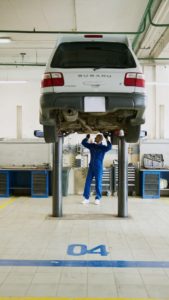
The right repair depends entirely on the cause, which a technician finds by getting the vehicle on a lift, inspecting the full system, and often listening with the engine running. From there, the fix might be tightening or replacing clamps and gaskets, welding a small crack, replacing a section of pipe, hanging the system properly on new hangers, or replacing a muffler or resonator that has failed internally. On older systems, a shop will give you an honest read on whether patching one spot makes sense or whether neighboring sections are close behind it.
Be cautious with the tempting shortcuts. Exhaust tape and paste are temporary at best on a system that gets extremely hot and vibrates constantly, and a patch that falls off on the freeway fixed nothing. If your exhaust got loud suddenly or you smell fumes, skip the experiments and call (480) 444-0242 to get it looked at properly.
A Word About Aftermarket Exhausts
Sometimes the loud exhaust was a choice, installed by a previous owner or a younger version of yourself, and now the drone on the freeway has outlived its charm. That is a fixable situation too. A shop can replace an aftermarket system with quieter components, add or replace a resonator to take the edge off a specific frequency, or repair poorly fitted joints that make even an intentional system louder than it should be. The goal is the sound you actually want at the volume you can live with, and there is a lot of room between showroom-silent and waking the neighbors.
Quiet Is Also a Sign of Health
There is a satisfying flip side: a quiet exhaust usually means a healthy one. When the system is sealed and solid, sensors read accurately, the engine breathes the way it was designed to, the cabin stays free of fumes, and early morning departures stop being a neighborhood event. Fixing a loud exhaust is one of those repairs where you feel the result every single drive.
If your car, truck, or SUV has gotten loud, do not settle in and live with it. Network Automotive Service Center has been family-owned since 1995, and diagnosing and repairing exhaust systems is everyday work for us. Explore our services, check our current coupons, or call (480) 444-0242 to schedule an exhaust inspection. We will find the noise, fix the cause, and give you back a quiet ride.
by | Sep 12, 2022 | Oil Change & Maintenance
Few things trigger car-owner dread like walking out to the driveway and spotting a dark stain under the engine. Oil leaks are among the most common problems we see, and they range from a minor seep you monitor to a serious leak that threatens the engine itself. The good news is that oil leaks almost never appear without a traceable cause, and finding that cause early usually means a simpler, cheaper repair. Here is why oil leaks happen, how to read the clues, and when to get a Chandler, AZ auto repair professional involved.

First, Confirm It Is Actually Oil
Cars can drip several fluids, and each tells a different story. Engine oil is amber to dark brown or black, with a slick feel and a distinct petroleum smell. Pink or red fluid is usually transmission or power steering fluid. Green, orange, or yellow watery fluid is coolant. And clear water dripping near the front passenger side in summer is almost always harmless air conditioning condensation, which Valley drivers see constantly and often mistake for a leak.
A simple trick: slide a piece of cardboard under the engine overnight. The color and position of the drips give you and your mechanic a head start on the diagnosis.
The Most Common Causes of Oil Leaks
Nearly all oil leaks trace back to a handful of usual suspects:
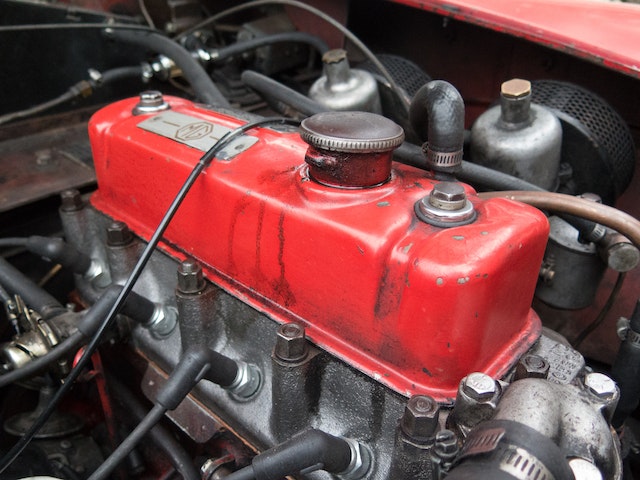
- Valve cover gasket. The rubber gasket sealing the top of the engine hardens with age and heat, then seeps. Often shows up as oil smell or light smoke as oil drips onto hot parts.
- Oil pan gasket or drain plug. The pan lives at the bottom of the engine, so leaks here drip straight to the ground. A worn drain plug washer or a loose plug is one of the cheapest fixes on this list.
- Oil filter issues. A filter that is loose, overtightened, or double-gasketed can leak noticeably, sometimes right after an oil change.
- Front and rear main seals. These seal the rotating crankshaft, and when they age, oil finds its way out. The rear main is more involved to replace because of its location.
- Timing cover and other gaskets. Various seals around the engine each have their own failure pattern, which is why identifying the true source matters before replacing parts.
Why Arizona Heat Makes Leaks More Common
Most of the parts above are rubber or cork-based seals, and heat is what ages them. Underhood temperatures in a Chandler summer are extreme, and years of those heat cycles harden gaskets, shrink seals, and crack o-rings sooner than in milder climates. It is one reason oil leaks show up on Valley vehicles at ages and mileages that might surprise drivers from cooler places. Heat also thins oil slightly, which helps it find escape paths that thicker, cooler oil might not. None of this is cause for panic, but it is a good reason for East Valley drivers to take fluid levels and driveway spots seriously.
How Serious Is Your Leak?
Not every leak is an emergency, but every leak deserves a plan:
- A few drops occasionally is worth monitoring closely and mentioning at your next service. Check the dipstick regularly to make sure the level stays healthy.
- A regular spot with every parking means schedule an inspection soon, before the leak grows and before oil-soaked components create secondary problems.
- A spreading puddle, a low dipstick reading, or the oil pressure light means stop driving and get help now. Running an engine low on oil can destroy it in minutes, turning a gasket repair into an engine replacement.
There is also a hidden cost to ignoring leaks: oil dripping onto hot exhaust parts creates smoke and a fire risk, and oil-soaked belts and mounts deteriorate quickly.
Diagnosing and Fixing the Leak Properly
Oil travels. It blows backward in the wind stream and runs down along the engine, so the wet spot you see is often not where the leak starts. Professional diagnosis means cleaning the engine, then tracing the fresh oil to its true origin, sometimes with dye and ultraviolet light for stubborn cases. That step matters, because replacing the wrong gasket fixes nothing. Once the source is confirmed, you get a clear picture of the repair and its urgency. If your oil level has been dropping without visible drips, the oil may be burning or leaking while driving, and that pattern is worth mentioning when you call. Reach our team at (480) 444-0242 and describe what you are seeing, and check our engine diagnostics articles to understand the process.
What About Stop-Leak Additives?
Auto parts stores sell bottles that promise to stop oil leaks from the inside, and it is fair to wonder whether one of those is easier than a repair. The honest answer: these products work by causing seals to swell or soften, which can slow a minor seep for a while, but they do not repair anything. The aged gasket is still aged, the leak path is still there, and the additive is circulating through your entire engine, not just the one seal you care about.
For an older vehicle with a slow seep, an additive is sometimes a reasonable stopgap while you plan the proper fix. For a meaningful leak, it is a delay disguised as a solution, and the underlying problem keeps aging while you wait. A better use of that money is a proper diagnosis, so you know exactly what is leaking and can decide on the repair with real information instead of hope.
Keep Your Engine Protected
Between visits, two habits protect you: check your dipstick monthly (more often if you have a known seep), and stay on schedule with oil changes, since fresh oil and a correctly installed filter prevent some leaks outright. Our oil change and maintenance articles can help you build the routine.
An oil leak caught early is usually a manageable repair. An oil leak ignored is how engines die. Network Automotive Service Center has been family-owned since 1995, serving Chandler and the East Valley. Explore our services and call (480) 444-0242 to schedule a leak inspection. We will find where it is coming from and give you straight answers about what it needs.

by | Sep 5, 2022 | Oil Change & Maintenance
When you are thinking about all the ways you can save money on gas, there are a few things you can do to improve gas mileage. If you are worried that there could be a problem with your car that is causing you to get low gas mileage, reach out to a Mesa, AZ auto repair shop. We are here to assist with all your car repair needs.
Maintain a calmer driving style. Gas is wasted when driving aggressively, which involves excessive acceleration and frequent braking. Make sure you follow traffic flow rather than always trying to pass other vehicles. On the highway, this can increase mileage by up to 33 percent, while in town, it can increase mileage by up to 5 percent.
The speed limit is to be followed. Between 45 and 60 mph is the speed at which most cars reach their maximum efficiency. Above 60 mph, efficiency rapidly decreases. In addition, you’ll save money: 35.2 cents per gallon of gas becomes 24 cents per gallon if you exceed 60 mph.
Make sure you only pack what you need. A car’s fuel efficiency decreases by 1 to 2 percent for every 100 pounds of cargo it carries. There is a greater impact on smaller cars than on larger ones.
Unless absolutely necessary, avoid using roof racks. If possible, store gear in the trunk rather than on the roof rack, which will reduce your gas mileage and cause aerodynamic drag.
 The air conditioning should be turned off. Open the windows at lower speeds or use the flow-through ventilation system in your automobile. Up to 20 percent of your mileage can be lost when running the air conditioner.
When you’re waiting for long periods of time, don’t idle. Turning the engine off while waiting consumes about as much fuel as restarting the vehicle, so idling for 10 seconds is more efficient. Overdrive gears and cruise control are especially useful for long highway drives.
Make sure your tires are inflated every month. Check your owner’s manual or the inside of the driver’s side door for the recommended pressure for your tires. It is not recommended to inflate your tires to the maximum pressure listed on them. Gas mileage can be improved by approximately three percent with properly inflated tires.
Take advantage of rush hour by planning your outings in advance. The more you brake, the more you idle, and the more gas you waste when you drive during busy hours. Using less gas is as simple as idling less and braking less. When planning your trips, try to pick times when there will be less traffic.
If you are planning to save gas on your next drive, there are a few different things you can do to reduce how much your car is using. If you are looking for a way to save money on your daily drives and also reduce the wear and tear on your car, there are ways to improve mileage. Another option is to have your car inspected by a Mesa, AZ auto repair shop. Reach out to us to make an appointment to have your car serviced today.

by | Aug 22, 2022 | Transmission
When you are having problems with your transmission you shouldn’t waste any time having it serviced. If your transmission goes out, you won’t be able to drive your car. If you are having issues or aren’t sure if your car needs to be serviced by a Chandler, AZ auto repair shop, be sure to watch for some of these signs and symptoms. They are all signs that there may be a problem with your car’s transmission and that it’s time to take your vehicle to a repair shop. Keep these things in mind when monitoring your car for transmission problems.
Switches Gears On Its Own
During driving, your vehicle will suddenly and unexpectedly switch gears, indicating that your transmission is slipping. Occasionally, the unauthorized switching of gears is accompanied by a pitching change or noise. In the event of your car switching gears out of the blue, while you’re driving, you may be in danger. The car might shake as a result. Is the vehicle suddenly shifting into neutral while you’re driving? If this is the case, the vehicle is having an increasingly difficult time staying in gear. Do not drive any further if this is the case. The vehicle should be taken to a mechanic who has experience in dealing with these types of shifts. If the vehicle is in neutral, you shouldn’t assume it was accidentally put into it. In most cases, a properly maintained vehicle makes this kind of mistake just won’t happen.
Has No Power
It is possible that your car might have a slipping transmission problem if it is not accelerating quickly or feels sluggish. Other transmission issues may be present as well. This is why you should get your vehicle inspected as soon as possible by a professional mechanic.
Switches Gears Roughly
It may also be difficult for your vehicle to change gear smoothly when it has a slipping transmission. When your vehicle shifts down or up a gear, you’ll hear a thud or clunk. If your vehicle takes longer to start, your transmission could be slipping. If your gear shift is moved from ‘Park’ to ‘Drive,’ then you will immediately experience a lag in your vehicle’s movement. At this point, the car engine revs but does nothing. An alarming sound is always going to go off for any motorist: the grinding of gears. It’s an unmistakable sound that even experienced motorists will find difficult to ignore. When you have a slipping transmission, you will commonly hear this noise.
If you are dealing with transmission problems and are worried that your car may not be able to be driven, don’t waste any time taking your car to an experienced mechanic at a Chandler, AZ auto repair shop. We are happy to help you with all your transmission problems and any other issues you may be having with your car. Give us a call to learn more about all the ways we can help you keep your car on the road and in good condition.

by | Aug 15, 2022 | Engine & Diagnostics
If you hear a tapping sound while driving your car, you may be worried about the cause of it and wondering what you can do to fix it. There are many things that can cause these issues so it’s a good idea to have the car checked out by a Mesa, AZ auto repair shop. If you need help deciding what could be wrong with your car, be sure to keep some of these possible causes in mind. Regardless of the cause, you should get it checked as soon as possible.
Worn Belt
You can also hear tapping or knocking sounds when your accessory belt is faulty. Since the belt, which connects to various pulleys throughout the engine bay, turns as it runs, it’s possible for this to happen. An exact amount of tension must be applied to the belt for it to turn properly and quietly. The tensioner will not work properly if the belt is broken or stretched out, causing slapping, knocking, or tapping sounds. Pulleys that are bent out of shape can also cause this problem.
Manifold Leak
It can be caused by an exhaust manifold leak if you hear a ticking or tapping noise when accelerating or at idle. A gasket leak or a rupture in the manifold can lead to high-pressure leakage of exhaust gasses. As long as you do not consider this a serious problem if you are driving, you can continue driving. Your engine will be damaged if you do not have this problem fixed immediately, since excessive exhaust gas leaks cause damage.
Bad Spark Plugs
An engine tapping might be caused by cracked or loose spark plugs. Because spark plugs need to be properly threaded into the internal combustion engine’s cylinder heads, this can occur. For some reason, if the spark plug is not fully seated to the head, maybe due to improper installation or cracks that make the plug unable to fully tighten, it can result in a bypass of combustion and exhaust gasses, which can cause a tapping noise.
Bad Bearings
Symptoms and causes of engine tapping can also include a rod knock. It is caused by worn or damaged bearings and you will hear a deep tapping sound from the engine. Rod bearings that are worn, loose, or damaged can cause tapping noises, which indicates that they are about to fail completely. If your engine experiences either seizing or locking up, it may try to seize and break a rod. These two conditions can severely damage an engine, requiring an engine replacement.
If you are experiencing any of these issues, it could mean there is a serious problem with your vehicle. You don’t want to drive your car if there are problems, so you should have it serviced by a Mesa, AZ auto repair shop. You can make an appointment with us to have your car inspected to find out the cause of the tapping sounds and to make sure they are repaired correctly so you can feel safe on the road.
by | Aug 8, 2022 | A/C & Cooling System
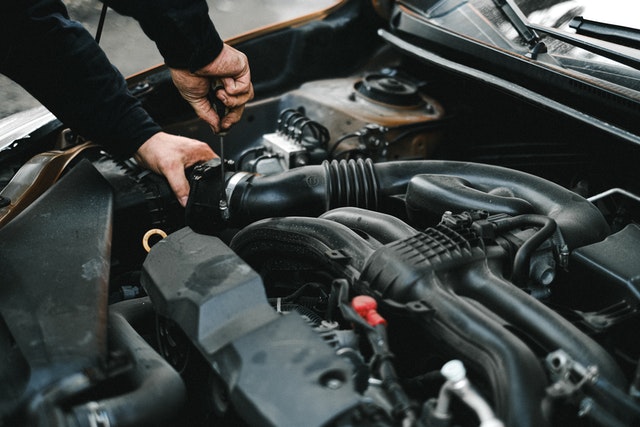
If your water pump goes bad in your car, you may experience a variety of different issues. You will need to have it serviced as soon as possible to avoid other issues and to be able to drive your car safely and properly. If you are looking for some signs that your water pump may be the problem, be sure to watch for some of these signs and symptoms that may help you decide what type of problems you have and need services by a Chandler, AZ auto repair shop.
Low Coolant Warning Light
A warning light may appear on the dashboard if your car’s water pump fails. Check engine light, low coolant warning, and overheating warning are just a few examples. If your vehicle has a temperature gauge, it will also climb.
No Heat
Heater systems require hot engine coolant to function properly. Thus, a malfunctioning cooling system, such as a faulty water pump, can render an inoperable heater. Your heater may not blow hot air or it may not turn on at all. Sometimes the air will work and the heat won’t and sometimes neither one will work.
Overheating
It is possible for a water pump to develop leaks, which will cause the coolant level to fall and the engine to overheat. Water pumps that fail internally can also impede coolant circulation, which overheats the engine. The result is the same either way. Water pumps are frequently prone to leaks. It is possible that the leak originates from the water pump itself or its gasket. In such a situation, the engine may overheat and if not repaired or replaced quickly, additional damage could ensue, such as cracked cylinder heads, pushed head gaskets, or burnt pistons. The water pump is more likely to be at fault if the engine temperature gauge runs hot frequently. This issue should be checked by a mechanic and if necessary, the water pump should be replaced.
Leaking Coolant
This causes coolant to leak from the water pump and fall to the ground, usually near the front of your car or right where the motor is located. It is important to have your car, truck, or SUV inspected if you notice a leak of coolant that appears green or sometimes red in color under the center of the vehicle. The most common cause of these leaks is a water pump leak, which can be fixed before it gets worse.
If you are experiencing problems with your car’s water pump or if your car is showing any of these signs and you need to know if there is a serious problem, be sure to think about taking it to a Chandler, AZ auto repair shop. We are happy to help with all your car repair needs. Contact us today to make an appointment to have your car serviced and to get to the bottom of your car’s water pump problems or any other things that may be wrong with it. We are here to help with all your car repair needs.